


Small Giant Clam
Tridacna maxima · Cardiidae · Giant clam · Palau Fish ID
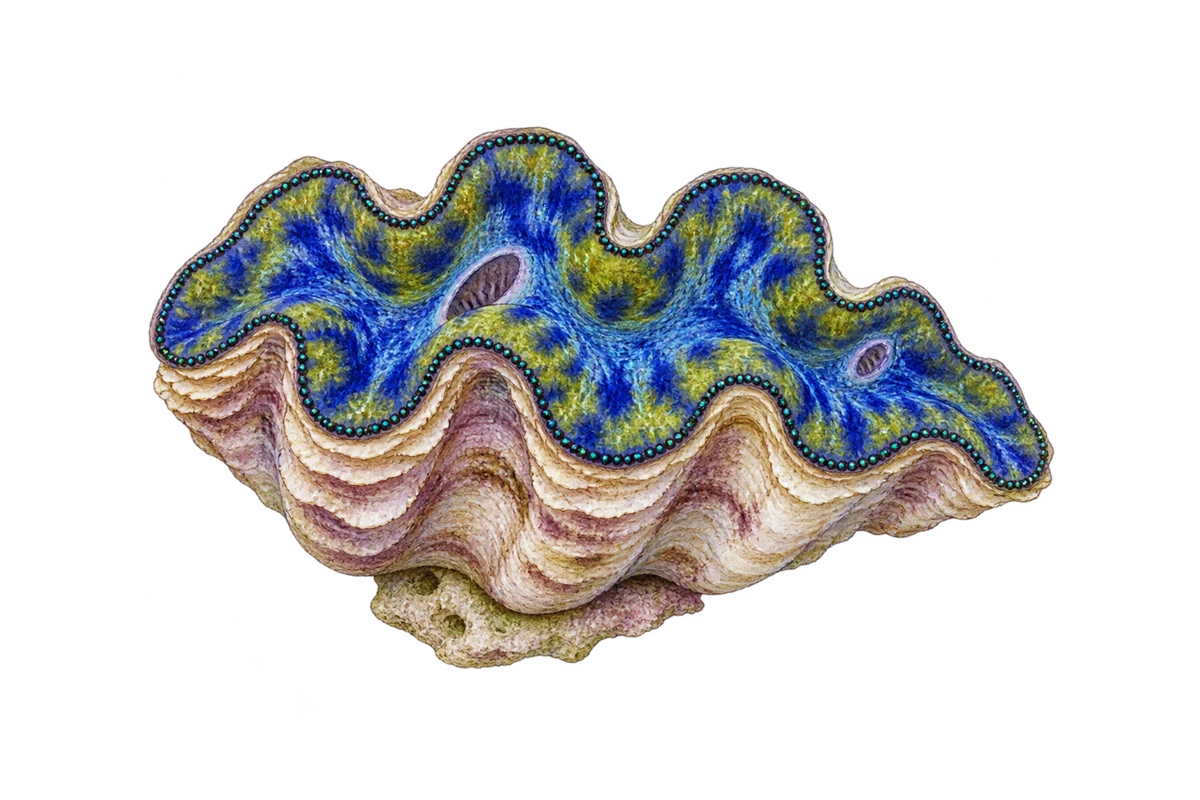
Small giant clam sounds like the reef couldn’t make up its mind. Look past the eye-catching color and check the fine row of spots near the mantle edge. That’s where the useful clue is.
How to recognize it
Look for a row of tiny, eye-like light-sensing organs just inside the mantle edge. The fleshy mantle may be blue, green or brown. Some shell edges are visible even when the clam sits partly in the reef.
Where to look in Palau
A shallow-reef census in Palau identified this species separately from Noah’s giant clam. It was among the three most numerous kinds that researchers counted. Look at reef surfaces and lagoon habitat without assuming every rocky opening is one.
Size and life stages
Shell length can reach about 14 inches (35 cm), although many are smaller. The span of the soft mantle isn’t the same measurement.
What it does all day
Water carries food particles through the clam’s siphons. Microscopic algae living in the mantle make sugars using sunlight; they help feed the clam as well.
The next generation
After a drifting larval stage, a young clam settles into a suitable reef spot. On a dive it’s easier to spot an open mantle than a small shell wedged in rock.
Look-alikes
Noah’s clam often has pale-outlined teardrops and no orderly continuous row of light-sensing dots. The boring giant clam may hide almost all its shell. Patterns vary, so a partial view is a good reason to stop at “giant clam.”
Try this on your next dive
Photograph the whole mantle and one edge without touching or shading it on purpose. The useful clues fit in one well-framed picture. If you want practice bringing home the details in a photo, try the SDI Underwater Photographer.
Six things to notice
- Small is relative: the shell can reach about the length of a ruler.
- The tiny eyespots sense light; they don’t see a detailed picture the way you do.
- It shares its mantle with photosynthetic algae.
- A living clam may sit partly embedded in the reef.
- Color alone doesn’t reliably separate it from Noah’s giant clam.
- Palau researchers counted it among the three most abundant clams in their survey.
Keep looking through Palau Fish ID or explore our international group dive trips.




