


True Giant Clam
Tridacna gigas · Cardiidae · Giant clam · Palau Fish ID
The true giant clam earns every word of its name, but a giant shell is not an invitation to investigate with your hands. You can learn plenty from the shell’s heavy folds and the soft mantle between them, all from a comfortable distance.
How to recognize it
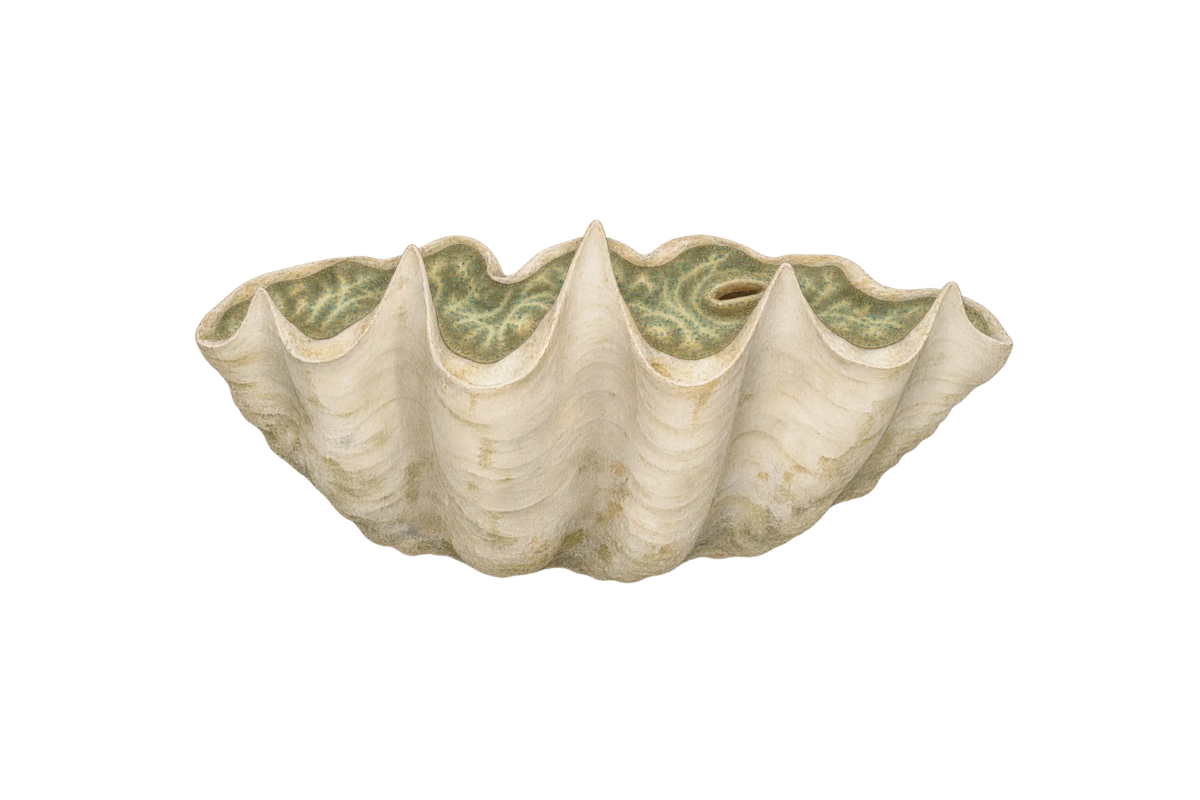
Start with the thick valves and broad, deep folds. The way the folds meet gives an open shell a scalloped outline. Look for the overall shell proportions: a blue mantle does not automatically make it a true giant clam, and not every adult will be enormous.
Where to look in Palau
Palau researchers measured true giant clams in a survey across reef types. Historical researchers also saw spawning on a reef at Ngemelis Island. Ask your guide for good habitat to look in, and treat any sighting as a bonus.
Size and life stages
This is the largest giant clam species. Exceptionally large shells can exceed 3 feet (1 meter) across. That is a species reference, not a diver’s visual size test or a claim that Palau specimens in the modern survey reached that size.
What it does all day
Although the biggest ones look a lot like reef structure, the tissue is alive. Like other giant clams, it filters water and hosts microscopic photosynthetic partners. A well-framed view makes it easy to compare the soft mantle with the thick shell.
The next generation
Giant clams begin life as tiny larvae; a Palau team reared them in hatchery work. Another Palau study reported patterns in the timing of spawning in relation to moon phase and time of day. That is an interesting local observation, not a calendar prediction.
Look-alikes
The smooth giant clam can also be large. Compare the overall shell and the depth of the folds rather than trying to estimate weight underwater. Rows of big, projecting, leaflike scales are a stronger clue for a fluted giant clam.
Try this on your next dive
Take in the whole shell first. From a respectful distance, notice where the mantle ends and the surrounding reef begins. Don’t put a hand or camera between the valves, feed the clam or test whether it closes. Frame the whole ribbed edge first, then photograph the details if you can keep steady. That’s a good exercise in the SDI Underwater Photographer course.
Six things to notice
- It is the largest member of the giant-clam group.
- A mature shell can exceed a meter in length.
- Heavy, deeply folded valves are a better clue than any one mantle color.
- The tiny starting point is a floating larva, not an already oversized shell.
- Palau hatchery researchers followed this species from larvae to juveniles.
- Palau researchers documented a reef-spawning observation at Ngemelis.
Keep looking through the Palau Fish ID guide, or explore our international group dive trips.




