


Smooth Giant Clam
Tridacna derasa · Cardiidae · Palau Fish ID
Some giant clams wear frilly shells. This one keeps things simple. If the mantle is doing all the showing off, look at the shell before committing to a name.
How to recognize it
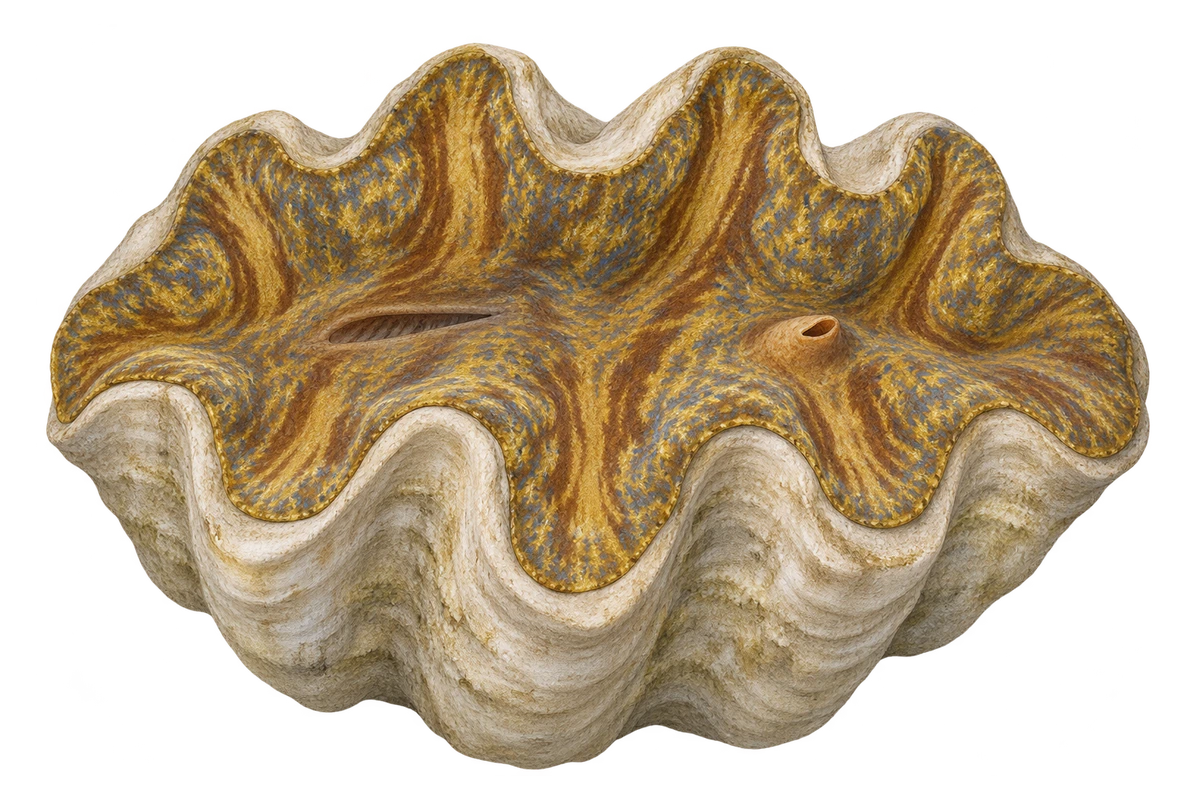
The heavy pale shell usually shows six or seven main shallow folds. Adult shell faces lack the prominent blade-like scales of fluted clams. The mantle often carries long blue or green markings.
Where to look in Palau
Researchers recorded this exact species in a reef census across Palau. An earlier study also recorded it at Helen Reef in the remote southwest. Neither record guarantees a sighting on a particular dive.
Size and life stages
The shell can grow to about 24 inches (60 cm). A small one does not lose its diagnostic identity just because the common name says “giant.”
What it does all day
Its siphons move water through the animal. It can feed on material suspended in that water and also receive nutrients from the algae living in its mantle.
The next generation
Larvae drift first and later settle. Young animals can hold on using threads; large individuals are typically unattached and sit under their own weight.
Look-alikes
Fluted giant clams have projecting blade-like scales. The true giant clam generally has fewer but deeper folds ending in higher triangular projections. The smooth giant clam has lower, broader waves.
Try this on your next dive
If the clam is open, photograph from an oblique angle that shows both mantle and shell face. If algae cover the shell, let them stay there and record the best view you have.
Six things to notice
- It is one of the largest living giant clams, second to the true giant clam.
- Six or seven shallow main folds are a useful starting clue.
- The surface lacks the fluted giant clam’s obvious projecting scales.
- An older survey documented it at Helen Reef.
- Very young clams can attach with threads; adult shells can sit by their own weight.
- Bright marks across the mantle can be longer than you’d guess from the shell’s plain appearance.
Bring back a better ID photo
Hold steady and leave the animal where it is. A side-on photo can show the features you might miss underwater. If you want to practice framing small subjects and getting the light right, try SDI Underwater Photography.
Keep looking through Palau Fish ID or explore international group dive travel.




