


Barred Clingfish
Tomicodon fasciatus · Gobiesocidae · Clingfish · Cayman Islands Fish ID
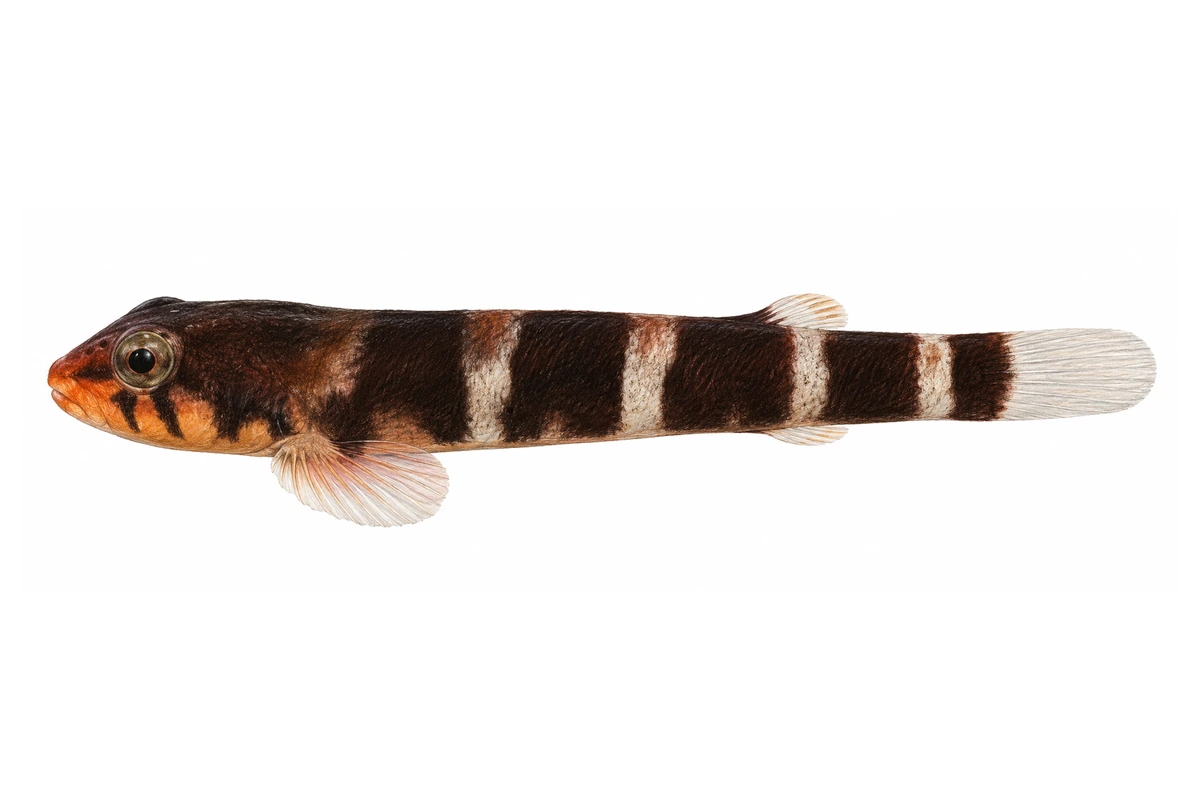
How to identify it
A small Barred Clingfish can disappear against rock. Check for a dark mark just above the side fin and a series of dark bars. A clear head view can also show a little flap at the front nostril.
Tomicodon rupestris shares a common name and a similar barred outline. Compare the nostril flap and precise mark placement; an ordinary overhead photo may not separate them.
Cayman Islands records
A 1980 Smithsonian survey identified Barred Clingfish among Little Cayman’s tidal rock-pool animals. That historical record does not show that it is usually encountered on reef boat dives.
A documented record does not guarantee an encounter on your dive.
Fun facts
- The suction disc is on the underside, so it may be hidden in a photo of a fish clinging to rock.
- The front edge of the disc has small fleshy tabs.
- Some of the small front teeth have three points.
- The back has about six dark marks that can narrow in the middle like hourglasses.
- Its single dorsal fin sits well back on the body and has soft rays rather than spines.
- Even at full recorded length, it is less than an inch and a half long.
See more on your next dive
SDI Underwater Photography · Explore Stuart Scuba group dive trips




