


Tomato Grouper
Cephalopholis sonnerati
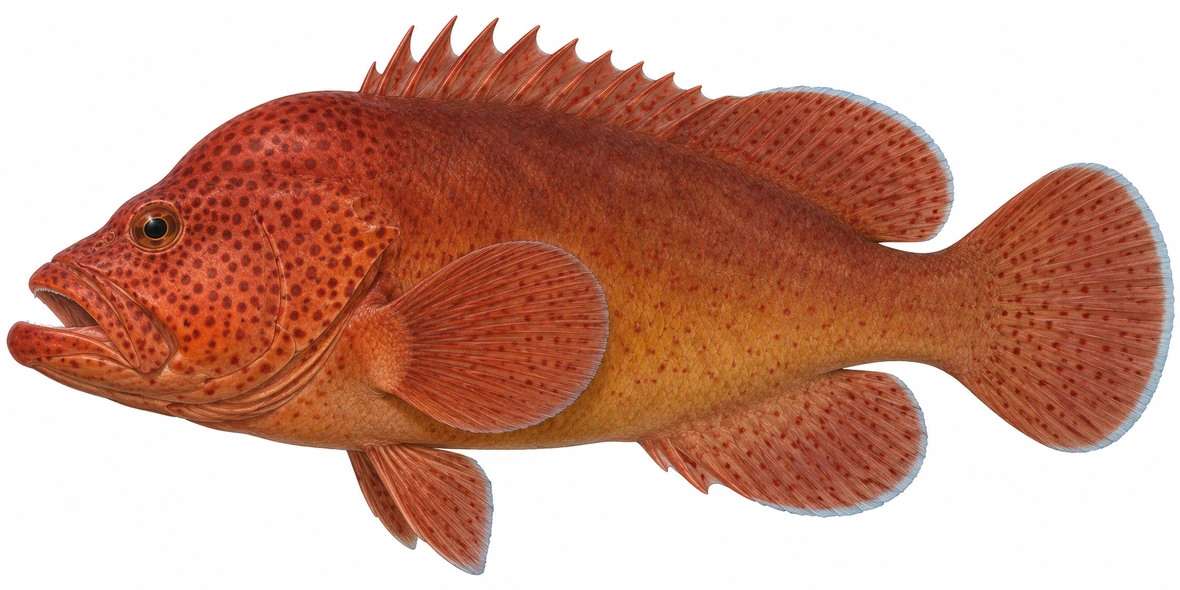
Two details worth remembering
- Adult head shape can be more informative than colour: the heavy, humped forehead helps reveal the tomato grouper beneath variable red and brown tones.
- Its juvenile tail has a pale-blue border, while the adult is most conspicuous for its body depth and densely spotted head.
How to identify it
A stout, deep-bodied grouper with a noticeably humped adult head. Reddish to yellow-brown individuals carry a close network of reddish spots, particularly on the head. Juveniles are darker and have a broad pale-blue tail margin.
Where to look
Deep lagoons and steep outer reef slopes; the cited museum account gives 30–70 m as usual, although shallower records occur. An adult is therefore not a routine shallow-reef target.
Natural history
Small fishes, shrimps, crabs and mantis shrimps.
Forms spawning aggregations. The museum account describes female-to-male sex change as likely, not conclusively established; that distinction should remain in the guide.
Look-alikes
Compare body depth and forehead shape with coral hinds and other spotted groupers; colour alone is unreliable.
What to watch for underwater
Record the forehead profile and whether the fish was on a steep slope or a lagoon reef.
Recorded in Raja Ampat
This species has a published Raja Ampat record. A regional record does not guarantee a sighting on a particular dive.
Sources: fishesofaustralia.net.au species reference · Regional survey record
I saw this and want to share
Back to Raja Ampat Fish ID · Dive Raja Ampat with Stuart Scuba




