


Fish identification archive / Raja Ampat
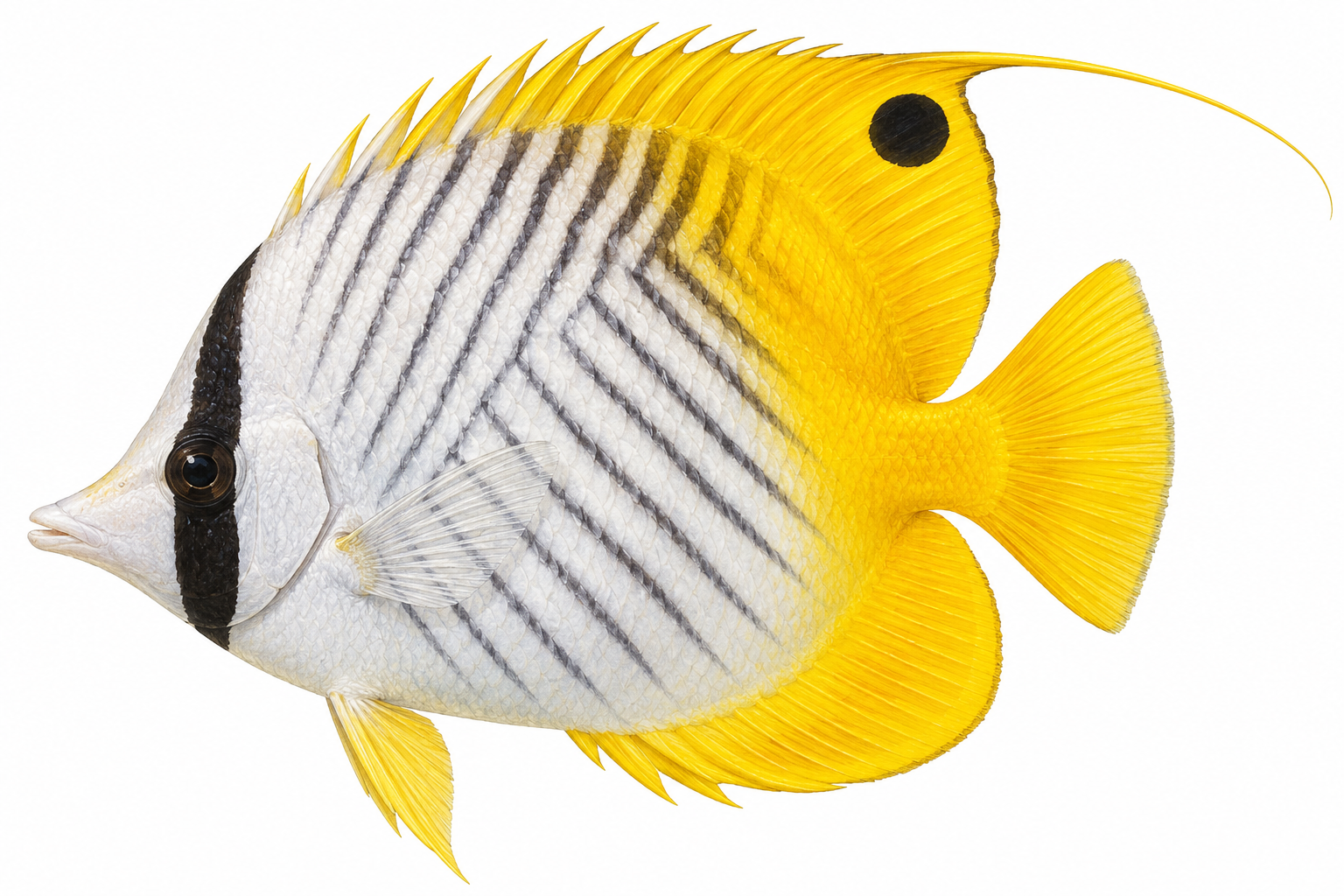
Threadfin Butterflyfish
Chaetodon auriga
Raja Ampat field guide
Two things to tell your dive buddy
- The trailing thread is an adult feature. A small juvenile without a conspicuous streamer should not automatically be dismissed.
- Its menu includes small invertebrates, coral polyps and algae. Unlike coral specialists, this butterflyfish uses several kinds of food.
How to identify it
White front and yellow rear, diagonal dark body lines, black eye band, rear dorsal eyespot and an adult dorsal filament.
Habitat and where to look
A variety of reef-associated habitats, including areas around coral reefs.
Daily habits and behavior
May occur alone, in pairs or in small groups. Adults develop the trailing dorsal filament that gives the fish its name.
What is on the menu?
Coral polyps, small invertebrates and algae: a varied menu rather than exclusive coral feeding.
Mating and the next generation
Eggs and larvae are planktonic, spending early development drifting in the water.
Look-alikes and identification traps
Do not confuse the adult thread with a bannerfish’s much longer pennant. The white front, yellow rear, diagonal lines and rear dorsal eyespot are the useful combination.
Try this observation
Watch a few feeding pecks and note whether the targets are coral, rubble or other reef surfaces.
Raja Ampat occurrence
Recorded in Raja Ampat; regional occurrence does not guarantee an encounter on a particular dive. This guide does not imply that every site, itinerary or season offers the same chance of an encounter.
Observe, do not disturb
Keep a respectful distance, leave the animal an unobstructed route and follow your dive guide. Do not touch, feed, chase or collect wildlife. Identification does not establish permission to harvest or food safety; Florida harvest labels do not apply to this Indonesian guide.
Sources and review
Reviewed November 18, 2026.
Trace the chevrons before checking the filament
Dark diagonals form chevrons across the pale flank. If the fish turns sideways, look for the dark eye bar and the slender thread trailing from the back of the dorsal fin rather than using the filament alone.
Learn to compare fin shapes and body markings in SDI Reef Fish Identification.
Make your next dive happen
Dive With UsTrain With UsExplore the Raja Ampat tripShop With Us
Questions? (772) 600-8288 or info@stuartscuba.com.




