


← Back to South Florida Fish ID
Striped Bumblebee Shrimp
Gnathophyllum americanum · Palaemonidae
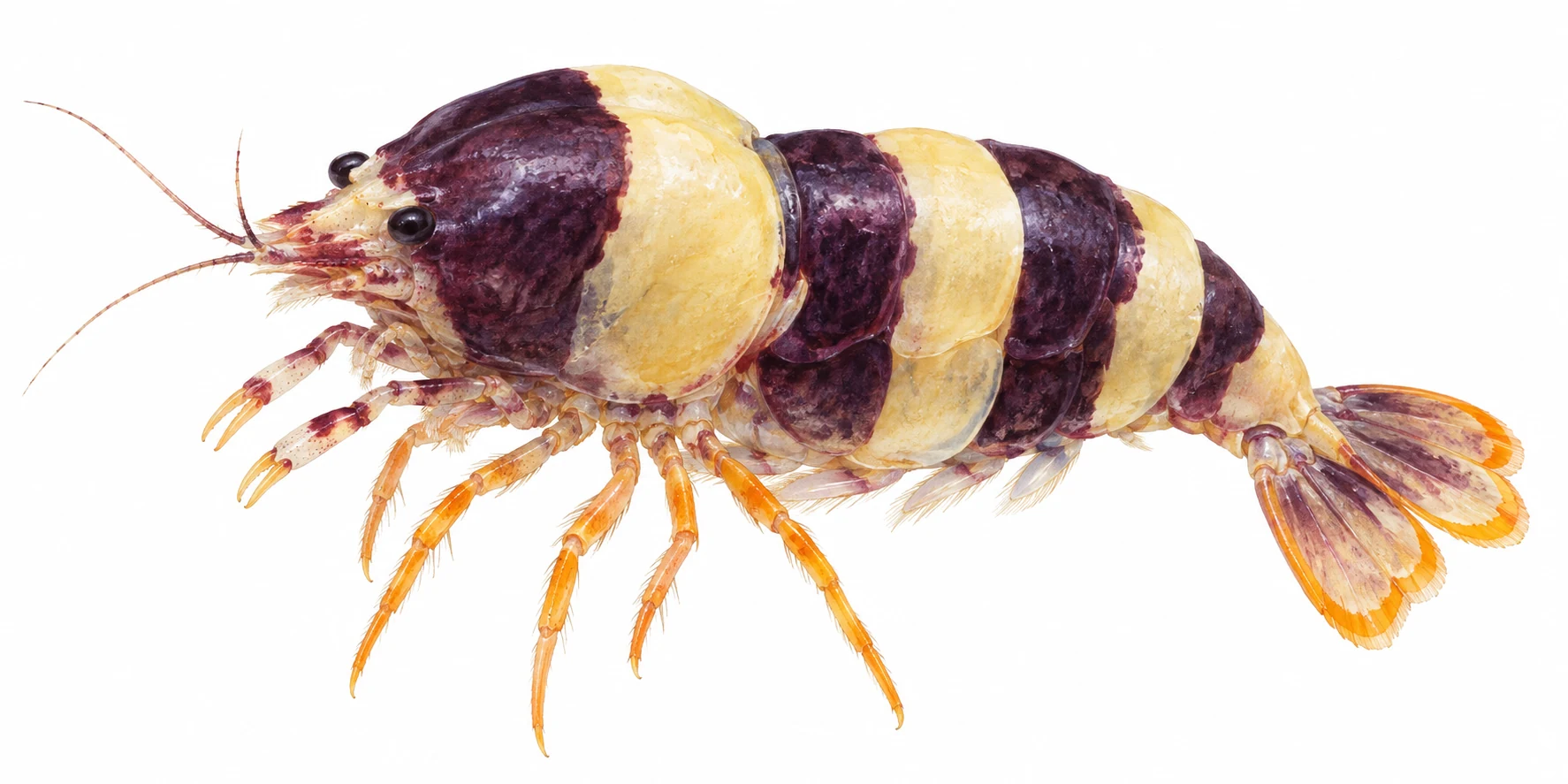
Deep dark and pale crossbands break up the outline of this short, stocky shrimp.
One fun thing to know
Researchers studying its unusual mouthparts could propose several possible foods, but could not establish a single wild diet.
I saw this and want to share
To share this guide with a dive buddy, copy the page link.
How to identify it
- Broad, alternating dark and light bands on the body
- Compact body and short head projection
- Check a side photograph for the full repeating body pattern
Where to look
It has been recorded in Riviera Beach and the Florida Keys.
Size
Only a few centimeters long; use a close photo rather than size alone.
What it eats
A mouthpart study suggests feeding on small particles, mucus, fluids or possibly echinoderm tube feet, but these are hypotheses, not a confirmed local feeding menu.
Behavior
This small shrimp may be overlooked among reef textures. Photograph it where it is rather than moving a nearby animal or piece of rubble.
Reproduction
Its breeding season in South Florida is not well established.
Look-alikes
Do not use the name bumblebee shrimp for every banded shrimp. Compare the broad bands with the ringed spots of Gnathophyllum circellum.
Can you collect or eat it?
CC: Observe and leave in place. Stuart Scuba conservation recommendation, not blanket legal protection.
Check current species and site rules before collecting. This guide does not establish permission to collect.
Make your next dive happen
Dive with Stuart Scuba · Train with us · Travel with us · Shop with us



