


Greenfish Sea Cucumber
Stichopus chloronotus · Stichopodidae · Sea cucumber · Palau Fish ID
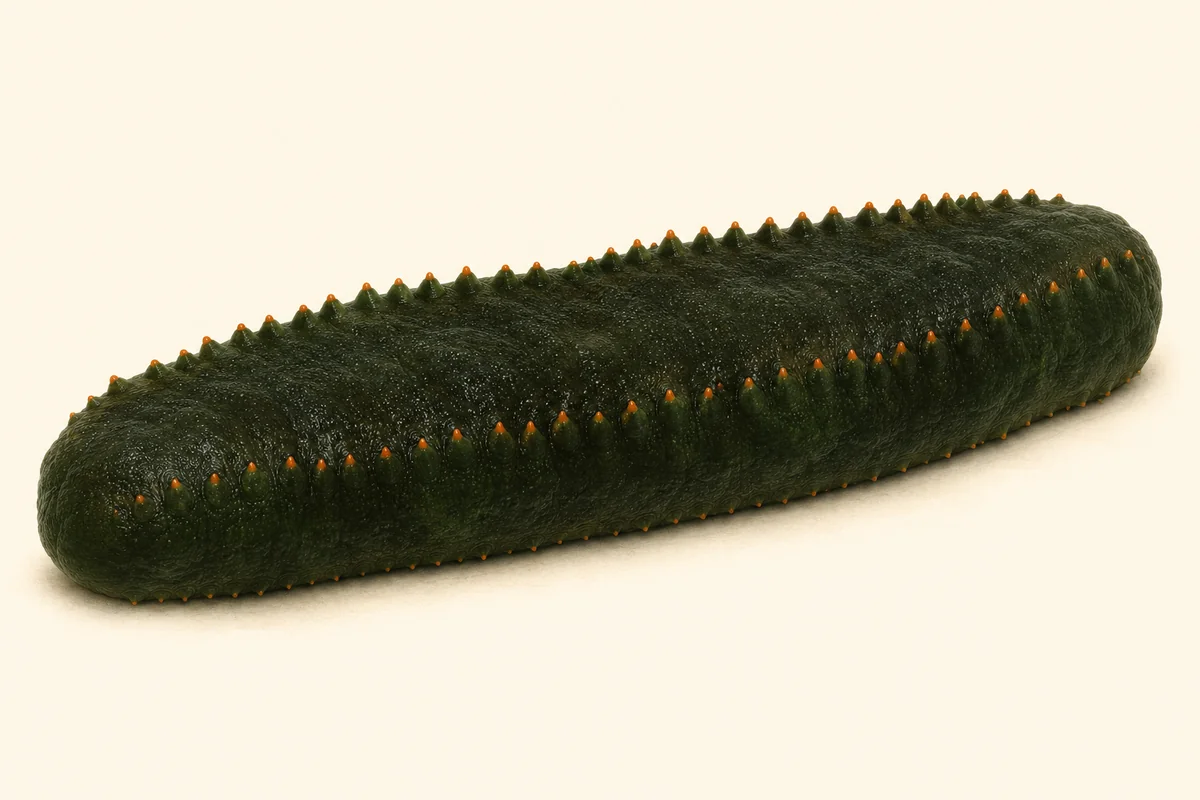
A nearly black sea cucumber called greenfish sounds like somebody lost a bet. Get a good look at the edges, though, and you can often see why the name stuck: deep green skin with pointed bumps that sometimes have warm-colored tips.
How to recognize it
Look for an elongated, boxy shape. Two rows of tapered bumps run along the top edges, and more line the lower sides. The tips may be orange or yellow, but not every animal shows them.
Where to look in Palau
Palau’s sea cucumber survey recorded greenfish in Airai and Ngarchelong. In suitable shallow reef habitat, check the hard bottom and rubble between coral patches, without moving anything.
Size and life stages
Full-grown animals are often around 8 inches (20 cm), and reported lengths reach about 14 inches (35 cm). Color or size alone will not distinguish a small animal from all the other dark cucumbers on the reef.
What it does all day
It feeds at the surface of the bottom, collecting organic material mixed with sediment. If you’re lucky enough to watch an undisturbed animal feeding, the action you want is at the mouth end, not on the pointy back.
The next generation
This species can release eggs and sperm into the water. It can also split across the body and regrow missing parts. Researchers have documented both methods; splitting is not something to provoke or test.
Look-alikes
The existing Lollyfish profile shows another dark species, but the greenfish has a particularly boxy outline and conspicuous rows of pointed bumps. Warm-colored tips help when you can see them; use the whole body shape if you can’t.
Try this on your next dive
Take one photo along the upper edges and one from the side. The second angle can show the boxy shape much better than a straight-down photo, and you never need to roll it over. If you want practice bringing home the details in a photo, try the SDI Underwater Photographer.
Six things to notice
- Some greenfish look almost black underwater, so the name is not a reliable color test.
- It has rows of conical bumps on both its upper edges and lower sides.
- The tips can be orange or yellow, but those highlights are optional.
- It eats at the seafloor like a slow-moving sediment sorter.
- Researchers found it can release eggs and sperm into the water.
- It can also split across its body and replace the missing parts, a process called fission.
Keep looking through Palau Fish ID or explore our international group dive trips.




