


Fish identification archive / Raja Ampat
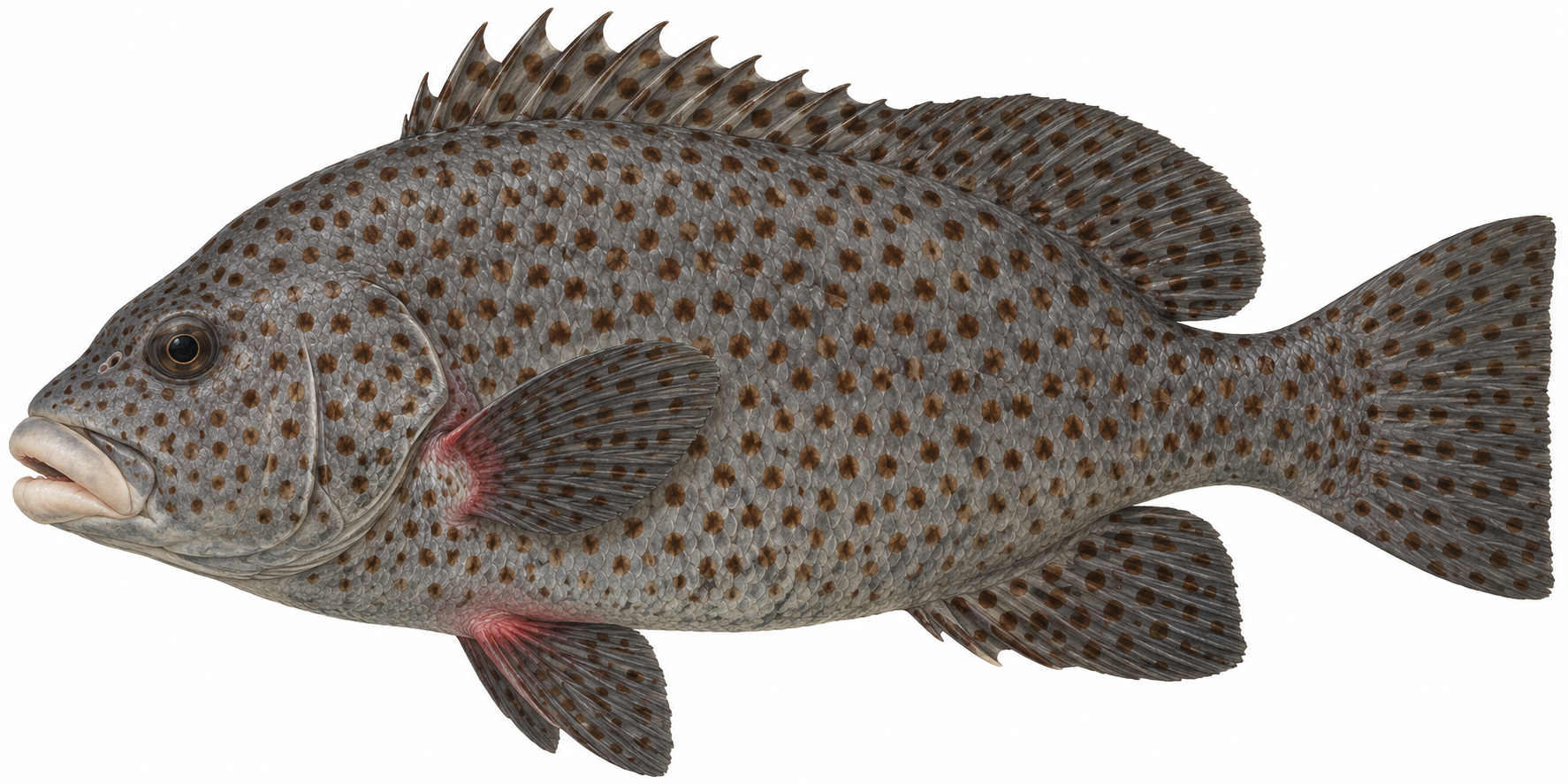
Spotted Sweetlips
Plectorhinchus pica
Raja Ampat field guide
Two things to tell your dive buddy
- The name pica refers to a magpie; historic picus is not the preferred spelling.
- Black-and-white juveniles develop the spotted adult pattern, so size and life stage matter.
How to identify it
Grey adult covered in brown spots; dark fins and sometimes conspicuously red pectoral and pelvic-fin bases.
Habitat and where to look
Lagoon and seaward reefs; adults shelter in caves or beneath coral heads.
Daily habits and behavior
Juveniles use shallow lagoons; adults often stay close to reef shelter.
What is on the menu?
Molluscs and crustaceans.
Look-alikes and identification traps
Other spotted sweetlips require careful comparison. Check the dark fins, brown spots and sometimes-red fin bases; juvenile patterns differ radically.
Try this observation
Look for a sheltered fish from outside its refuge; do not block the entrance for a photograph.
Raja Ampat occurrence
Recorded in Raja Ampat; regional occurrence does not promise a sighting on a particular dive. This guide does not imply that every site, itinerary or season offers the same chance of an encounter.
Observe, do not disturb
Keep a respectful distance, leave the animal an unobstructed route and follow your dive guide. Do not touch, feed, chase or collect wildlife. Identification does not establish permission to harvest or food safety; Florida harvest labels do not apply to this Indonesian guide.
Sources and review
Reviewed November 18, 2026.
Make your next dive happen
Dive With UsTrain With UsExplore the Raja Ampat tripShop With Us
Questions? (772) 600-8288 or info@stuartscuba.com.




