


Spotted Goby
Coryphopterus punctipectophorus · Gobiidae
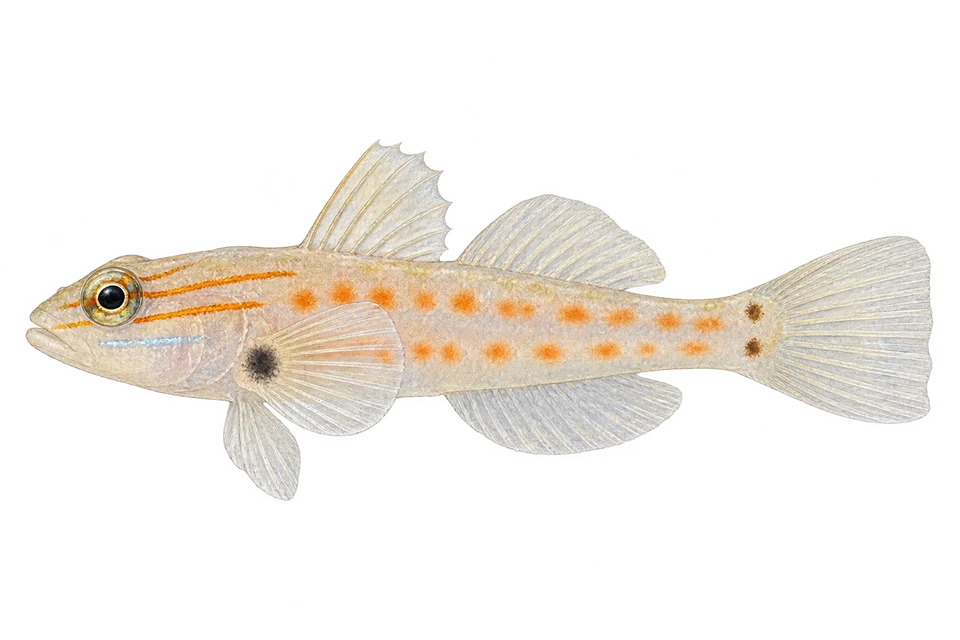
A row of orange dots is only a start. Look for a large dark spot low where the side fin meets the body.
One fun thing to know
The scientific name points to the same clue: a mark in the pectoral region.
How to identify it
- Three darker-edged orange streaks behind the eye and a faint blue cheek stripe.
- Two alternating rows of orange blotches on the translucent flank.
- Large dark spot low on pectoral-fin base, plus two brown marks at the tail base.
Where to look
Tiny silty holes around the bases of rocky reefs. Watch the reef-to-sand transition without disturbing the bottom.
Local record: This fish has been recorded in REEF surveys at Blue Heron Bridge (Phil Foster Park), Riviera Beach. A local record is not a guarantee of a sighting.
Size: Up to about 3.0 in (7.5 cm) in the cited account. This is a published upper size, not what to expect on every dive.
What it eats
Species-specific prey at Blue Heron Bridge was not established in reviewed sources.
How it behaves
Look for a tiny fish facing out of a hole. A still side photo helps with faint markings.
Reproduction
Local breeding timing and egg attendance are unverified.
Look-alikes
Bridled Goby and related sand gobies look similar. Check the fin-base spots and lack of a dark triangle on the gill cover.
Can you collect or eat it?
Enjoy watching it and leave it in the water. This guide does not verify species-specific harvest or food-safety rules. Check the current rules for the exact place, species and method before taking any fish.
Check Florida’s current saltwater rules
Field references
I saw this and want to share
Make your next dive happen
Dive with Stuart Scuba · Train with us · Travel with us · Shop with us



