


Spinyhead Blenny
Acanthemblemaria spinosa · Chaenopsidae
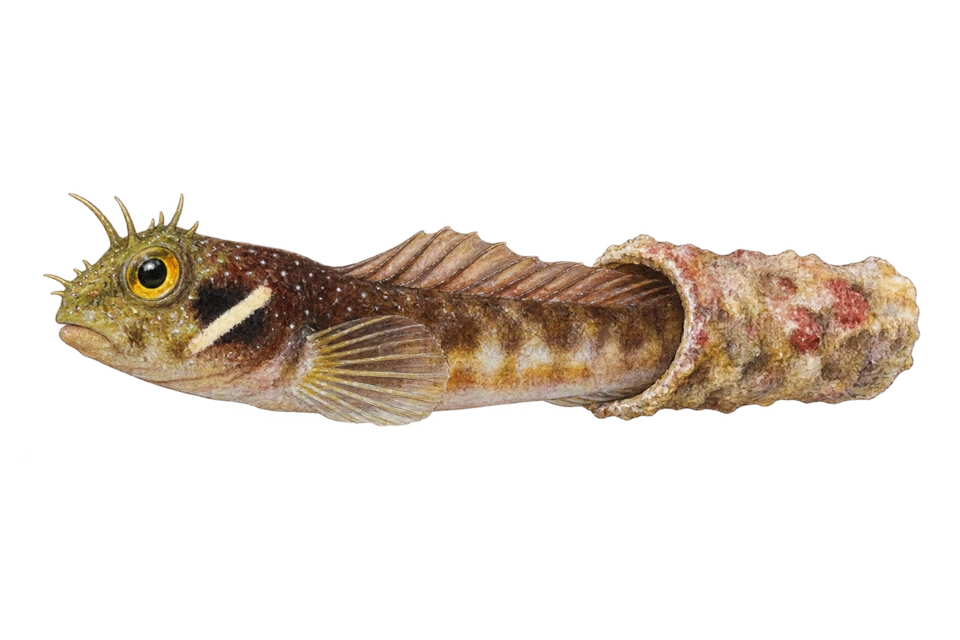
That pair of eyes in an old worm tube may be a fish, not a worm.
One fun thing to know
An old worm tube can become a blenny nursery.
How to identify it
- Tiny blunt head with a cap of forward-pointing spines.
- Yellow iris and a pale slanting mark beside a dark blotch behind the eye.
- Fine white dots behind the head on many fish; other colors vary.
Where to look
Coral patches, small holes in dead coral and abandoned worm tubes.
Local record: This fish has been recorded in REEF surveys at Blue Heron Bridge (Phil Foster Park), Riviera Beach. A local record is not a guarantee of a sighting.
Size: Up to about 1.4 in (3.5 cm) in the cited account. This is a published upper size, not what to expect on every dive.
What it eats
Tiny prey, including copepods and other small crustaceans.
How it behaves
Often stays at the mouth of its refuge. Wait quietly for a head-on or side view.
Reproduction
Field research records males guarding holes where females lay eggs. The larvae spend time in plankton.
Look-alikes
Other tube blennies also peep out of holes. Check the short head spines and mark behind the eye from close range without disturbing the fish.
Can you collect or eat it?
Enjoy watching it and leave it in the water. This guide does not verify species-specific harvest or food-safety rules. Check the current rules for the exact place, species and method before taking any fish.
Check Florida’s current saltwater rules
Field references
I saw this and want to share
Make your next dive happen
Dive with Stuart Scuba · Train with us · Travel with us · Shop with us



