


Fish identification archive / Raja Ampat
Spinecheek Anemonefish
Amphiprion biaculeatus
Raja Ampat field guide
Two things to tell your dive buddy
- The female may be two or three times as large as her male partner.
- Older books call the same species Premnas biaculeatus.
How to identify it
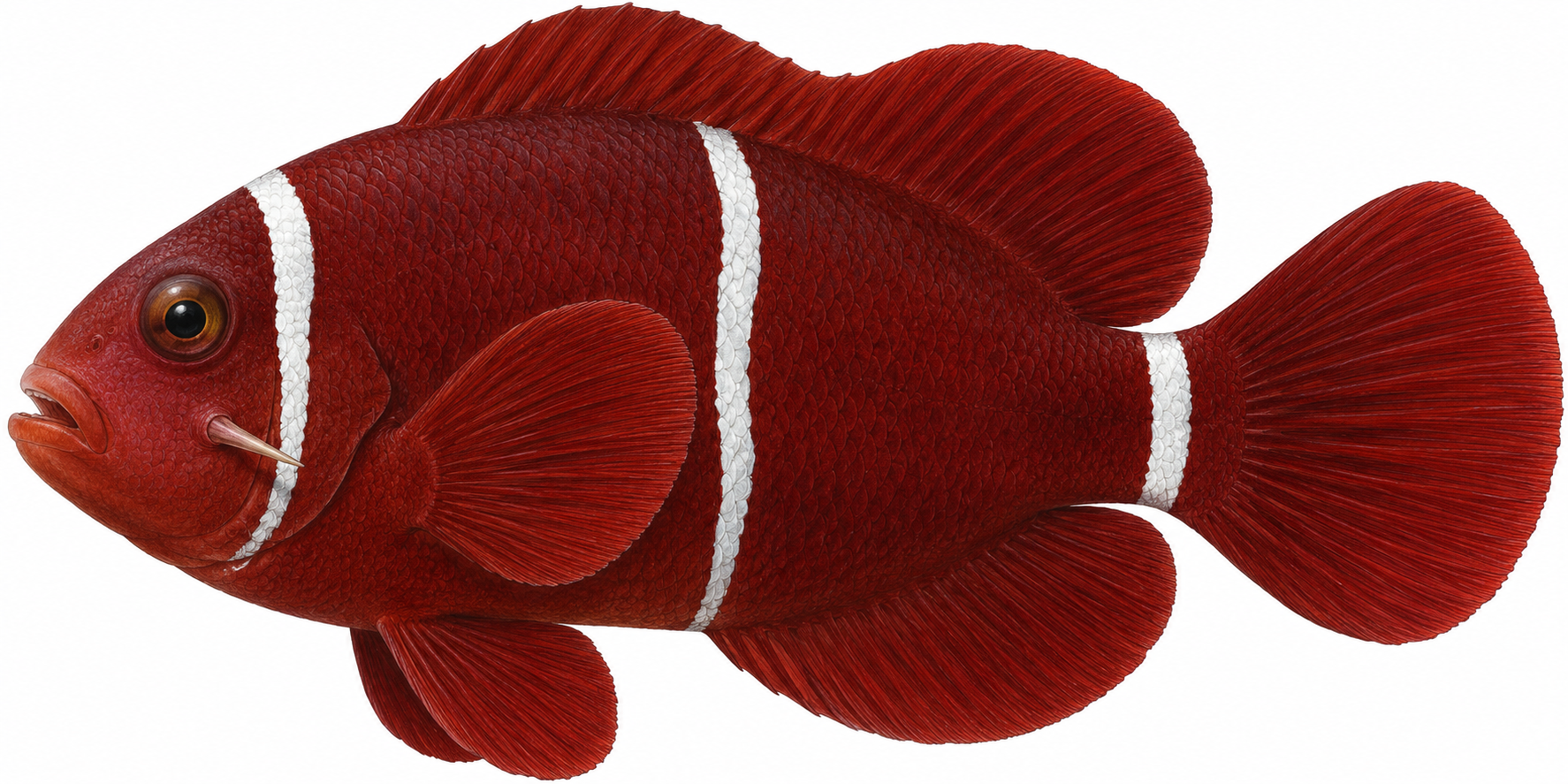
Red to dark brown anemonefish with three narrow pale bars and a conspicuous cheek spine.
Habitat and where to look
Lagoon and seaward reefs with the host anemone Entacmaea quadricolor.
Daily habits and behavior
Lives in a size-ranked social group dominated by a large female.
What is on the menu?
Mostly zooplankton and bottom-growing algae.
Mating and the next generation
Can change from male to female; males guard and fan eggs attached to the substrate.
Look-alikes and identification traps
Three narrow pale bars and the cheek spine distinguish it from many superficially similar red or dark anemonefishes.
Try this observation
Compare sizes from a distance; do not approach the cheek spine or disturb the host.
Raja Ampat occurrence
Recorded in Raja Ampat; regional occurrence does not promise a sighting on a particular dive. This guide does not imply that every site, itinerary or season offers the same chance of an encounter.
Observe, do not disturb
Keep a respectful distance, leave the animal an unobstructed route and follow your dive guide. Do not touch, feed, chase or collect wildlife. Identification does not establish permission to harvest or food safety; Florida harvest labels do not apply to this Indonesian guide.
Sources and review
Reviewed November 18, 2026.
Make your next dive happen
Dive With UsTrain With UsExplore the Raja Ampat tripShop With Us
Questions? (772) 600-8288 or info@stuartscuba.com.




