


← Back to South Florida Fish ID
Smallscale Fat Snook
Centropomus parallelus · Centropomidae
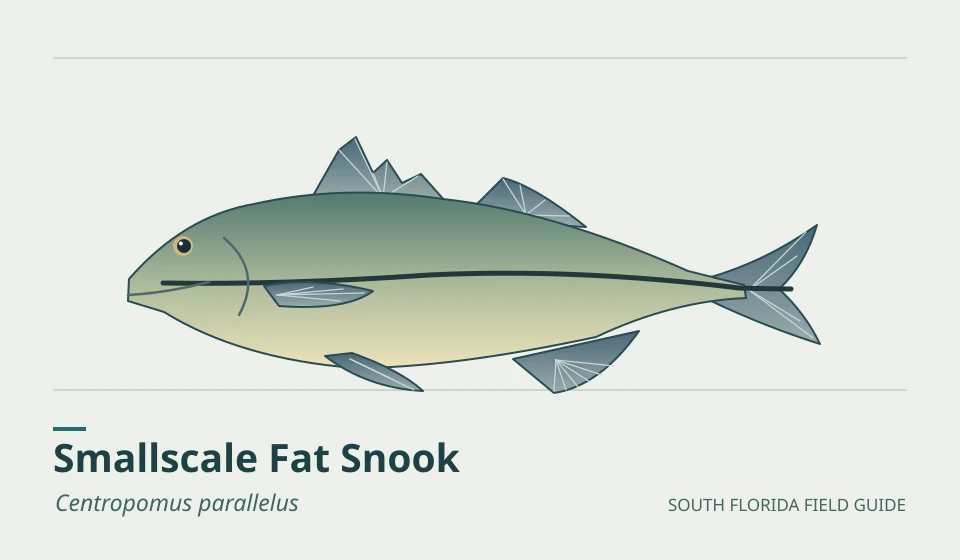
A deep, compressed snook with a dark stripe that continues onto its forked tail.
One fun thing to know
The second anal-fin spine is normally longer than the third when erect.
I saw this and want to share
How to identify it
- A deep, compressed snook with a dark stripe that continues onto its forked tail.
- Small rough scales and a projecting lower jaw.
- Stout second anal spine can reach about the tail base when folded.
Where to look
Sheltered coastal and brackish waters on the southeast Florida peninsula.
Size
Usually below 24 in (61 cm) in Florida.
What it eats
Small fish and crustaceans.
Behavior
Look near shelter in estuaries rather than exposed outer reefs.
Reproduction
Young use shallow protected shorelines. A local spawning calendar is not established here.
Look-alikes
Common Snook is more elongate. Tarpon Snook has a more upturned mouth and usually seven soft anal rays.
Can you collect or eat it?
Florida’s geographic snook rules cover this species. Check the current season, location, permit, slot and gear requirements before keeping a fish.
Check current Florida saltwater rules and posted rules at your site.
Field references
Make your next dive happen
Dive with Stuart Scuba · Train with us · Travel with us · Shop with us



