


Fish identification archive / Raja Ampat
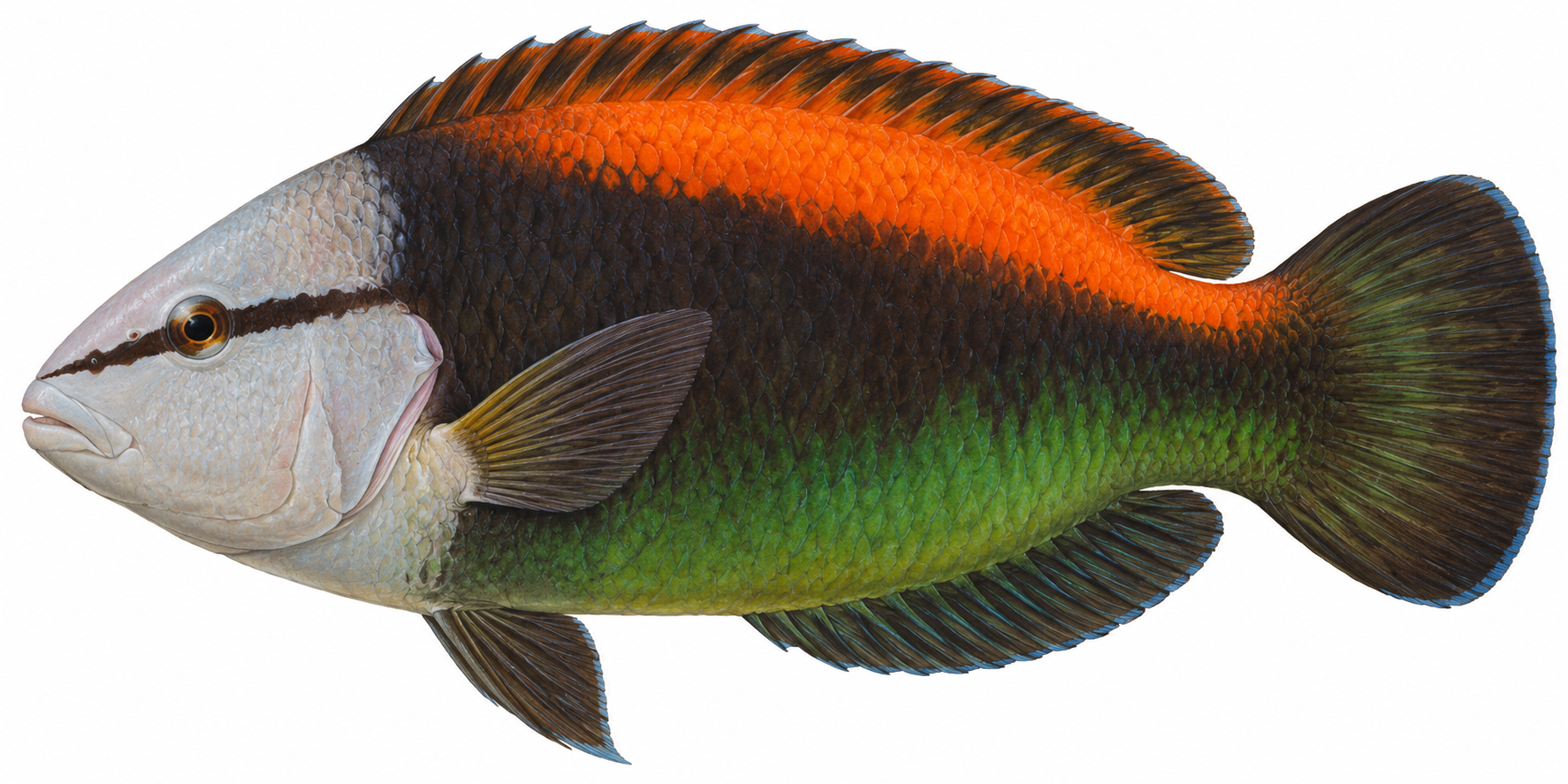
Slingjaw Wrasse
Epibulus insidiator
Raja Ampat field guide
Two things to tell your dive buddy
- The mouth is a deployable feeding tube. Its jaw apparatus folds beneath the head, then swings forward to draw prey inward.
- Biomechanical research measured protrusion reaching about 65 percent of head length. The trick depends on modified bones and ligaments working with relatively ordinary muscle activity.
How to identify it
Adult males have an orange back, pale head and narrow dark eye stripe; females may be yellow or brown.
Habitat and where to look
Tropical reef-associated habitats.
Daily habits and behavior
Its jaws unfold into a tube during a feeding strike and fold beneath the head afterward.
What is on the menu?
Prey is drawn into the extended mouth by suction.
Look-alikes and identification traps
The related Epibulus brevis has drabber males and often dark pectoral fins in females. Color alone is insufficient for a difficult sighting.
Try this observation
Wait for a natural feeding strike. Do not offer food to stage one.
Raja Ampat occurrence
Recorded in Raja Ampat; regional occurrence is not an itinerary-specific sighting promise. This guide does not imply that every site, itinerary or season offers the same chance of an encounter.
Observe, do not disturb
Keep a respectful distance, leave the animal an unobstructed route and follow your dive guide. Do not touch, feed, chase or collect wildlife. Identification does not establish permission to harvest or food safety; Florida harvest labels do not apply to this Indonesian guide.
Sources and review
Reviewed November 18, 2026.
Make your next dive happen
Dive With UsTrain With UsExplore the Raja Ampat tripShop With Us
Questions? (772) 600-8288 or info@stuartscuba.com.




