


Fish identification archive / Raja Ampat
Sixbar Angelfish
Pomacanthus sexstriatus
Raja Ampat field guide
Two things to tell your dive buddy
- Its prey includes sponges and tunicates, both animals despite their fixed position on the reef.
- Juvenile and adult habitat preferences differ, adding age to the identification puzzle.
How to identify it
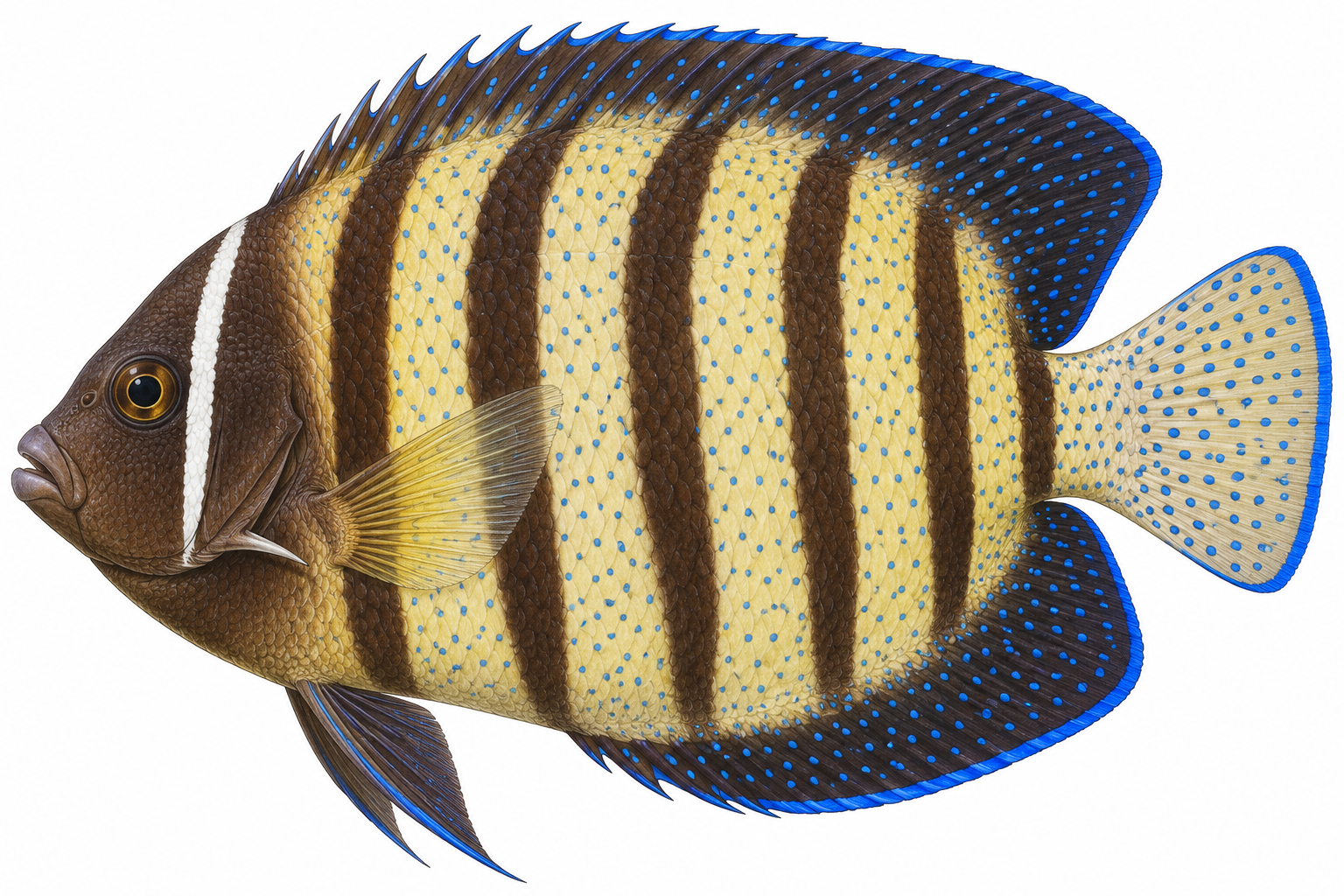
Large pale angelfish with dark vertical bars, blue spotting and a dark head crossed by a white bar behind the eye.
Habitat and where to look
Coastal reefs, lagoons and outer reef slopes; juveniles favour sheltered inner reefs.
Daily habits and behavior
Adults occur alone or in pairs in coral-rich areas.
What is on the menu?
Sponges and tunicates.
Mating and the next generation
Look-alikes and identification traps
For a striped adult, confirm the dark head, pale bar behind the eye and scattered blue spots rather than counting body bars alone.
Try this observation
Count the bars only after noting the white band behind the eye and the blue spots.
Raja Ampat occurrence
Recorded in Raja Ampat; regional occurrence does not promise a sighting on a particular dive. This guide does not imply that every site, itinerary or season offers the same chance of an encounter.
Observe, do not disturb
Keep a respectful distance, leave the animal an unobstructed route and follow your dive guide. Do not touch, feed, chase or collect wildlife. Identification does not establish permission to harvest or food safety; Florida harvest labels do not apply to this Indonesian guide.
Sources and review
Reviewed November 18, 2026.
Make your next dive happen
Dive With UsTrain With UsExplore the Raja Ampat tripShop With Us
Questions? (772) 600-8288 or info@stuartscuba.com.




