


Silvertip Shark
Carcharhinus albimarginatus
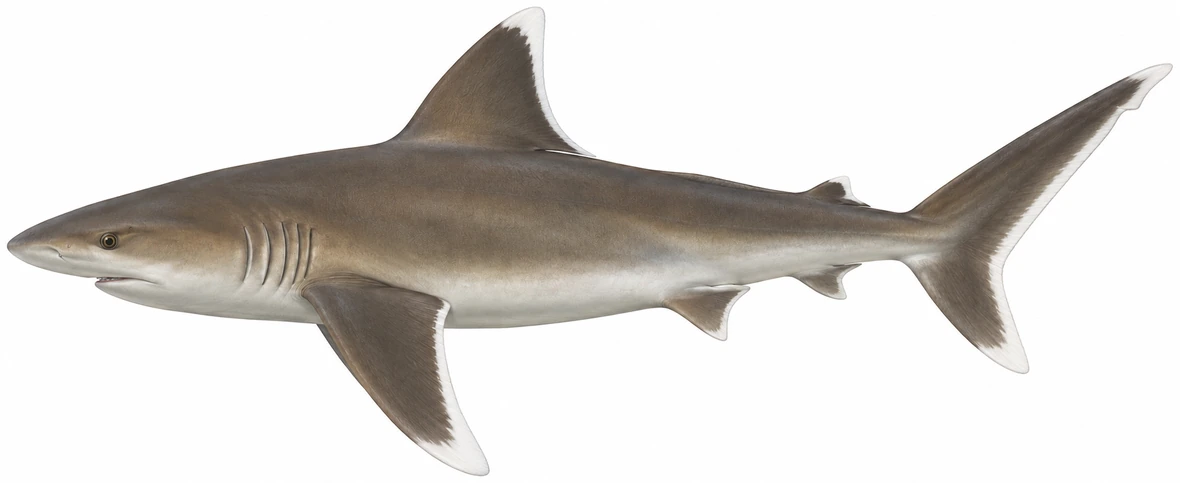
Six things worth knowing
- Its silver signature is on the pectoral fins as well as the dorsal and tail. That extra check separates it from a whitetip reef shark.
- Live-born and already two feet long. Small silvertips are born live. Reported newborns are around two feet long, and they begin life among shallow reefs.
- It can get big. Many are around six to eight feet long, with the largest documented individuals near ten feet.
- The menu spans the water column. Silvertips eat fishes from near the bottom and midwater, including wrasses and tunas, as well as squid and octopuses.
- A food thief, on occasion. Observers have seen them circle the outskirts of feeding sharks and dart in to take food.
- A ridge between the dorsal fins. A raised line runs down the back between the two dorsal fins. It’s an anatomical clue, though often hard to see at a distance.
How to identify it
A streamlined grey shark with sharply defined white tips on the dorsal, pectoral and tail fins. Look for the ridge between the dorsal fins and the large, pointed first dorsal fin; a white dorsal tip alone is not enough for identification.
Where to look
An offshore-island and reef-associated shark with a much broader depth range than ordinary scuba. Young fish use shallower water; adults range farther offshore. Treat a sighting as an opportunity, not a promised stop on a Raja itinerary.
Natural history
Eats midwater and bottom-associated fishes, other small sharks, rays and cephalopods.
Gives birth to live young nourished through a yolk-sac placenta. Published accounts describe roughly year-long gestation; do not turn southern-hemisphere breeding dates into a Raja Ampat calendar.
Look-alikes
Grey reef sharks have a dark tail margin and dark pectoral tips. Whitetip reef sharks lack the conspicuous white pectoral tips and have a blunter, more squared snout.
Build your shark ID skills
Practice reading the silhouette, fin marks, and behavior with Stuart Scuba’s SDI Shark Awareness course. Advanced Adventure can help build broader skills for reef itineraries. If an itinerary separately calls for deeper reef diving, Deep Diver covers depth planning and gas management. Neither course makes a sighting more likely or replaces the dive plan.
What to watch for underwater
If your guide identifies a cruising shark, record the pectoral-tip colour and tail margin without chasing it or leaving the dive plan.
Recorded in Raja Ampat
This species has a published Raja Ampat record. A regional record does not guarantee a sighting on a particular dive.
Sources: fishesofaustralia.net.au species reference · doi.org species reference · floridamuseum.ufl.edu species reference · Regional survey record
I saw this and want to share
Back to Raja Ampat Fish ID · Dive Raja Ampat with Stuart Scuba




