


Fish identification archive / Shrimp Eel
Shrimp Eel
Ophichthus gomesii
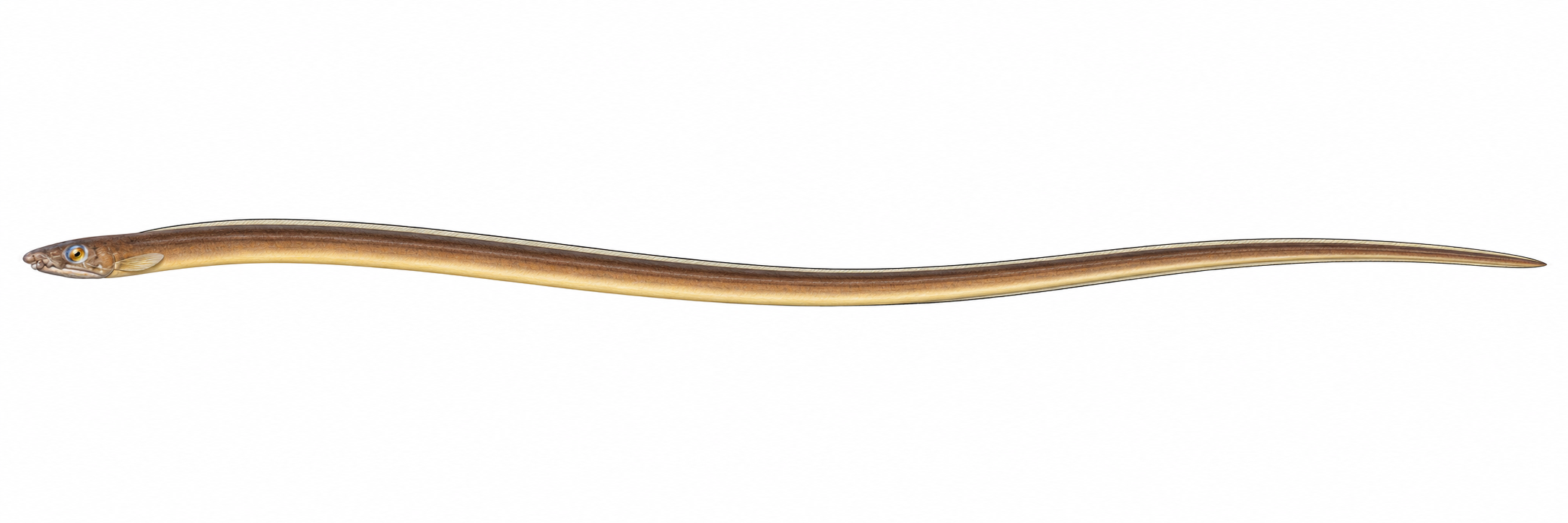
Fun facts for your next surface interval
- The tail accounts for roughly two-thirds of total length.
- Its blunt tail tip is finless, unlike the continuous tail-fin outline of many other eel-shaped fishes.
How to recognize it
A plain-colored snake eel with a broad overhanging snout, conspicuous eyes and relatively long pectoral fins. The dorsal starts over the rear third of the pectoral fin. Gray-to-black above, variably yellow or dark below; fin edges are black.
West Palm Beach occurrence
Verified in the Florida Museum Lake Worth Lagoon checklist; this establishes local occurrence, not abundance or a guaranteed sighting.
Habitat
Sand and mud, including estuaries; usually shallower than 90 m, although deeper records exist.
Behavior: watch what it does
A bottom-associated predator whose habitat can appear empty at first glance.
What it eats
Crustaceans, fishes and cephalopods; the name does not describe its entire menu.
Reproduction
Has drifting leptocephalus larvae; detailed spawning observations remain limited.
Similar animals and identification limits
Distinguish other unpatterned snake eels using dorsal-fin origin and pectoral-fin proportions, not just darkness.
A better underwater observation
If visible naturally, capture the pectoral fin and beginning of the dorsal in one frame.
Observe responsibly
Documented local presence is not a promise of a sighting or a statement of abundance. Do not chase, handle, feed or disturb wildlife. This identification guide is not permission to collect or harvest, and it does not establish food safety. Check current rules and protected-area boundaries for your exact location.
I saw this
Share the guide with your dive buddies. Review your caption before posting.
Nothing posts automatically. Sharing does not record a verified sighting.




