


Shoulder-Blade Coral
Pavona clavus · Agariciidae · Colonial coral · Galápagos Islands Fish ID
How to identify it
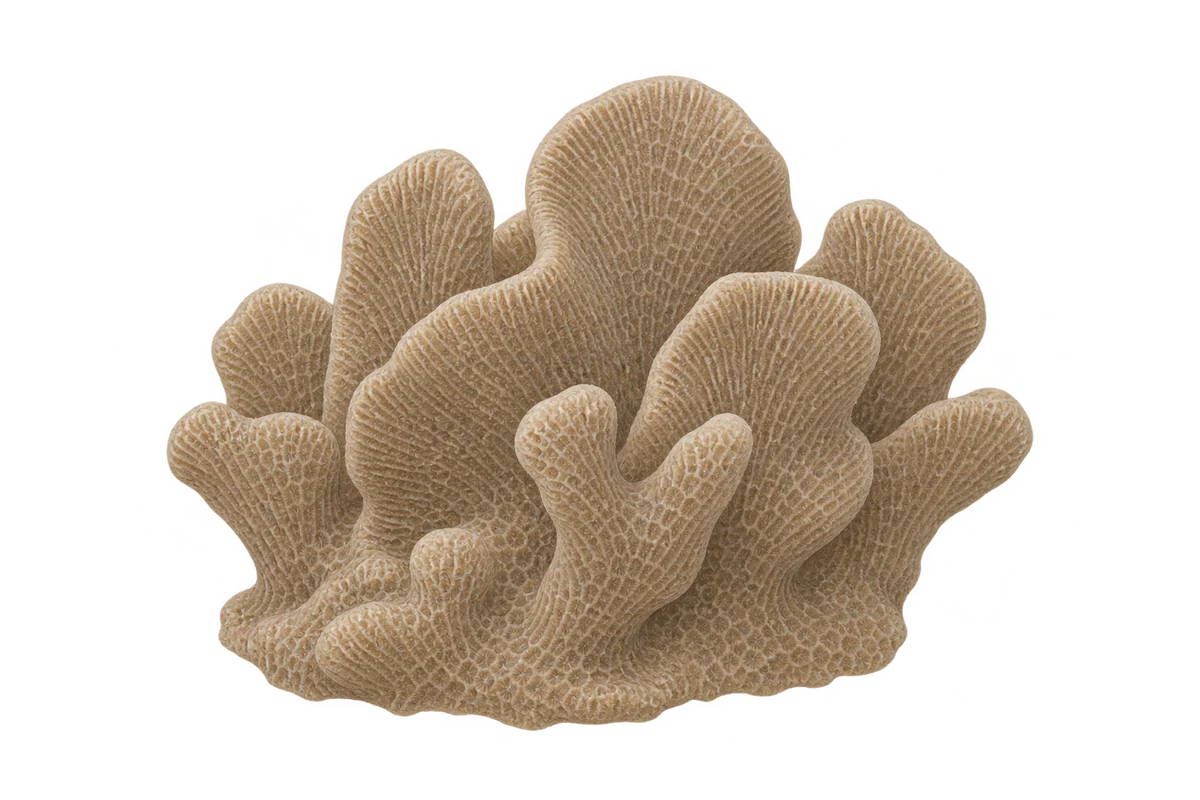
Look for thick clubs, broad blades or bulky lobes, then zoom in for the small, clearly outlined pits that house the polyps. Galápagos researchers have documented the coral on Wellington Reef and in stands at Tres Cuevitas, Floreana.
Compare with Pavona gigantea, which can also form large mounds. Use a colony photograph plus a close shot of the polyp cups. Never separate these by color alone.
Learn to observe reefs without touching
SDI Coral Conservation is the place to start if you want to learn about coral habitats and how to observe them responsibly.
Start with the colony’s outline and the pattern of its coral cups. Look from a position where you can keep your fins and camera clear of the colony.
- Keep your fins and camera clear: Advanced Buoyancy Control focuses on trim, weighting and hovering.
- Build a broader skill set: Advanced Adventure introduces several specialties, including deep diving and navigation, with opportunities to refine buoyancy.
- For deeper recreational dives already in your plans: Deep Diver focuses on planning depth and managing breathing gas. It’s not needed to identify coral on a shallow dive.
- Record the details: Underwater Photography covers lighting and still-image composition. Underwater Video covers framing and steady footage. Use either without resting gear on the reef.
Galápagos Islands records
Documented Galápagos record: Wellington Reef, Darwin Island. A record does not guarantee a sighting.
Fun facts
- One colony may grow as blunt clubs, upright columns or broad blades, depending in part on its setting.
- The columns can divide, but separate columns do not fuse into a single slab.
- The individual polyp cups have relatively thick, well-defined walls.
- Two distinct sizes of skeletal ridges can be seen in close views of the cups.
- Divers recorded it on an 8–10 m ridge system off Marchena as well as on Wellington Reef.
- At Tres Cuevitas the field team described an early-stage coral framework with most colonies still separate.




