


Fish identification archive / Raja Ampat
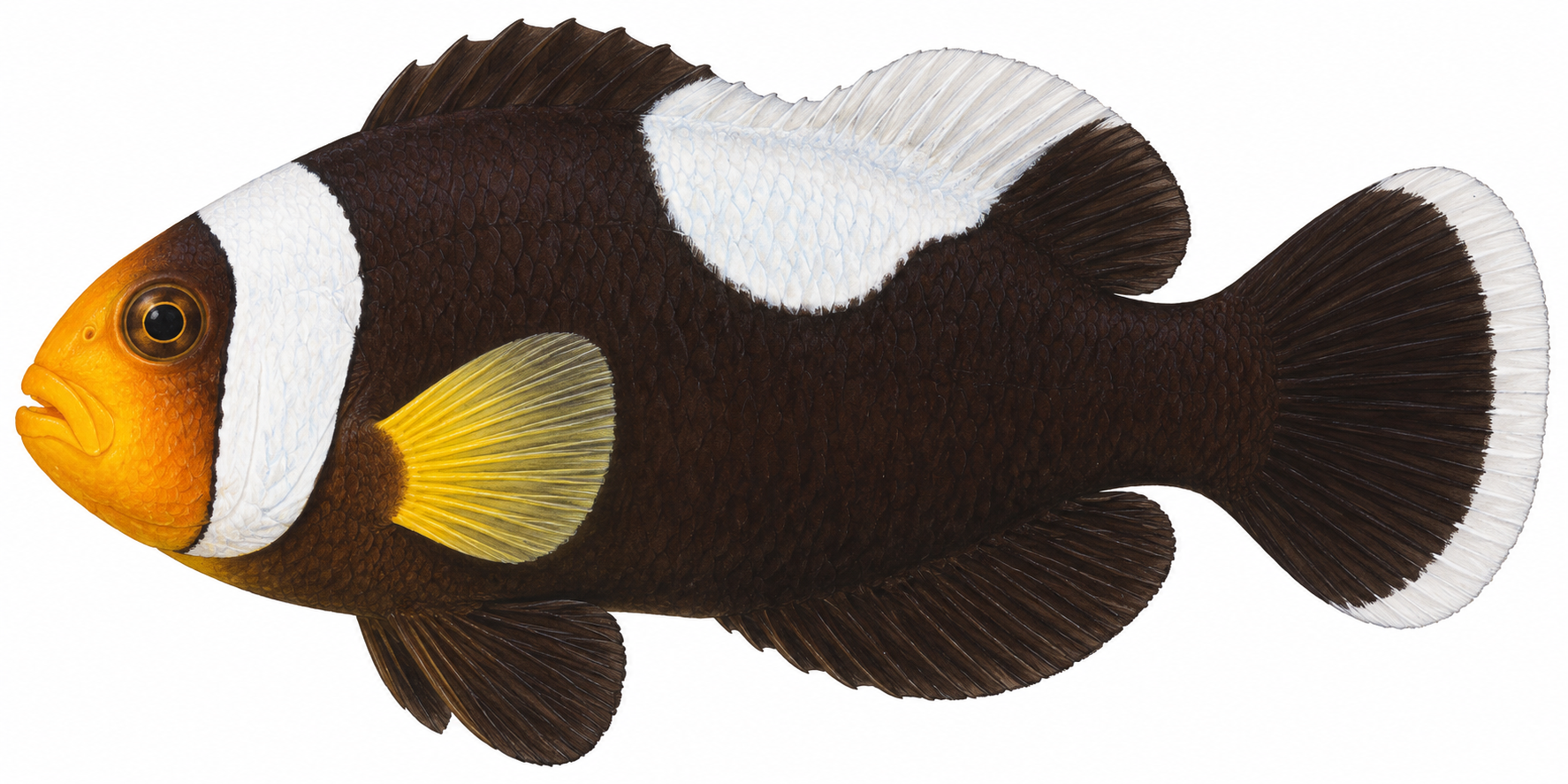
Saddleback Anemonefish
Amphiprion polymnus
Raja Ampat field guide
Two things to tell your dive buddy
- Its silty-water habitat is a reminder that clear coral gardens are only one part of reef biodiversity.
- Egg-fanning near a nest is parental care, not aimless hovering.
How to identify it
Orange-brown or dark anemonefish with a broad white head bar, white saddle across the back and soft dorsal fin, and pale tail margin.
Habitat and where to look
Silty lagoons and harbours, with host anemones on or near sandy bottoms.
Daily habits and behavior
Associated closely with its host; breeding fish form pairs.
What is on the menu?
Zooplankton, small bottom-dwelling invertebrates and algae.
Mating and the next generation
Can change from male to female; males guard and aerate eggs after spawning.
Look-alikes and identification traps
Clark’s anemonefish has a distinct tail-base bar; inspect the saddle, body bands and pale tail margin together.
Try this observation
Keep your fins well above the sediment and observe from outside the anemone's immediate space.
Raja Ampat occurrence
Recorded in Raja Ampat; regional occurrence does not promise a sighting on a particular dive. This guide does not imply that every site, itinerary or season offers the same chance of an encounter.
Observe, do not disturb
Keep a respectful distance, leave the animal an unobstructed route and follow your dive guide. Do not touch, feed, chase or collect wildlife. Identification does not establish permission to harvest or food safety; Florida harvest labels do not apply to this Indonesian guide.
Sources and review
Reviewed November 18, 2026.
Make your next dive happen
Dive With UsTrain With UsExplore the Raja Ampat tripShop With Us
Questions? (772) 600-8288 or info@stuartscuba.com.




