


← Back to South Florida Fish ID
Rock Sea Bass
Centropristis philadelphica · Serranidae
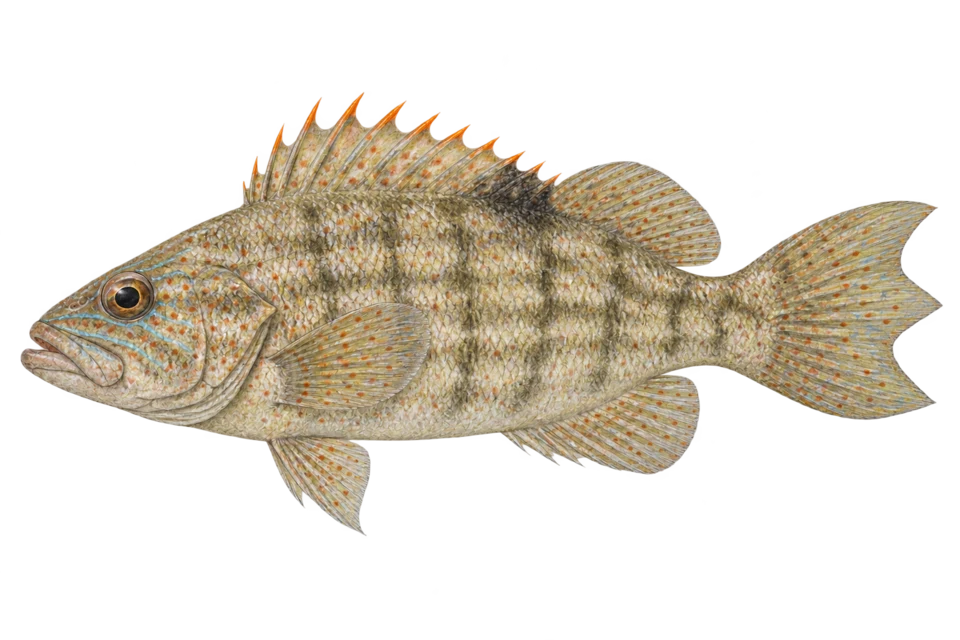
The tiny central point on the tail can turn an ordinary-looking sea bass into an easy ID.
One fun thing to know
The dark inside of the gill chamber can show through its gill cover.
How to identify it
- Pale olive-gray body with faint vertical blotches in a grid
- Black saddle below the rear half of the spiny dorsal, extending onto the fin
- W-shaped tail edge, rusty head spots and blue lines in front of the eye
Where to look
Mud, sand and rocky bottoms. REEF survey records include occasional observations at Blue Heron Bridge.
Size
11.8 in (30 cm). reported maximum; measurement convention not specified.
What it eats
Worms, mobile crustaceans, small mollusks and fish.
Behavior
Look just above the bottom and use a side view to get both dorsal and tail marks.
Reproduction
Eggs and larvae occur in the water column; local spawning timing is not specified.
Look-alikes
Black Sea Bass is typically darker; the Rock Sea Bass has the conspicuous dark saddle and a three-pointed tail margin.
Can you collect or eat it?
Enjoy watching it and leave it in the water. This guide does not verify species-specific harvest or food-safety rules. Check the current rules for the exact location, species and method before taking anything, and never collect where prohibited.
Check Florida’s current saltwater rules
Field references
- Smithsonian Shorefishes reference 1
- REEF field survey reference 2
- Florida Fish and Wildlife Conservation Commission reference 3
I saw this and want to share
Make your next dive happen
Dive with Stuart Scuba · Train with us · Travel with us · Shop with us



