


Ringeye Pygmygoby
Trimma benjamini · Gobiidae · Philippines Fish ID
How to spot it
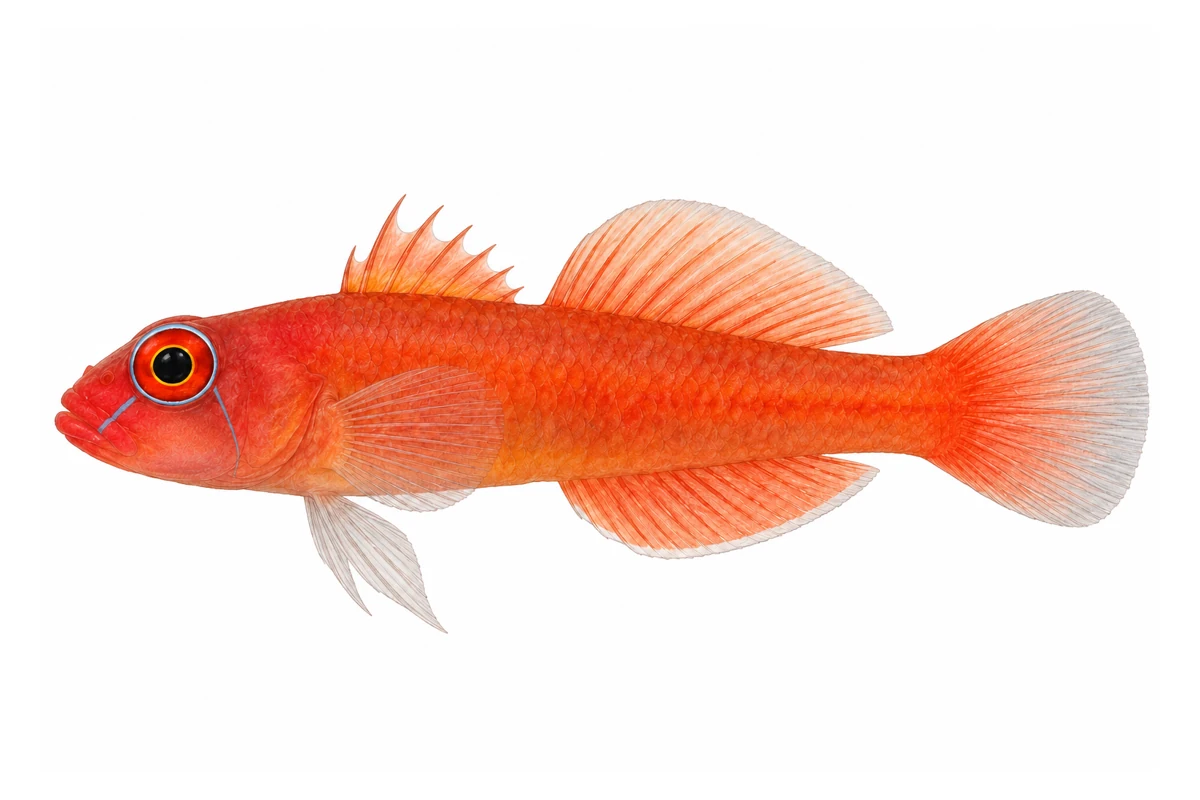
On this tiny reddish-orange goby, look for a thin blue-white line tracing the eye, a pale inner ring around the pupil and two fine blue-gray strokes descending toward the cheek and jaw. A red fish under a ledge is not enough to make the identification. Look closely at the markings around the eye.
Pause at a shaded reef ledge or drop-off and scan the undersides. Ringeye Pygmygobies feed on plankton and sometimes hover vertically or upside down. Keep clear of the reef while watching.
From open water to the reef
In one study in Kimbe Bay, Papua New Guinea, the researchers estimated that larvae spent 26 to 40 days in open water before settling. The largest fish in that study measured just 24 millimeters without the tail fin. The illustration above shows an adult, not a larva or juvenile.
Philippines records
The specimen used to describe the species was collected at Tonga Point off Siquijor. Museum records also document it near Negros and off Mactan, Cebu. These records do not establish a sighting at a specific resort reef.
The scientific name honors Peter Benjamin, who provided color film and processing for the researcher's fieldwork.
Browse the Philippines Fish ID guide · Explore the Atlantis Philippines trip · See Stuart Scuba dive trips




