


Fish identification archive / Raja Ampat
Reef Manta Ray
Mobula alfredi
Raja Ampat field guide
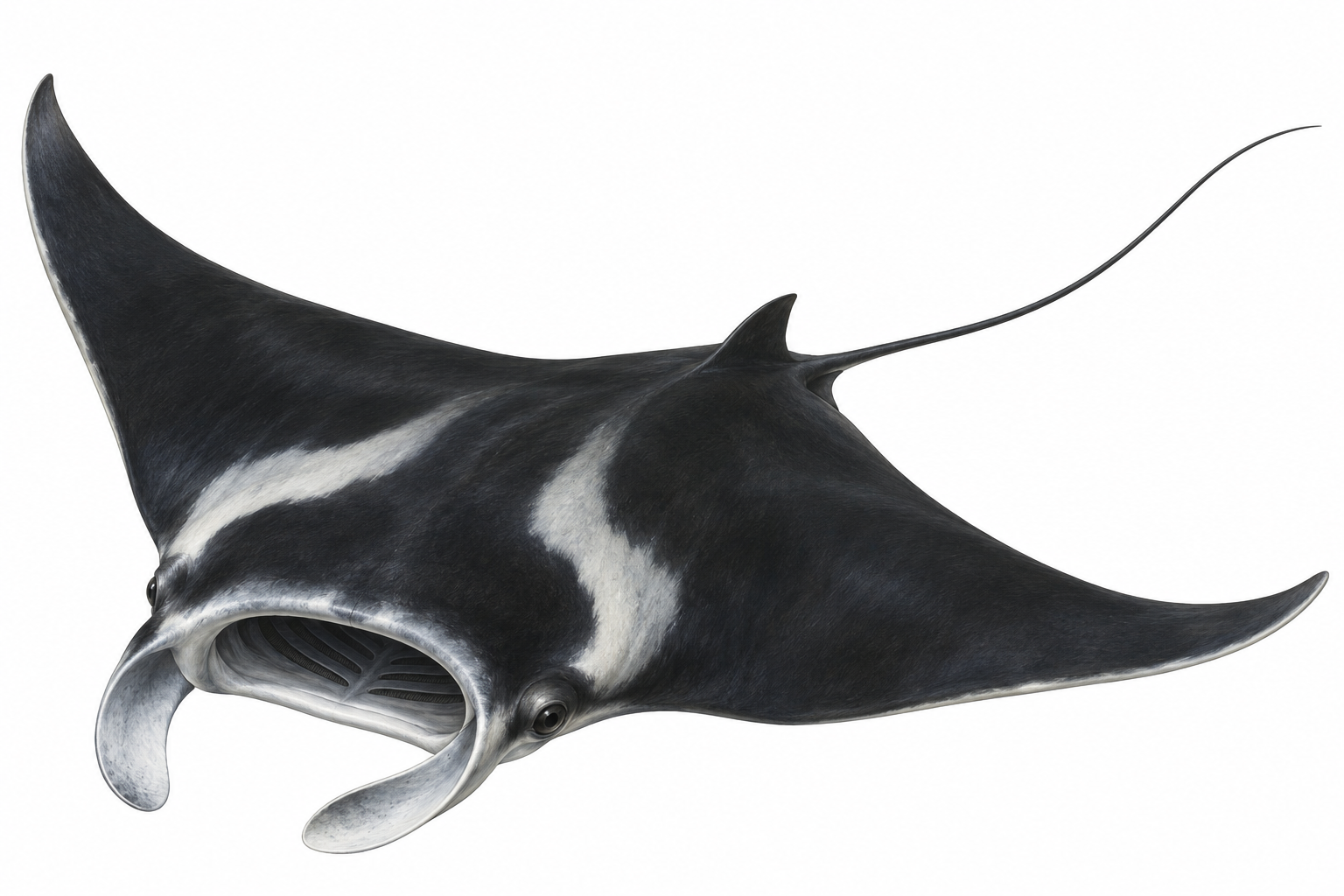
Two things to tell your dive buddy
- A manta carries a natural identity card on its belly. Researchers use the individual pattern of underside spots to recognize the same animal across photographs and encounters.
- The rolled head fins are feeding equipment. Unfurled cephalic lobes help guide plankton-rich water toward the mouth; at cleaning stations, the manta instead benefits from small fishes removing material from its body.
How to identify it
Broad winglike disc, forward-facing mouth and paired cephalic lobes; underside spot patterns help identify individuals.
Habitat and where to look
Reefs, atolls and island groups; Raja Ampat research documents movements among sites.
Daily habits and behavior
May feed, travel or visit cleaning stations. Remain clear of its chosen path.
What is on the menu?
Primarily plankton, directed into the mouth by the unfurled cephalic lobes.
Mating and the next generation
Females give birth to live young.
Look-alikes and identification traps
Oceanic mantas require careful comparison of shoulder and underside markings. Do not identify species from apparent size alone, and do not confuse this species with the Atlantic manta.
Try this observation
Observe whether the cephalic lobes are rolled or unfurled, and whether the ray is feeding, travelling or visiting a cleaning station. Remain outside its route and follow the local guide’s positioning.
Raja Ampat occurrence
Recorded in Raja Ampat; regional occurrence does not guarantee an encounter on any particular dive. This guide does not imply that every site, itinerary or season offers the same chance of an encounter.
Observe, do not disturb
Keep a respectful distance, leave the animal an unobstructed route and follow your dive guide. Do not touch, feed, chase or collect wildlife. Identification does not establish permission to harvest or food safety; Florida harvest labels do not apply to this Indonesian guide.
Sources and review
Reviewed November 18, 2026.
Make your next dive happen
Dive With UsTrain With UsExplore the Raja Ampat tripShop With Us
Questions? (772) 600-8288 or info@stuartscuba.com.




