


Fish identification archive / Raja Ampat
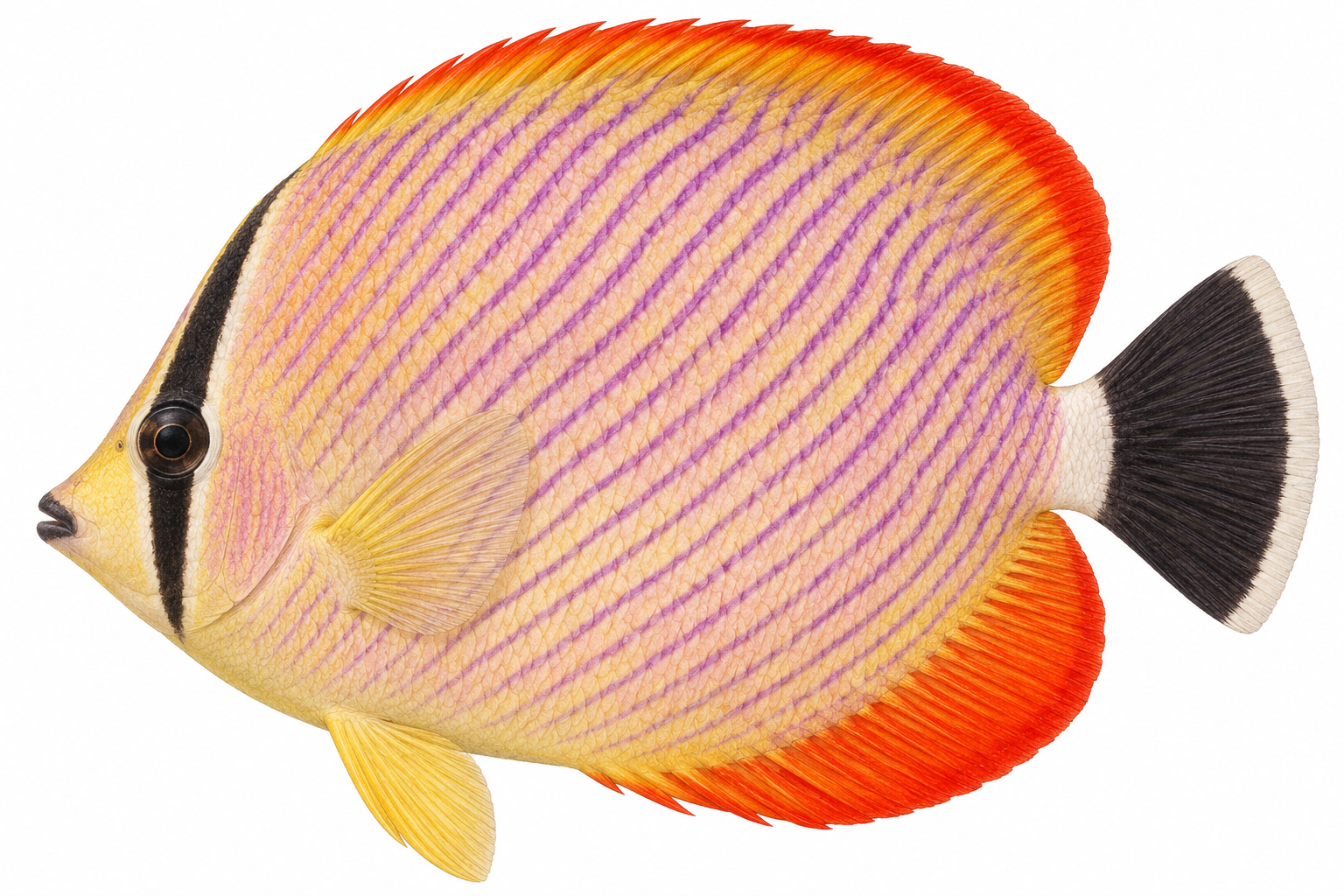
Redfin Butterflyfish
Chaetodon lunulatus
Raja Ampat field guide
Two things to tell your dive buddy
- This is an obligate coral feeder: live coral polyps are its food, not simply scenery around it.
- Young fish settle into living branching coral. The reef supplies both nursery structure and, later, the feeding resource that defines its ecology.
How to identify it
Oval pinkish-yellow fish with fine purplish diagonal stripes, black eye band, white tail base and reddish outer anal fin.
Habitat and where to look
Coral-rich lagoons and seaward reefs; juveniles settle among living branching corals.
Daily habits and behavior
A reef-feeding specialist. Repeated pecks at coral are feeding behavior, not merely incidental contact.
What is on the menu?
Live coral polyps from many coral species. It is an obligate corallivore, meaning coral is essential food.
Mating and the next generation
Butterflyfish family context: eggs are released into open water, and the larvae spend an early drifting stage away from the adult reef habitat. This is not a Raja Ampat spawning-calendar prediction.
Look-alikes and identification traps
The similar Chaetodon trifasciatus has a more bluish rear body and yellow tail base. Look for the white tail base and reddish outer anal fin of C. lunulatus. Older sources may combine the two names.
Try this observation
Watch repeated pecks at live coral and leave enough distance for normal feeding to continue.
Raja Ampat occurrence
Recorded in Raja Ampat; regional occurrence does not guarantee an encounter on a particular dive. This guide does not imply that every site, itinerary or season offers the same chance of an encounter.
Observe, do not disturb
Keep a respectful distance, leave the animal an unobstructed route and follow your dive guide. Do not touch, feed, chase or collect wildlife. Identification does not establish permission to harvest or food safety; Florida harvest labels do not apply to this Indonesian guide.
Sources and review
Reviewed November 18, 2026.
Check the reddish rear edge of the lower fin
Thin oblique lines cross the flanks of this butterflyfish. Look for the reddish outer portion of the anal fin and the pale area where the tail attaches when you have a clear side view.
Explore taking a clean side profile while keeping a comfortable distance in SDI Underwater Photographer.
Make your next dive happen
Dive With UsTrain With UsExplore the Raja Ampat tripShop With Us
Questions? (772) 600-8288 or info@stuartscuba.com.




