


Fish identification archive / Raja Ampat
Raja Ampat Epaulette Shark
Hemiscyllium freycineti
Raja Ampat field guide
Six things worth knowing
- Four fins do the walking. It can move over the bottom on its pectoral and pelvic fins. It can swim too.
- A Raja Ampat native. This species is native to Raja Ampat. Related walking sharks occur elsewhere, so a walk alone does not identify this species.
- Seagrass is part of the story. A Dampier Strait survey recorded it in seagrass, on reef, and over rubble. Seagrass accounted for the most sightings in that survey, whose search effort varied by site.
- Usually seen sitting still in one study. The shark can walk, but most sightings in that night survey were of individuals resting or staying still on the bottom.
- Spots do double duty. Researchers matched individuals using the spot patterns near the gills. Resightings with implanted tags backed up those matches during the study.
- Neighbors that turn up again. Some photographed and tagged sharks were seen again more than a year later. All recorded resightings in that study were at the same sites as before.
How to identify it
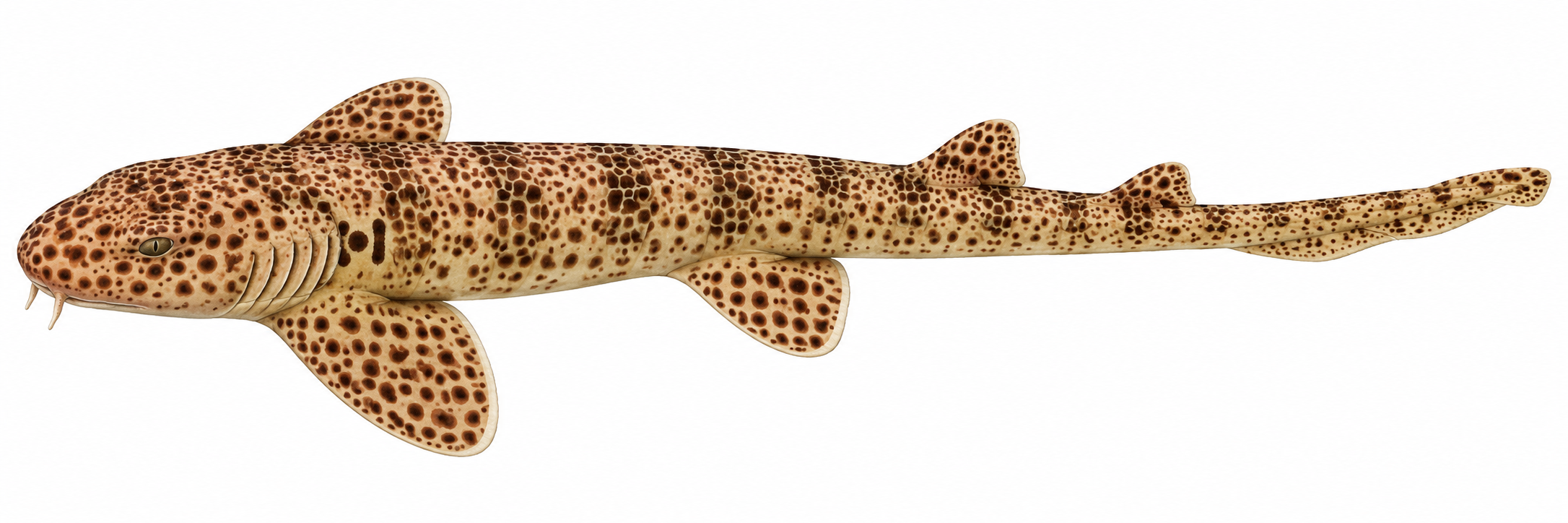
Slender bottom-dwelling shark with dense brown spots, many arranged in polygon-like clusters; the dark shoulder marking is fragmented rather than a single clean round eyespot.
Habitat and where to look
Shallow coastal mosaics of coral, seagrass and mangroves in Raja Ampat.
Daily habits and behavior
Can walk over the bottom on its paired fins as well as swim.
What is on the menu?
Bottom-dwelling prey; detailed species-specific diet composition is not established here.
Mating and the next generation
Egg-laying. A recent Dampier Strait study documented females carrying egg cases.
Look-alikes and identification traps
Other walking sharks have very restricted ranges and similar outlines. Match the spot pattern and locality; do not substitute the Australian epaulette shark.
Try this observation
On an operator-led night dive, watch how the pectoral and pelvic fins move relative to the body. Stay within the dive plan and never handle or strand the animal to demonstrate its gait.
Raja Ampat occurrence
Recorded in Raja Ampat; regional occurrence does not guarantee an encounter on any particular dive. This guide does not imply that every site, itinerary or season offers the same chance of an encounter.
Observe, do not disturb
Keep a respectful distance, leave the animal an unobstructed route and follow your dive guide. Do not touch, feed, chase or collect wildlife. Identification does not establish permission to harvest or food safety; Florida harvest labels do not apply to this Indonesian guide.
Build your shark ID skills
Practice reading the silhouette, fin marks, and behavior with Stuart Scuba’s SDI Shark Awareness course. Advanced Adventure is a way to develop broader reef skills, but looking for a shallow-water walking shark is not a reason to dive deeper.
Sources and review
Reviewed November 18, 2026.
Make your next dive happen
Dive With UsTrain With UsExplore the Raja Ampat tripShop With Us
Questions? (772) 600-8288 or info@stuartscuba.com.




