


Puffcheek Blenny
Gobioclinus bucciferus · Labrisomidae
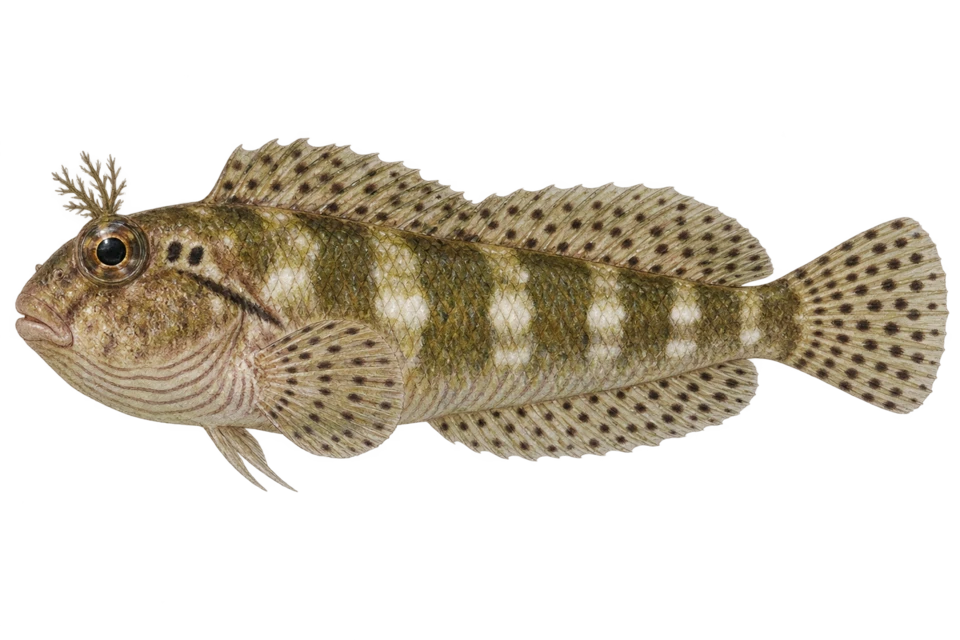
Check just behind the eye for two little dark marks and a line angled down and back.
One fun thing to know
The Florida Museum lagoon checklist uses the older name Labrisomus bucciferus.
How to identify it
- Four or five brown-green bars with pale spots in between.
- Two dark dots behind the eye plus a slanted dark line.
- No gill-cover eyespot. Males may have a red head and barred fins; female fins can be heavily spotted.
Where to look
Shallow reef, rubble, rocky ledges, seagrass and tide pools to about 49 ft (15 m).
Local record: This fish has been recorded in REEF surveys at Blue Heron Bridge (Phil Foster Park), Riviera Beach. A local record is not a guarantee of a sighting.
Size: Up to about 3.5 in (9 cm) in the cited account. This is a published upper size, not what to expect on every dive.
What it eats
Small bottom invertebrates and small fish.
How it behaves
Scan the edges of algae and rubble without stirring its shelter.
Reproduction
Smithsonian lists bottom-associated eggs and drifting larvae; seasonality is unverified.
Look-alikes
Longfin Blenny normally has more body bars. Check the two little dots behind the Puffcheek’s eye.
Can you collect or eat it?
Enjoy watching it and leave it in the water. This guide does not verify species-specific harvest or food-safety rules. Check the current rules for the exact place, species and method before taking any fish.
Check Florida’s current saltwater rules
Field references
- Smithsonian Shorefishes species account
- REEF Blue Heron Bridge survey report
- Florida Museum Lake Worth Lagoon checklist
I saw this and want to share
Make your next dive happen
Dive with Stuart Scuba · Train with us · Travel with us · Shop with us



