


Fish identification archive / Raja Ampat
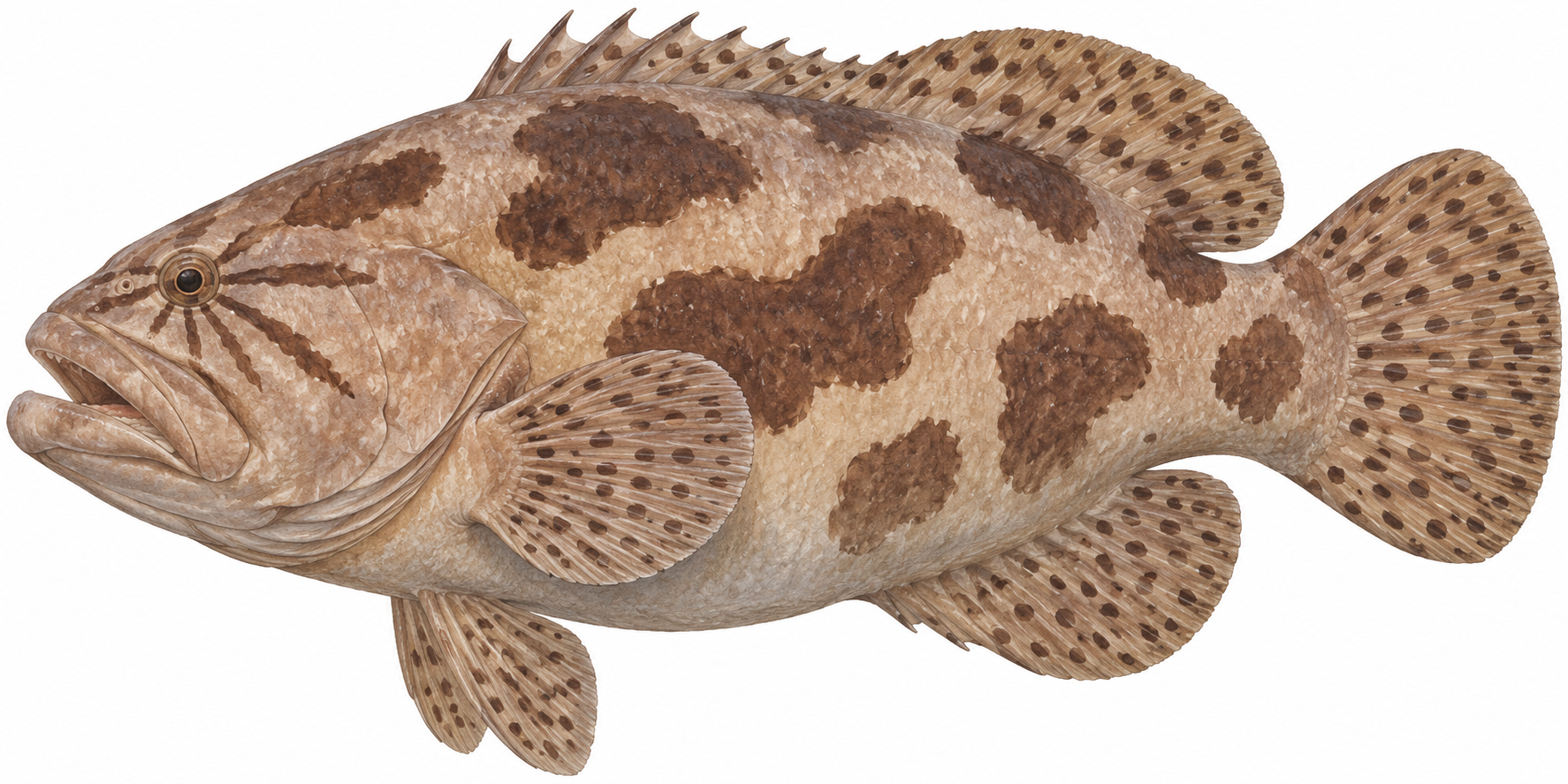
Potato Grouper
Epinephelus tukula
Raja Ampat field guide
Two things to tell your dive buddy
- This grouper can reach about two metres: familiar reef-fish proportions on a much larger scale.
- Individuals can become bold around divers where feeding has conditioned their behaviour.
How to identify it
Large widely spaced dark blotches on a pale robust body, with dark streaks from the eyes.
Habitat and where to look
Coral reefs; juveniles also occur in tide pools.
Daily habits and behavior
Large individuals can be inquisitive, especially where feeding has altered behaviour.
What is on the menu?
Reef fishes and crustaceans such as crabs and lobsters.
Mating and the next generation
Capable of changing sex; no Raja Ampat spawning calendar is asserted.
Look-alikes and identification traps
Other large groupers may look similar: confirm widely spaced large blotches and radiating eye streaks.
Try this observation
Watch its natural route; never offer food or solicit an approach.
Raja Ampat occurrence
Recorded in Raja Ampat; regional occurrence does not guarantee a sighting. This guide does not imply that every site, itinerary or season offers the same chance of an encounter.
Observe, do not disturb
Keep a respectful distance, leave the animal an unobstructed route and follow your dive guide. Do not touch, feed, chase or collect wildlife. Identification does not establish permission to harvest or food safety; Florida harvest labels do not apply to this Indonesian guide.
Sources and review
Reviewed November 18, 2026.
Make your next dive happen
Dive With UsTrain With UsExplore the Raja Ampat tripShop With Us
Questions? (772) 600-8288 or info@stuartscuba.com.




