


Branched Finger Coral
Porites furcata · Poritidae · Stony coral · Cayman Islands Fish ID
How to identify it
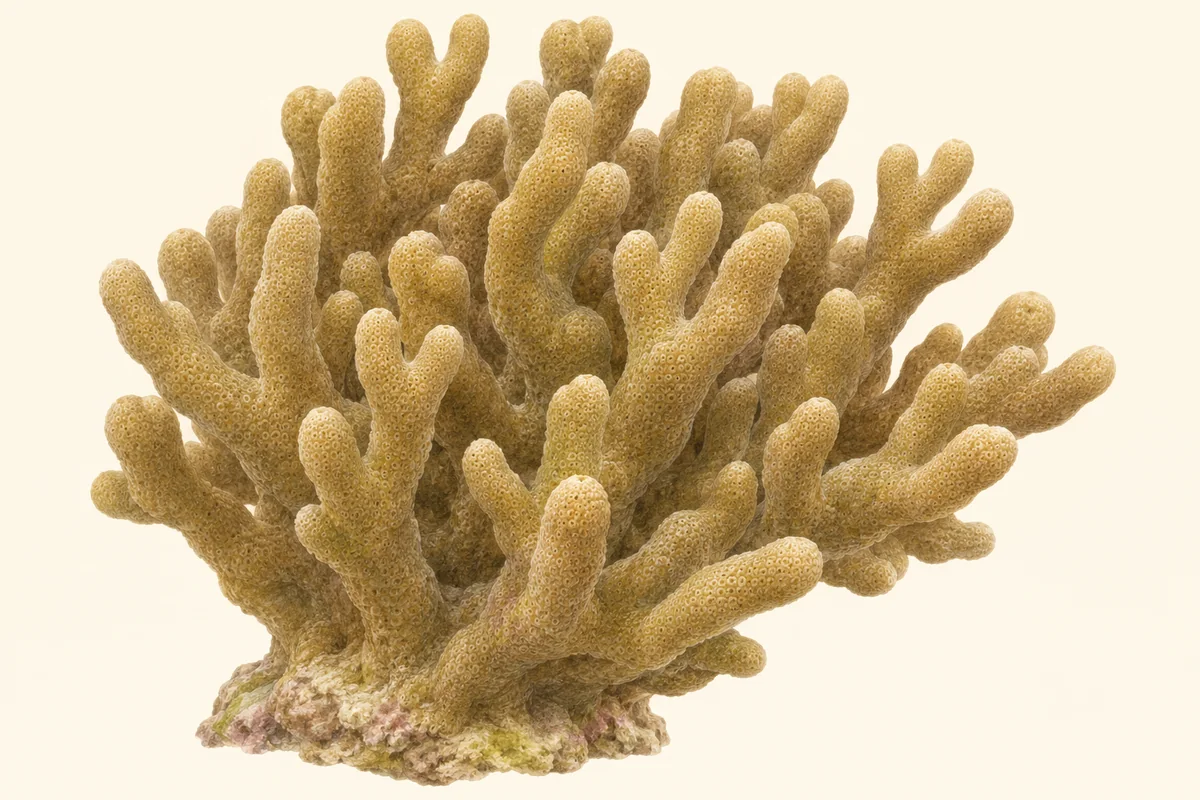
Branched finger coral makes clusters of rounded, often forked fingers. Its branches sit between the slender fingers of thin finger coral and the stout clubs of clubtip finger coral. Look at several branches, not one tip.
Thin finger coral tends to have more delicate, open branches; clubtip finger coral usually has broader, club-shaped stems. Intermediate-looking colonies may remain uncertain.
Learn to observe reefs without touching
SDI Coral Conservation is the place to start if you want to learn about coral habitats and how to observe them responsibly.
Start with the colony’s outline and the pattern of its coral cups. Look from a position where you can keep your fins and camera clear of the colony.
- Keep your fins and camera clear: Advanced Buoyancy Control focuses on trim, weighting and hovering.
- Build a broader skill set: Advanced Adventure introduces several specialties, including deep diving and navigation, with opportunities to refine buoyancy.
- For deeper recreational dives already in your plans: Deep Diver focuses on planning depth and managing breathing gas. It’s not needed to identify coral on a shallow dive.
- Record the details: Underwater Photography covers lighting and still-image composition. Underwater Video covers framing and steady footage. Use either without resting gear on the reef.
Cayman Islands records
Historical reef transects recorded it on Grand Cayman, Little Cayman and Cayman Brac.
Fun facts
- The branches are nearer finger-width than the thick arms of a big staghorn coral.
- Adjacent branches can form tightly packed patches.
- Branch tips usually round off rather than ending in a prominent central growth cup.
- The species has many tiny round cups across each branch.
- The coral can have a dead base beneath its living upper branches.
See more on your next dive
Frame several tips in the same photograph so you can compare proportions back on the boat.




