


Cactus Coral
Pavona cactus · Agariciidae · Leafy coral · Palau Fish ID
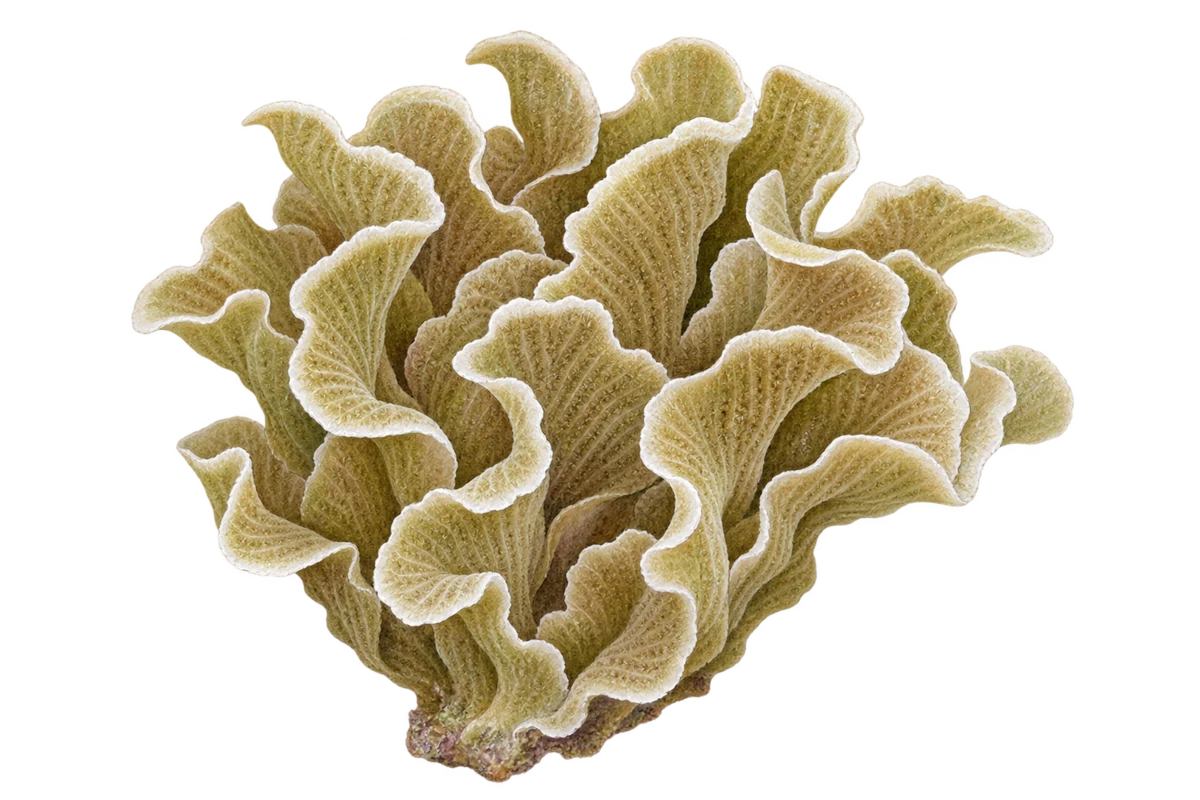
Picture a cluster of thin, wavy leaves growing upward. The edges can look pale against the rest of this hard coral. Its name is about its shape, not its relationship to a cactus.
How to recognize it
Look for upright, wavy blades with tiny shallow cups on both faces. Some blades join near the base. The fine rows of cups usually follow the edge of the blade instead of pointing straight up.
Where to look in Palau
Collectors recorded this species in Palau. On an appropriate dive, look for leafy colonies in protected lagoons and along the upper slope of reefs rather than counting on any one site.
Look-alikes
Several Pavona species grow upright fronds. Close-ups of the cup pattern and a picture of the entire colony are more useful than a snapshot of its green or brown color. Don’t break or move a blade for a better angle.
Try this on your next dive
Pick any blade you can see from both sides without changing your position. Seeing how its thin edge turns gives you a better sense of the coral’s shape. For more practice observing reef habitats without touching the coral, start with SDI Coral Conservation.
Good skills for reef observation
Advanced Buoyancy Control helps you keep your fins clear. Underwater Photography and Underwater Video help record the details. Advanced Adventure lets you try several dive specialties. Deep Diver is for already-planned deeper recreational dives, not a requirement for observing coral.
Six things to notice
- Coral animals live on both sides of each frond.
- The blades may join together as the colony grows.
- The cups are very shallow compared with the thickness of many hard corals.
- A recent study of type skeletons measured the widest part of its tiny cups at under 2 millimeters.
- Pale margins can stand out on both green-brown and tan colonies.
- In some sheltered localities outside Palau, leafy growth has been documented across several yards.
Keep looking through Palau Fish ID or explore our international group dive trips.




