


Panama Graysby
Cephalopholis panamensis · Epinephelidae · Grouper · Galápagos Islands Fish ID
How to identify it
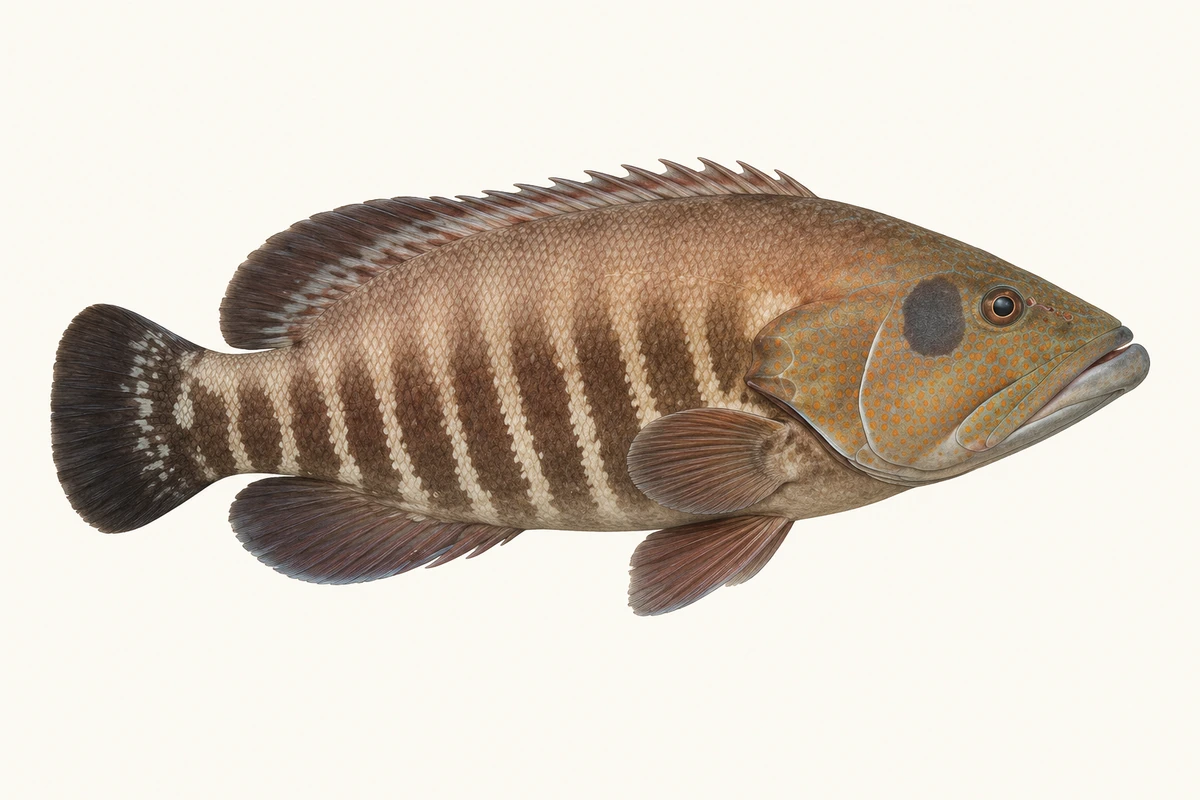
The dark patch just behind the eye is a good place to start. On a broadside adult look for around nine narrow bars across the body and a rounded tail.
Unlike the Pacific Creolefish, which has a deeply notched tail and a slimmer open-water profile, the Panama graysby is sturdier and has a rounded tail. The Caribbean graysby is a different species.
Galápagos Islands records
Divers recorded it at Enderby off Floreana in the Galápagos. That is a documented sighting, not a promise of an encounter.
Fun facts
- Adults can show around nine narrow bars across the full depth of the body.
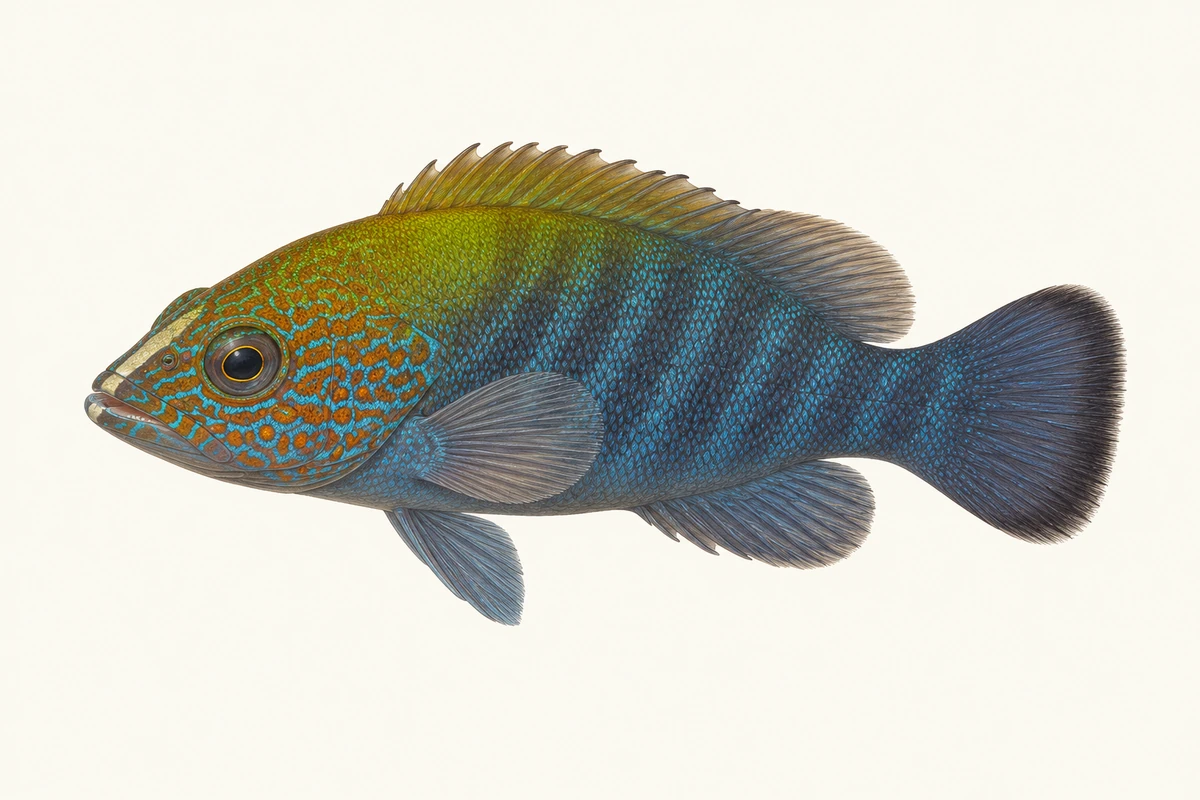
- A dark patch sits behind the eye; the head may also carry finer blue and orange marks.
- The tail ends in a rounded edge rather than a deep fork.
- Small juveniles can be blue-gray, with green on the nape and front of the back.
- This grouper is associated with rocky shores and reefs.
- Recorded prey includes small fish, crustaceans and members of the squid and octopus group.
Explore and learn
Look for the mark behind the eye and body bars together. Juveniles look different, so a blue-gray small fish should not be judged by adult bars alone.
Practice identifying small groupers by face, bars and tail · Explore Stuart Scuba’s worldwide group dive trips




