


Palau Finger Coral
Palauastrea ramosa · Astrocoeniidae · Branching coral · Palau Fish ID
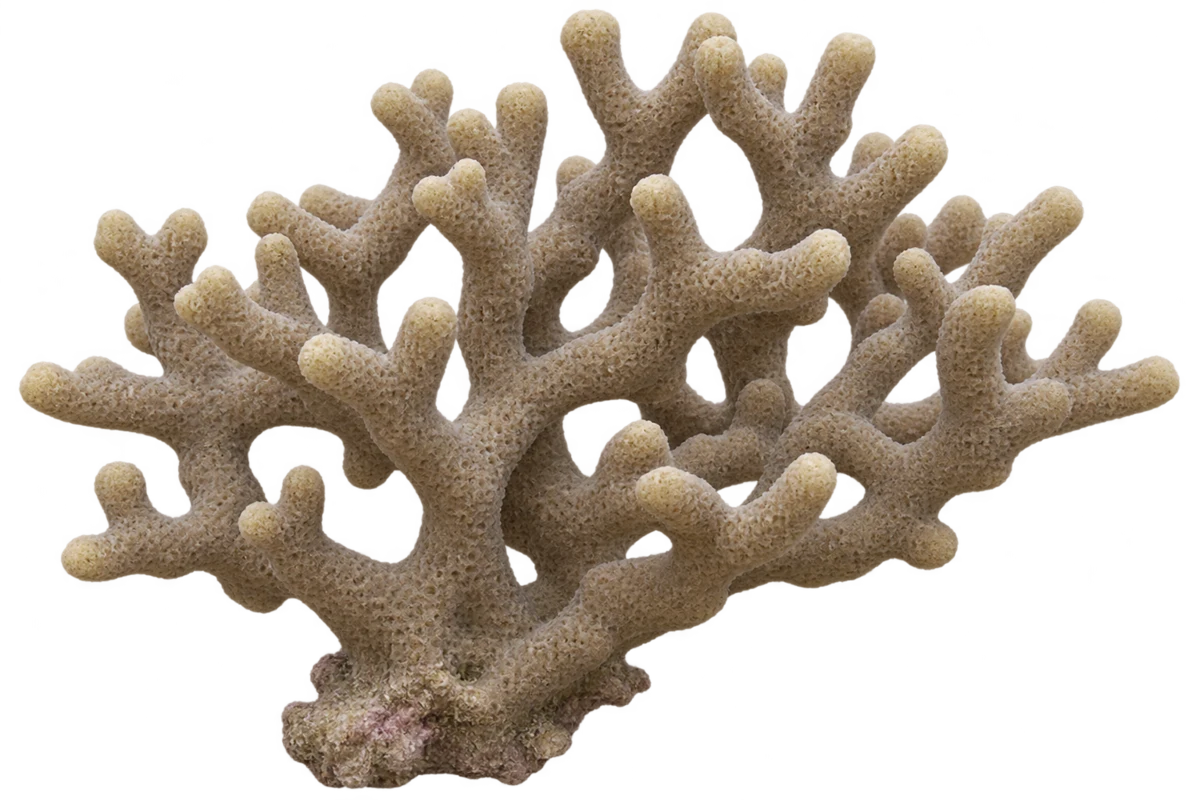
You could mistake this colony for a handful of short, rounded fingers. That’s the easy part to see. What separates it from look-alikes is much smaller.
How to recognize it
Look at the nearly cylindrical branches and blunt, rounded ends. Some branches fork and some grow together. Small, distinct, closely spaced cups cover the branches; the silhouette alone isn’t enough for a firm ID.
Where to look in Palau
The coral was originally described from Nikko Bay in Palau. It’s known from other regions too. If you see this shape on a sheltered reef slope, treat it as a clue to compare later, not an instant identification.
Look-alikes
The finger growth of Porites cylindrica can look nearly identical at a glance. Compare the tiny cups with an appropriate magnified view rather than relying on color or branch size.
Try this on your next dive
Frame the full colony first. A second photo from the same comfortable position can record the tiny cups. If they don’t show in the picture, leave the ID at “branching coral.” For more practice observing reef habitats without touching the coral, start with SDI Coral Conservation.
Good skills for reef observation
Advanced Buoyancy Control helps you keep your fins clear. Underwater Photography and Underwater Video help record the details. Advanced Adventure lets you try several dive specialties. Deep Diver is for already-planned deeper recreational dives, not a requirement for observing coral.
Six things to notice
- The original scientific description dates to 1941.
- Nikko Bay is the locality the name was first based on.
- Despite its name, this coral isn’t found only in Palau.
- The short, blunt branch tips don’t taper like pointed twigs.
- Some branches join each other instead of staying separate.
- A close enough view shows separate little cups with distinct walls between them.
Keep looking through Palau Fish ID or explore our international group dive trips.




