


Pacific Creolefish
Cephalopholis colonus · Epinephelidae · Grouper · Galápagos Islands Fish ID
How to identify it
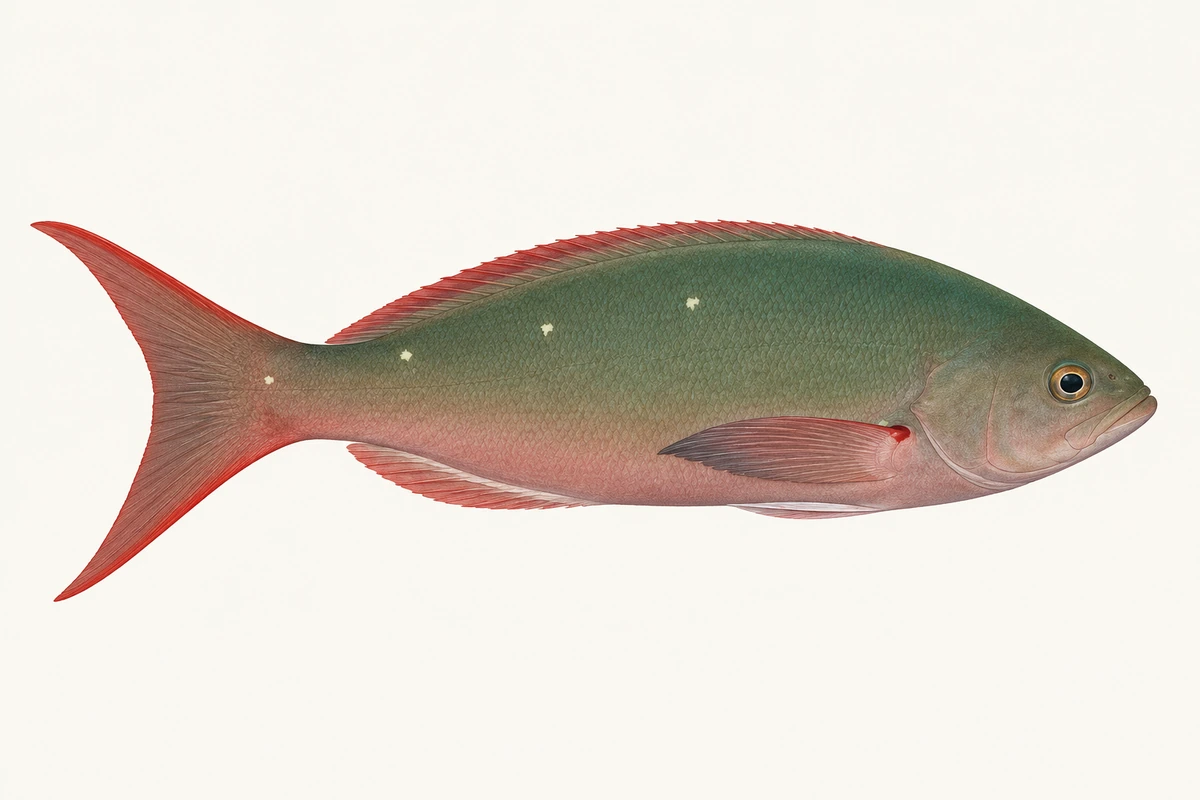
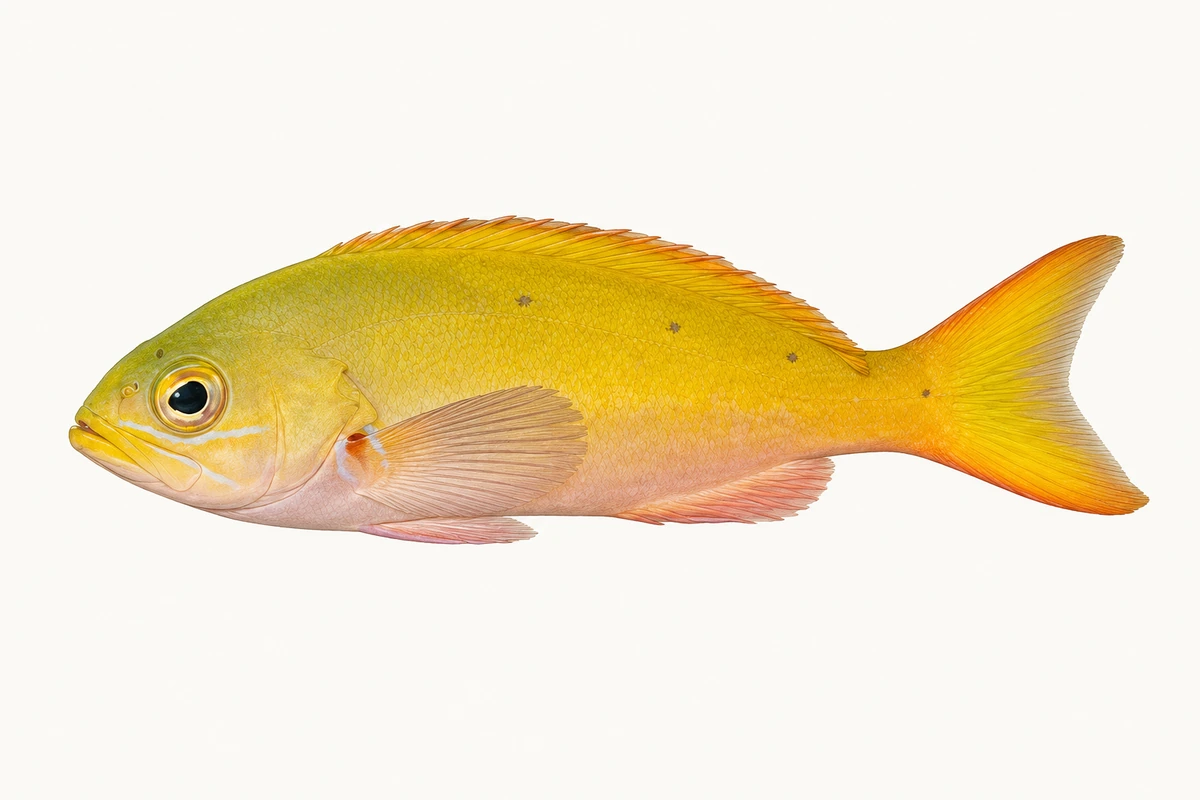
Look up off the reef for this grouper. The Pacific creolefish often schools in midwater, and a good side view shows a small head, a deeply notched tail and a line of pale spots along the upper back.
The Pacific and Atlantic creolefish are separate species. Don’t use Atlantic art or an Atlantic common name to identify the Galápagos fish.
Galápagos Islands records
An underwater survey recorded this species at Post Office Bay, Floreana in the Galápagos Islands. That’s a documented observation, not a guaranteed sighting.
Fun facts
- Although it belongs to the grouper family, this fish is built for swimming off the reef: narrow body, small head and a deeply forked-looking tail.
- Adults are greenish brown above and redder below, with about five pale spots along the back.
- Young fish may be bright yellow or gray. Their row of small back spots is dark rather than pale.
- Large schools can feed on plankton above rocky reefs.
- The Galápagos dive survey printed the older name Paranthias colonus. That name and Cephalopholis colonus refer to the same fish here.
- The body and tail shape stand out even if the school is too distant to see the tiny spots.
Explore and learn
Watch a school from where you are. Take a side view with the tail in frame and check whether the back spots are pale on a dark adult or dark on a yellowish youngster.
Explore how rocky reefs and the water above them work together · Explore Stuart Scuba’s worldwide group dive trips




