


Elephant-Skin Coral
Pachyseris speciosa · Pachyseridae · Plating coral · Palau Fish ID
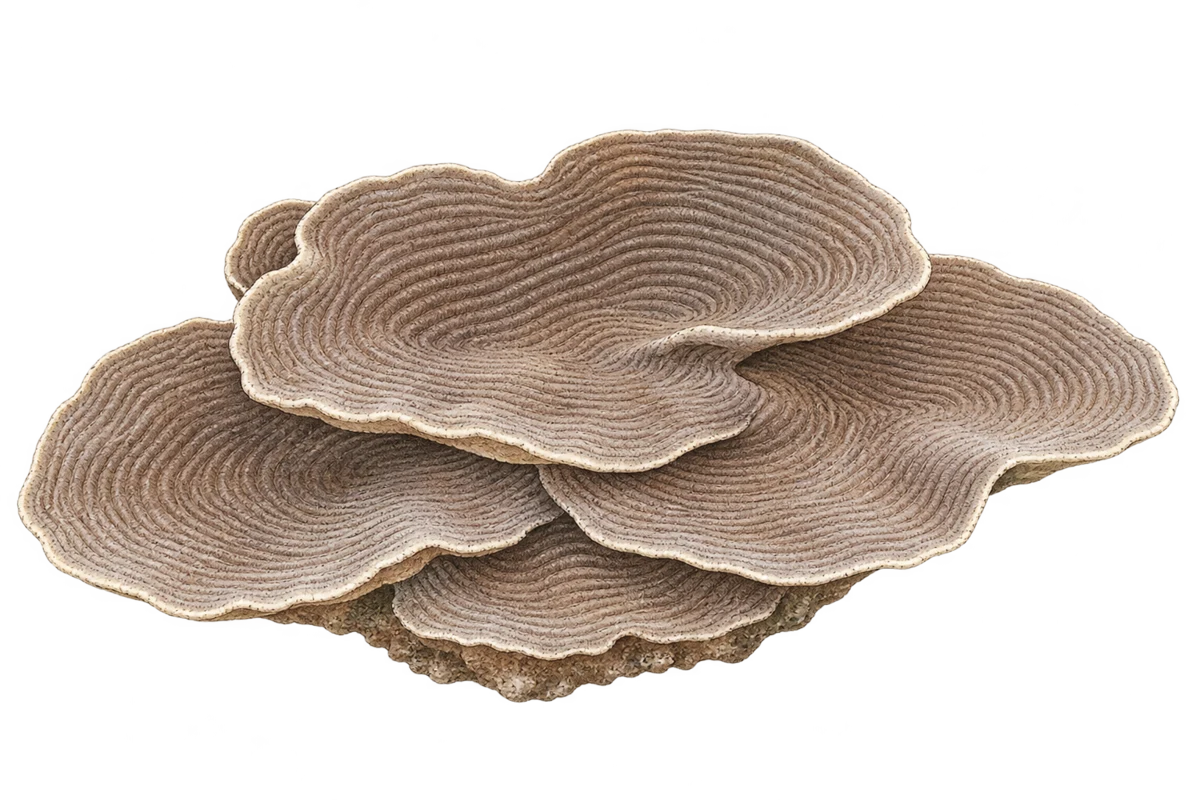
Take a look at the surface, not just the stack of shelves. The folds on this coral can look like contour lines on a map, bending as each plate changes direction.
How to recognize it
Follow the closely spaced, curved ridges as they wrap around a plate. The shelves usually spread sideways. Their pale edges can stand out against the gray or brown tissue, but the ridge pattern is the better clue.
Where to look in Palau
A diver photographing the Rock Islands documented this coral there. Even patches of reef that look similar can have very different amounts of it. It grows on several types of reef and is particularly associated with lower slopes.
Look-alikes
Rugose elephant-skin coral sometimes makes far thicker and more upright, folded growth. Other plate corals can also overlap. Get a photo of both the edge and the ridge pattern, and keep your ID broad if these aren’t clear.
Try this on your next dive
A low, slightly side-on photo shows where each shelf starts and ends. Avoid swimming into an overhang to see under it. For more practice observing reef habitats without touching the coral, start with SDI Coral Conservation.
Good skills for reef observation
Advanced Buoyancy Control helps you keep your fins clear. Underwater Photography and Underwater Video help record the details. Advanced Adventure lets you try several dive specialties. Deep Diver is for already-planned deeper recreational dives, not a requirement for observing coral.
Six things to notice
- Most colonies spread in sheets rather than grow upright like branches.
- The living, cup-bearing surface is on one face of a plate.
- A narrow valley can contain more than one row of tiny coral cups.
- Deep gray and pale brown colonies can be the same species.
- Large stands can span several yards, even though the shelves look thin.
- In the Rock Islands, Colin found it patchy even where the habitat looked much the same.
Keep looking through Palau Fish ID or explore our international group dive trips.




