


Fish identification archive / Raja Ampat
Oriental Sweetlips
Plectorhinchus vittatus
Raja Ampat field guide
Two things to tell your dive buddy
- The juvenile’s rounded tail becomes almost straight-edged in the adult.
- A peaceful daytime resting place is only one phase of its daily activity.
How to identify it
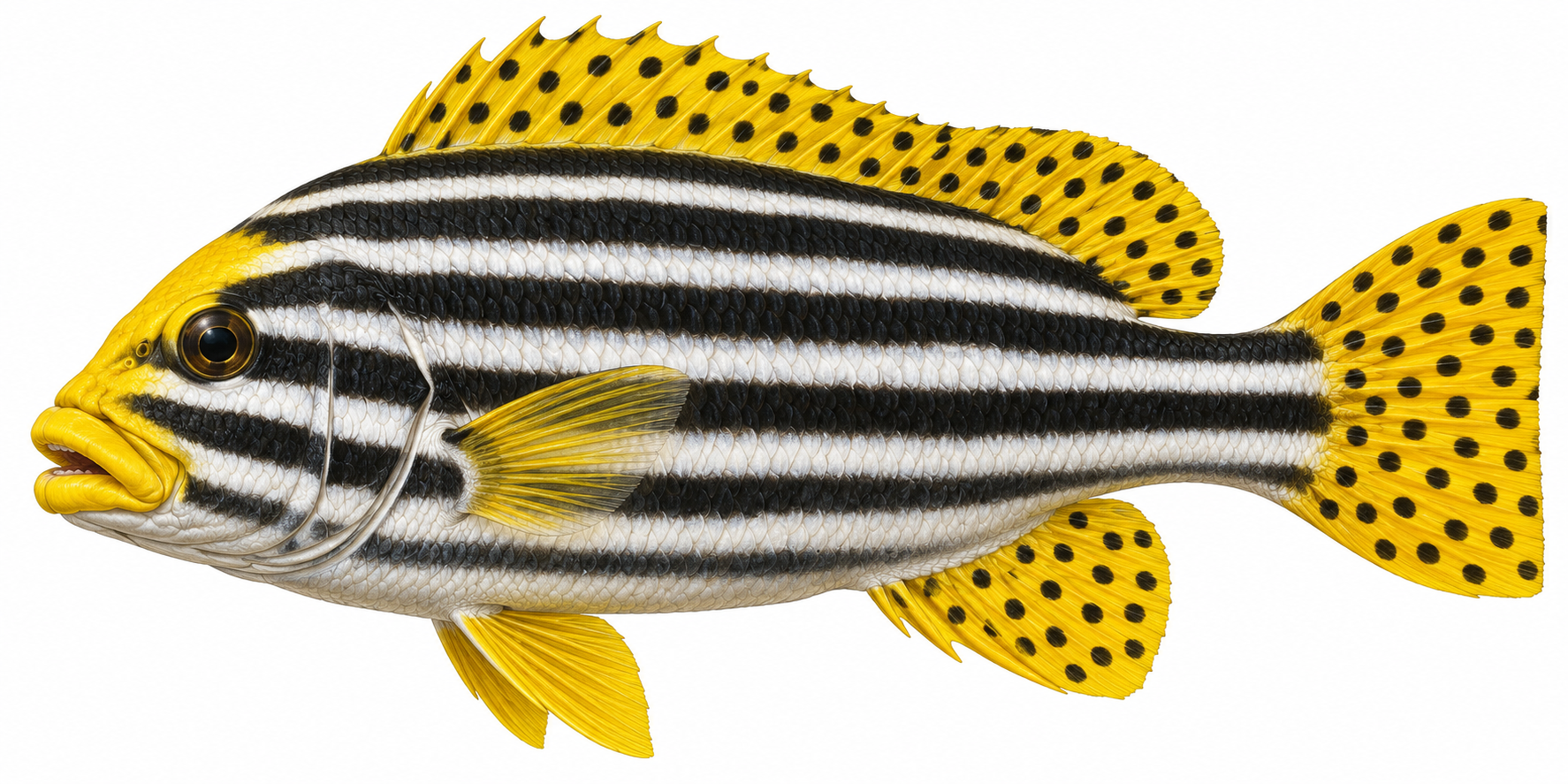
Adults have horizontal black-and-white striping, yellow forehead and snout, and yellow dorsal, anal and tail fins dotted black.
Habitat and where to look
Coastal reefs, lagoons and seaward reefs.
Daily habits and behavior
Often rests alone or in small groups by day and feeds at night.
What is on the menu?
Carnivorous; nocturnal feeding.
Look-alikes and identification traps
Adult yellowbanded sweetlips has more diagonal upper-body stripes. Compare both body bands and spotted yellow fins.
Try this observation
Watch a resting individual from the side and compare body stripes with the spotted tail.
Raja Ampat occurrence
Recorded in Raja Ampat; regional occurrence does not promise a sighting on a particular dive. This guide does not imply that every site, itinerary or season offers the same chance of an encounter.
Observe, do not disturb
Keep a respectful distance, leave the animal an unobstructed route and follow your dive guide. Do not touch, feed, chase or collect wildlife. Identification does not establish permission to harvest or food safety; Florida harvest labels do not apply to this Indonesian guide.
The stripe pattern changes, even before adulthood
A young oriental sweetlips can have irregular broad black stripes over a yellow-marked head. Larger fish develop a more orderly striped pattern; on mature fish, look for dark spots on the yellow fins as well as the horizontal stripes.
SDI Underwater Photographer course: Practice framing the fins and body together so later comparisons do not depend on one stripe.
Sources and review
Reviewed November 18, 2026.
Make your next dive happen
Dive With UsTrain With UsExplore the Raja Ampat tripShop With Us
Questions? (772) 600-8288 or info@stuartscuba.com.




