


Boulder Star Coral
Orbicella franksi · Merulinidae · Stony coral · Cayman Islands Fish ID
How to identify it
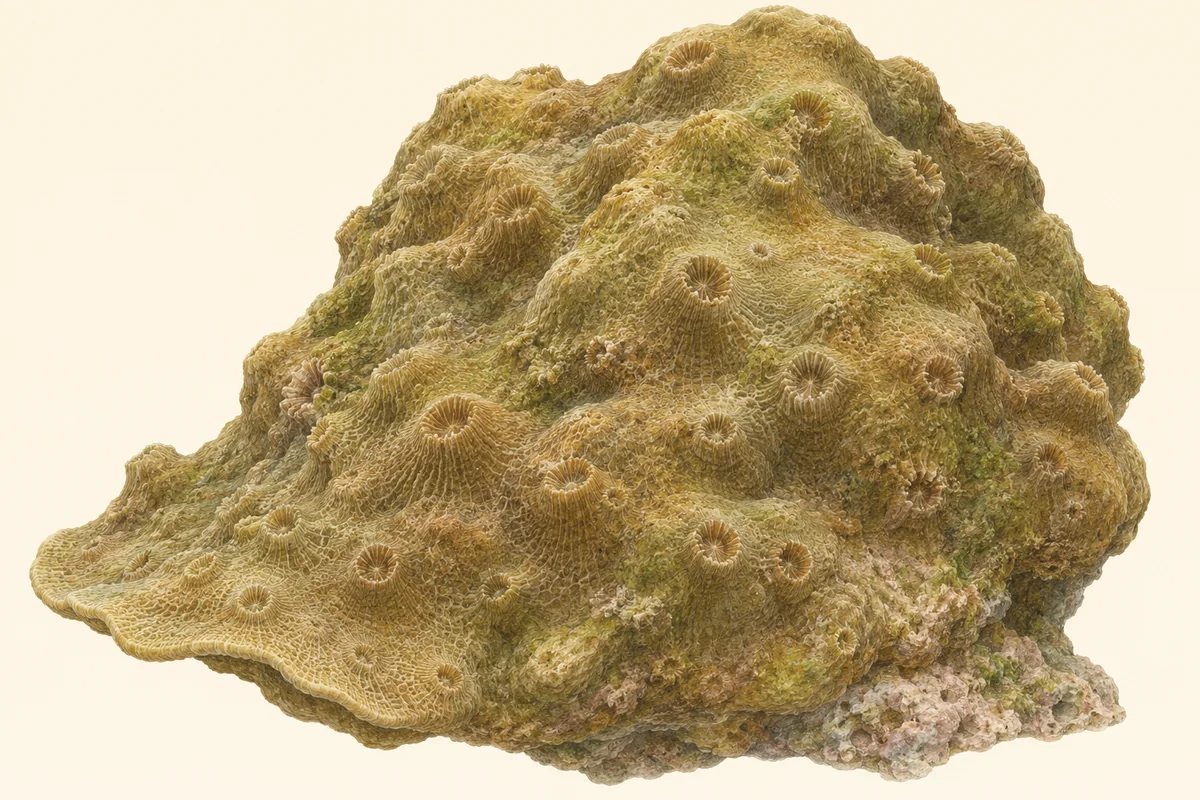
Boulder star coral may form a bulky mound, a low plate or an uneven crust. Look for the irregular bumps and protruding star-shaped cups rather than relying on the boulder name. Mountainous star coral generally has a smoother surface with more evenly spaced cups.
Mountainous star coral tends to have smoother, more evenly spaced texture; lobed star coral often forms clustered, more distinct columns or lobes.
Learn to observe reefs without touching
SDI Coral Conservation is the place to start if you want to learn about coral habitats and how to observe them responsibly.
Start with the colony’s outline and the pattern of its coral cups. Look from a position where you can keep your fins and camera clear of the colony.
- Keep your fins and camera clear: Advanced Buoyancy Control focuses on trim, weighting and hovering.
- Build a broader skill set: Advanced Adventure introduces several specialties, including deep diving and navigation, with opportunities to refine buoyancy.
- For deeper recreational dives already in your plans: Deep Diver focuses on planning depth and managing breathing gas. It’s not needed to identify coral on a shallow dive.
- Record the details: Underwater Photography covers lighting and still-image composition. Underwater Video covers framing and steady footage. Use either without resting gear on the reef.
Cayman Islands records
Cayman reef surveys recorded this species at the archipelago level. The pooled record does not establish a particular island or dive site.
Fun facts
- The name boulder describes only one of its growth forms.
- Its skeletal cups can protrude and are distributed unevenly.
- Large colonies can spread into substantial mounds or plates; judge the bumps and cups rather than size alone.
- It is a close relative of both lobed and mountainous star coral.
- The species often occupies deeper reef habitat than lobed star coral, though they can overlap.
See more on your next dive
Take one wide photo of the colony and a second of the surface detail. Use both clues to compare species.




