


Fish identification archive / Raja Ampat
Orangespine Unicornfish
Naso lituratus
Raja Ampat field guide
Two things to tell your dive buddy
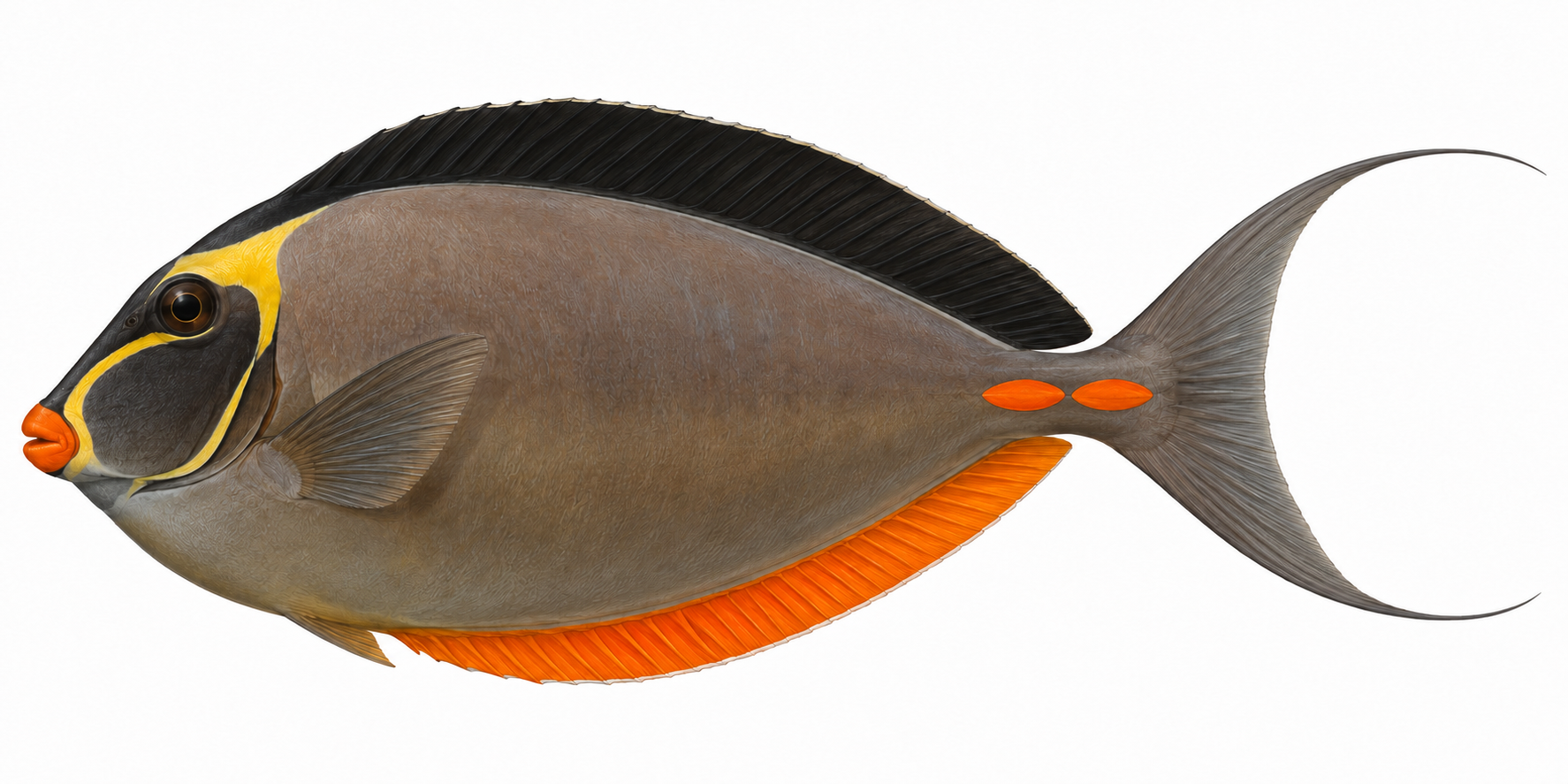
- A unicornfish without a horn is not a contradiction. This species lacks the forehead projection found in some other Naso species.
- The orange tail-base patches frame cutting keels, while adult males can develop long tail filaments. Colorful ornament and defensive anatomy share the same small area.
How to identify it
Grey-brown body, orange lips, black dorsal fin and orange patches around the tail-base keels.
Habitat and where to look
Tropical reef habitats.
Daily habits and behavior
Adult males can develop long filaments from the tail lobes.
What is on the menu?
Herbivorous, with leafy brown algae an important food.
Look-alikes and identification traps
Its black dorsal fin and orange tail-base patches are useful checks. The absence of a forehead horn is normal for this unicornfish.
Try this observation
Notice the dark dorsal fin and tail-base orange without approaching closely.
Raja Ampat occurrence
Recorded in Raja Ampat; regional occurrence is not an itinerary-specific sighting promise. This guide does not imply that every site, itinerary or season offers the same chance of an encounter.
Observe, do not disturb
Keep a respectful distance, leave the animal an unobstructed route and follow your dive guide. Do not touch, feed, chase or collect wildlife. Identification does not establish permission to harvest or food safety; Florida harvest labels do not apply to this Indonesian guide.
Sources and review
Reviewed November 18, 2026.
Check the bright orange plates at the tail base
Look at the narrow part of the body just ahead of the tail: the keeled plates there are orange. The plates are less developed in young fish, and this unicornfish does not have the forehead horn found in some relatives.
Compare related surgeonfish by more than a single silhouette trait in SDI Reef Fish Identification.
Make your next dive happen
Dive With UsTrain With UsExplore the Raja Ampat tripShop With Us
Questions? (772) 600-8288 or info@stuartscuba.com.




