


Orangeside Triggerfish
Sufflamen verres · Balistidae · Triggerfish · Galápagos Islands Fish ID
How to identify it
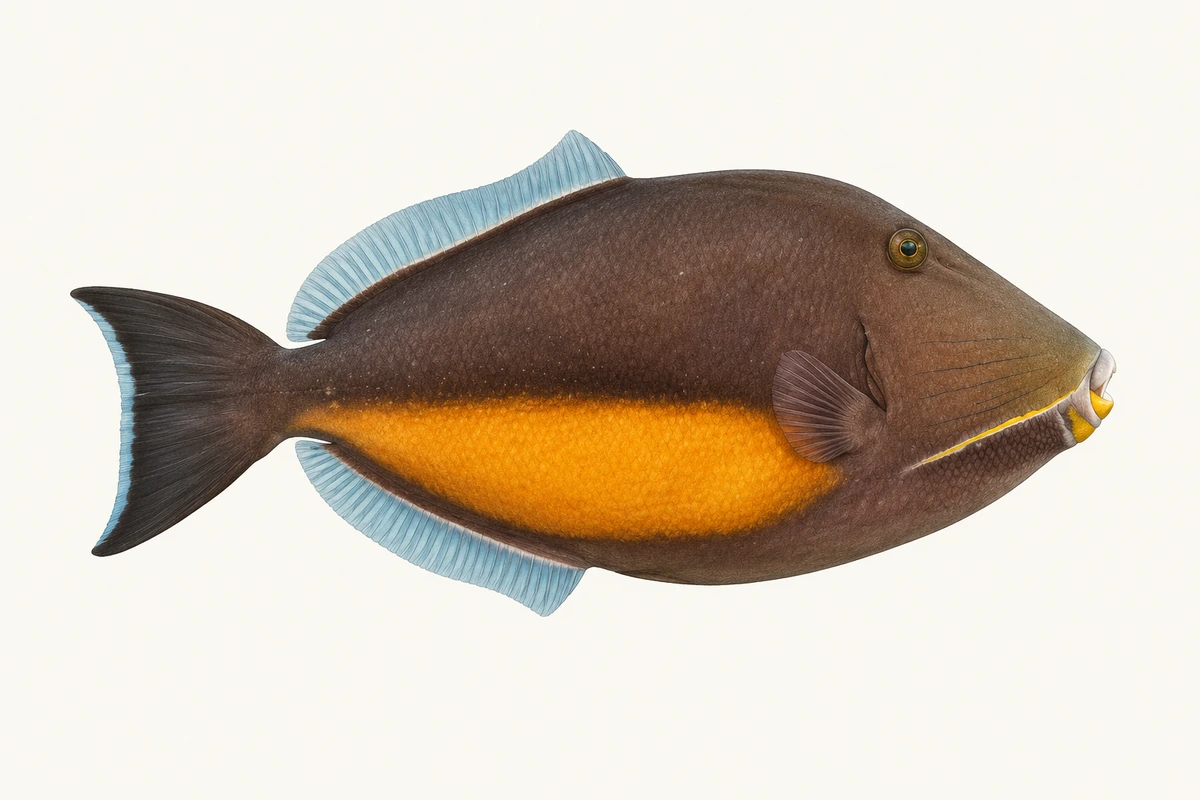
This triggerfish’s warm lower flank is a good first clue. The check that seals the ID is a fine yellow mark running back from the mouth, with narrow dark cheek lines nearby.
Stone triggerfish is a separate, bulkier grayish species that often shows subtle bars. Use the mouth-side mark and cheek details, not orange color by itself.
Galápagos Islands records
Divers recorded it at Enderby off Floreana in the Galápagos. That is a documented sighting, not a promise of an encounter.
Fun facts
- The back of an adult is generally brown, fading to yellowish orange along the lower side.
- The narrow yellow line slants back from the corner of the mouth.
- Its first dorsal spine can lock upright, a good example of how triggerfish got their name.
- The soft dorsal and anal fins stay fairly even in height rather than rising into tall peaks at their fronts.
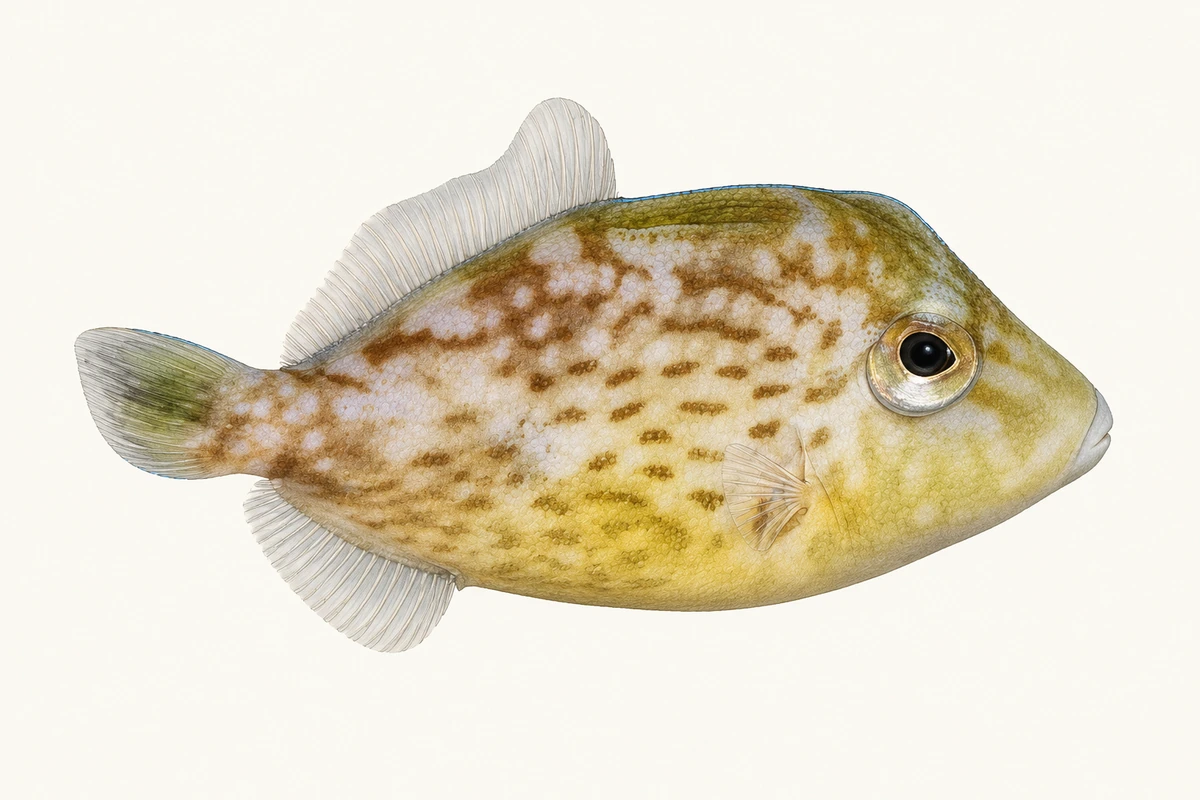
- Young fish can show spots and broken lines across the upper half, so they don’t look like miniature adults.
- On rocky reefs it eats bottom animals such as small crustaceans, worms and mollusks.
Explore and learn
Give a triggerfish plenty of room. Wait for a side view and compare the cheek pattern and low rear fins without following it or approaching a nest.
Practice comparing triggerfish cheek marks and fin shapes · Explore Stuart Scuba’s worldwide group dive trips




