


Orange-spotted Grouper
Epinephelus coioides
Two details worth remembering
- Not every male followed the same route. This species includes males that matured directly and males that changed sex after reproducing as females.
- The estuary is part of the reef fish’s story: young fish occupy sheltered coastal habitats rather than living exactly where adults do.
How to identify it
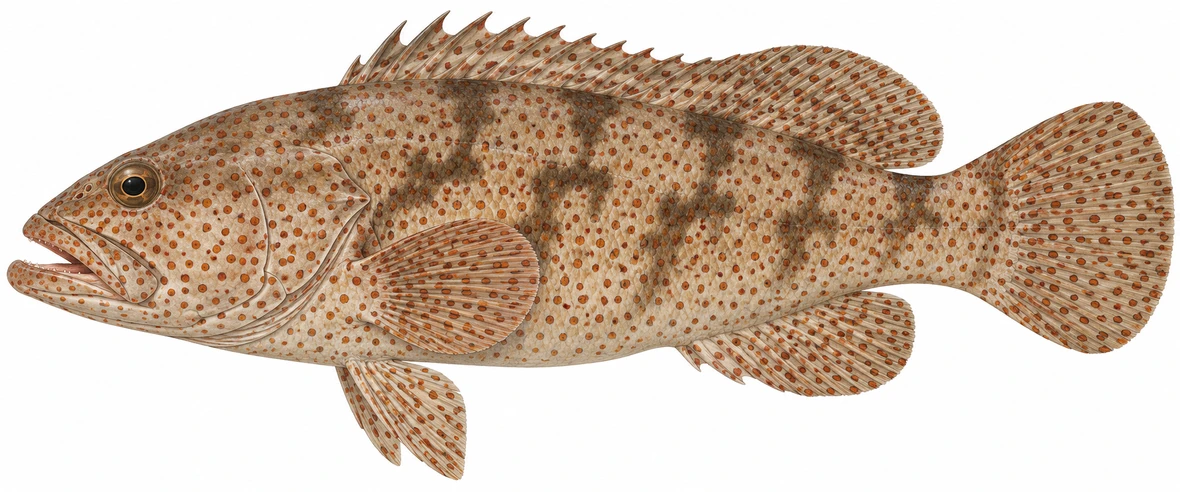
A grey-brown grouper with small orange to reddish-brown spots and often five darker, slanting H-shaped bars. Juvenile spots are comparatively large; larger fish have finer, more numerous spots.
Where to look
Juveniles use shallow estuarine sand, mud, gravel and mangroves. Adults occur on inshore reefs, including rubble and muddy bottoms. Habitat and life stage are valuable clues when comparing spotted groupers.
Natural history
Mostly small crabs and fishes.
A diandric, female-first hermaphrodite: some individuals mature directly as males, while others reproduce as females before becoming males.
Look-alikes
Often confused with Epinephelus malabaricus and E. tauvina. Record spot colour, bar pattern and life stage; do not force an identification from a distant spotted silhouette.
What to watch for underwater
Note whether the fish is among mangrove-influenced rubble or on an open reef, then photograph the spot colour and darker bars.
Recorded in Raja Ampat
This species has a published Raja Ampat record. A regional record does not guarantee a sighting on a particular dive.
Sources: fishesofaustralia.net.au species reference · Regional survey record
I saw this and want to share
Back to Raja Ampat Fish ID · Dive Raja Ampat with Stuart Scuba




