


← Back to South Florida Fish ID
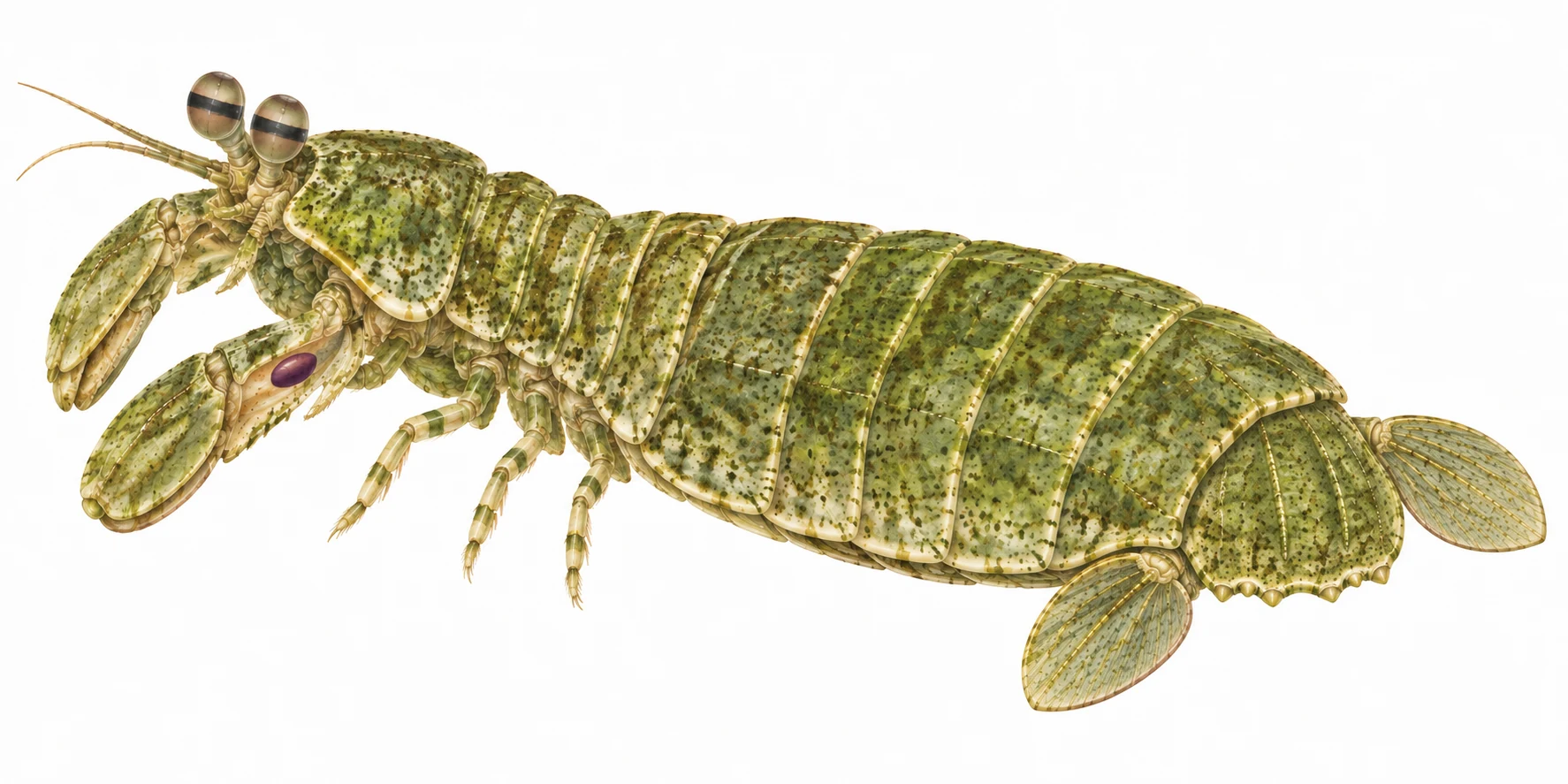
Oersted’s Mantis Shrimp
Neogonodactylus oerstedii · Gonodactylidae
A small reef smasher that uses cavities for shelter, courtship, and meals. Its color varies more than many divers expect.
One fun thing to know
Scientists compared how several color forms stand out against different shelters and backgrounds.
I saw this and want to share
To share this guide with a dive buddy, copy the page link.
How to identify it
- Stalked eyes and club-type raptorial limbs
- Color varies among individuals; photograph posture and front limbs
- Photograph tail and body detail when visible without disturbing the cavity
Where to look
It has been recorded off Key Largo at less than 5 m (16 ft), and in the Dry Tortugas.
Size
Published experiments examined adult individuals about 35–50 mm long.
What it eats
A predator that processes food inside cavities; its exact diet in South Florida is not well established.
Behavior
Occupies spaces in coral rubble, rock and shells. Wait for it to appear rather than reaching into the opening.
Reproduction
Mating and egg brooding may both take place inside a cavity. Local timing is not specified here.
Look-alikes
Compare N. wennerae; neither green nor mottled coloring is enough to confirm the species.
Can you collect or eat it?
CC: Observe and leave in place. Stuart Scuba conservation recommendation, not blanket legal protection.
Check current species and site rules before collecting. This guide does not establish permission to collect.
Make your next dive happen
Dive with Stuart Scuba · Train with us · Travel with us · Shop with us



