


Ivory Bush Coral
Oculina valenciennesi · Oculinidae · Stony coral · Cayman Islands Fish ID
How to identify it
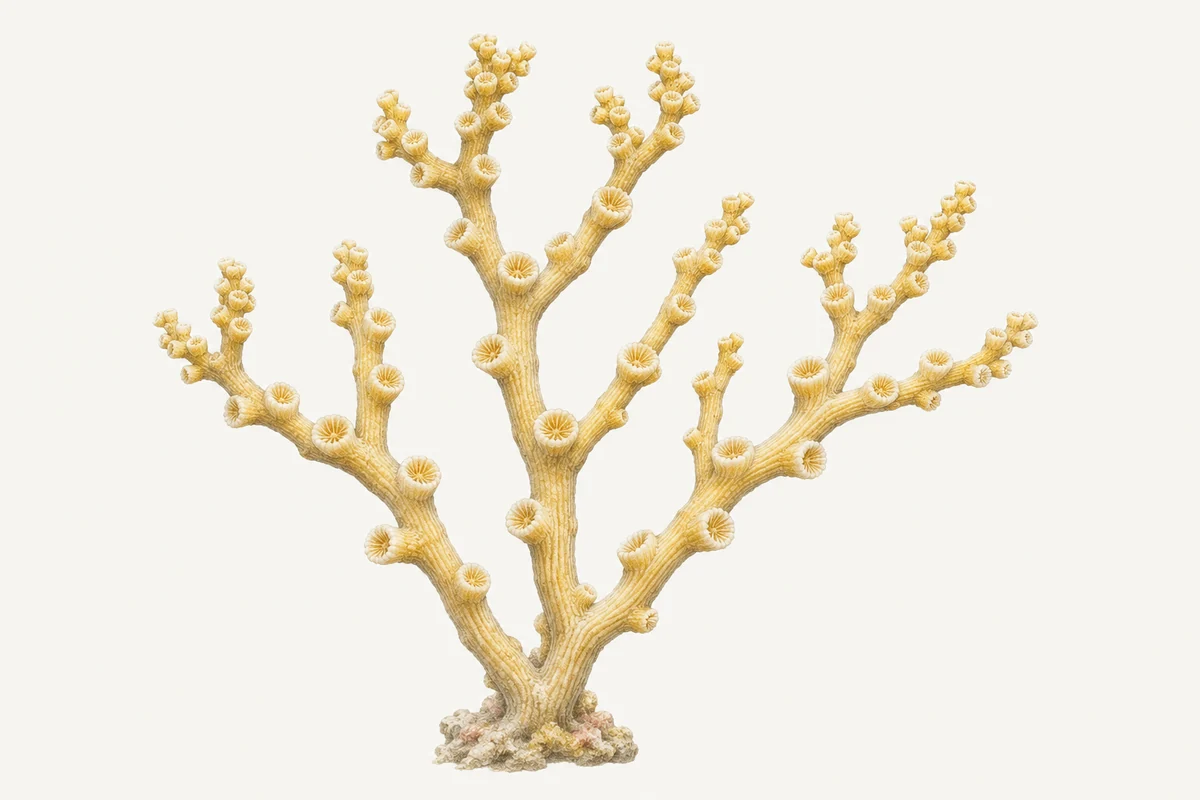
Think of a loose yellowish shrub with pencil-thick branches. Look along an older branch for widely spaced, rounded cups instead of crowds of tiny bumps.
Oculina diffusa can make a similar bush. Compare cup spacing along an older branch and at the tips. Neither branch shape nor color on its own is enough.
Learn to observe reefs without touching
SDI Coral Conservation is the place to start if you want to learn about coral habitats and how to observe them responsibly.
Start with the colony’s outline and the pattern of its coral cups. Look from a position where you can keep your fins and camera clear of the colony.
- Keep your fins and camera clear: Advanced Buoyancy Control focuses on trim, weighting and hovering.
- Build a broader skill set: Advanced Adventure introduces several specialties, including deep diving and navigation, with opportunities to refine buoyancy.
- For deeper recreational dives already in your plans: Deep Diver focuses on planning depth and managing breathing gas. It’s not needed to identify coral on a shallow dive.
- Record the details: Underwater Photography covers lighting and still-image composition. Underwater Video covers framing and steady footage. Use either without resting gear on the reef.
Cayman Islands records
Photo transects documented this species at Soto’s Reef and Eden Rock off Grand Cayman in the 2015 harbour assessment.
A documented record does not guarantee an encounter on your dive.
Fun facts
- The colony forms a loose thicket rather than a solid mound.
- Main branches can be about as thick as a pencil.
- Older branch cups are generally spaced farther apart than cups near the growing tips.
- Cups on older branches tend to face squarely outward, while the cups near the tips can sit at an angle.
- Fine skeletal striations run between the cups.
- The species is recorded on shallow rocky substrates.
See more on your next dive
Photograph from the side so the branch width, tip and several older cups are all visible.




