


← Back to South Florida Fish ID
Mottled Shore Crab
Pachygrapsus transversus · Grapsidae
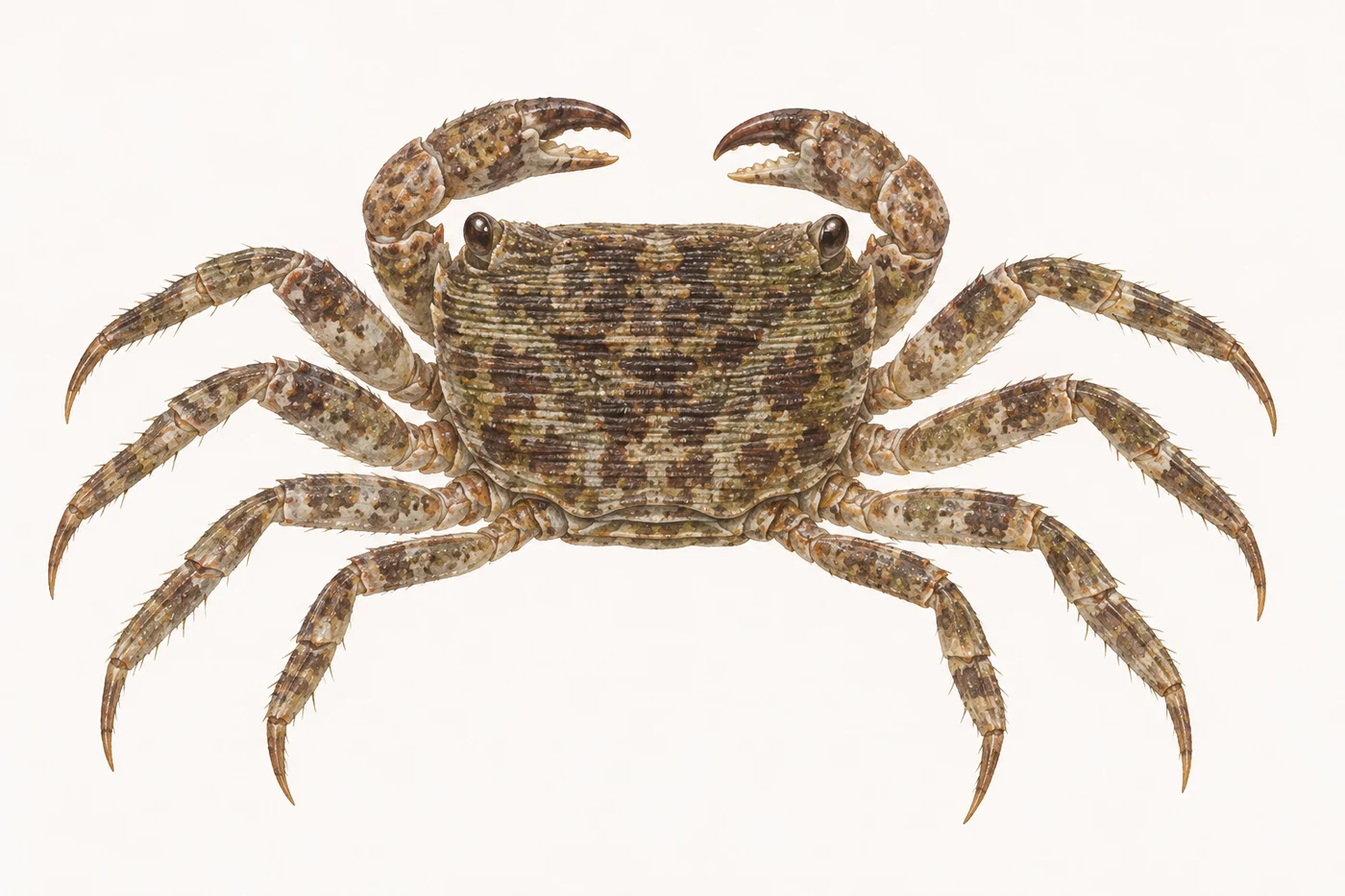
A small intertidal crab with a boxy shell and repeated ridges across the back.
Fun facts
- The ridges run across the shell. Transversus, its species name, means crosswise.
- Its eyes sit toward the front corners of that square-looking shell. Check the shape from above before leaning on color.
- The back legs do not end in flattened swimming paddles like those of a swimming crab.
- It lives around the splash line as well as the intertidal zone. You don’t have to be underwater to look for it.
- A Panama field study found it eats algae as well as animal food, including other crabs.
- A cracked rock or jetty edge offers a quick hiding place. Watch the opening instead of lifting rocks.
If the splash zone is busy, start looking from shore. Our Marine Ecosystems Awareness course helps you read shoreline habitats without disturbing them.
I saw this and want to share
To share this guide with a dive buddy, copy the page link.
How to identify it
- Squarish carapace with visible transverse ridges
- Eye sockets at front corners
- No flattened swimmer’s paddles on the last legs
Where to look
Specimens document it in Boca Inlet and the National Park Service lists it for Biscayne National Park.
Size
Only a few centimeters long; use a close photo rather than size alone.
What it eats
A field study documented algae, porcelain crabs, fish and members of its own species among foods.
Behavior
Look on hard shorelines near the waterline, where it can retreat quickly into cracks.
Reproduction
Its breeding season in South Florida is not well established.
Look-alikes
Other rock-dwelling crabs look square from above. Compare carapace ridges and margin shape, not the mottled color alone.
Can you collect or eat it?
CC: Observe and leave in place. Stuart Scuba conservation recommendation, not blanket legal protection.
Check current species and site rules before collecting. This guide does not establish permission to collect.
Make your next dive happen
Dive with Stuart Scuba · Train with us · Travel with us · Shop with us



