


Mojarra Grunt
Haemulon scudderii · Haemulidae · Grunt · Galápagos Islands Fish ID
How to identify it
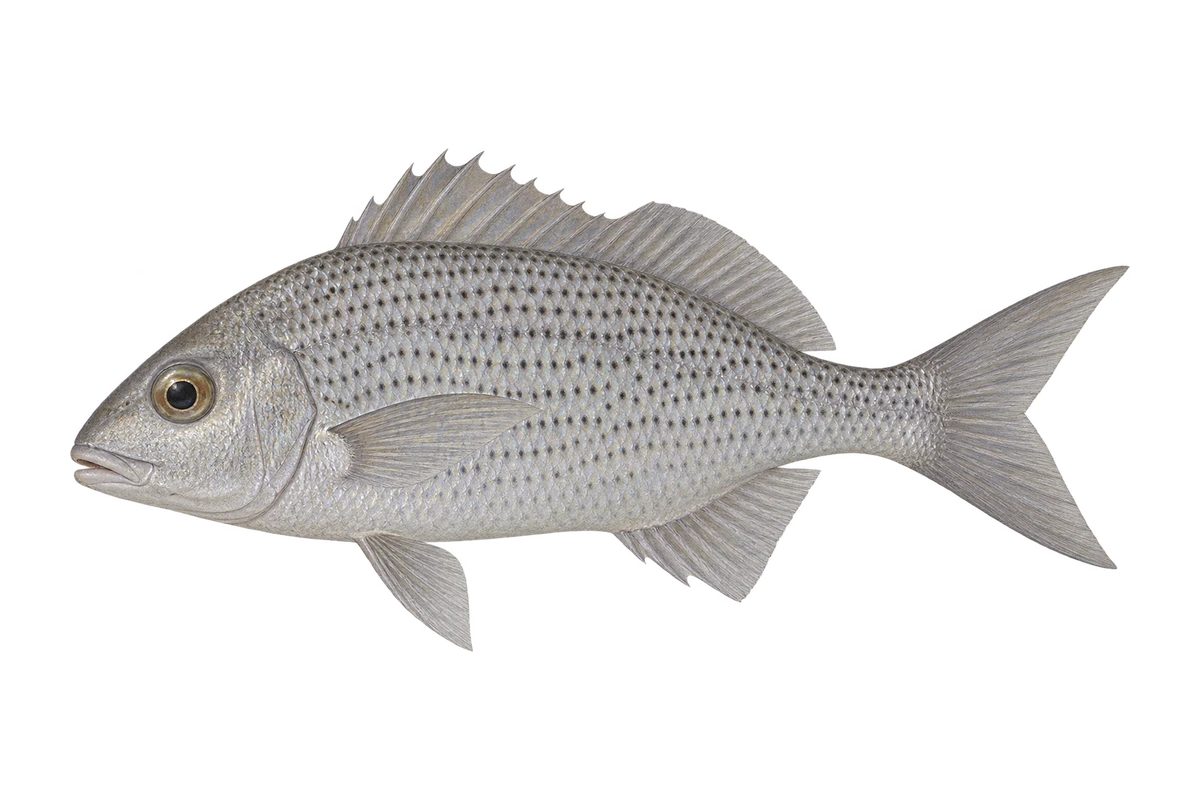
The Mojarra Grunt looks dotted at first. Take a second look and all those tiny dark marks may line up in broken rows along the silver flank.
The Greybar Grunt’s wide dark bars aren’t little dots. A juvenile Mojarra Grunt can have a narrow line and a tail-base spot, so an adult-only key can be misleading.
Galápagos Islands records
Dive surveys recorded this fish at Cape Marshall, Isabela. The record tells us it occurs there, not that you will see one.
Fun facts
- On an adult, each dark mark sits on a scale, making the rows appear broken rather than solid.
- The adult has no dark spot where the tail fin starts.
- A juvenile can show a lengthwise stripe ending at a black tail-base spot and a second stripe higher on the body.
- Adults may form large groups that hold over rocky reef during the day.
- The adult’s mouth slopes up a little, and its lower jaw projects.
- Despite the word Mojarra, this fish belongs to the grunt family, not the mojarra family.
Explore and learn
Watch quietly from where you can hold position without touching the reef. A clear side view usually tells you more than following the fish.
Practice identifying reef fish with Stuart Scuba · Explore Stuart Scuba’s group dive trips




