


Galápagos Fiddler Crab
Minuca galapagensis · Ocypodidae · Fiddler crab · Galápagos Islands Fish ID
How to identify it
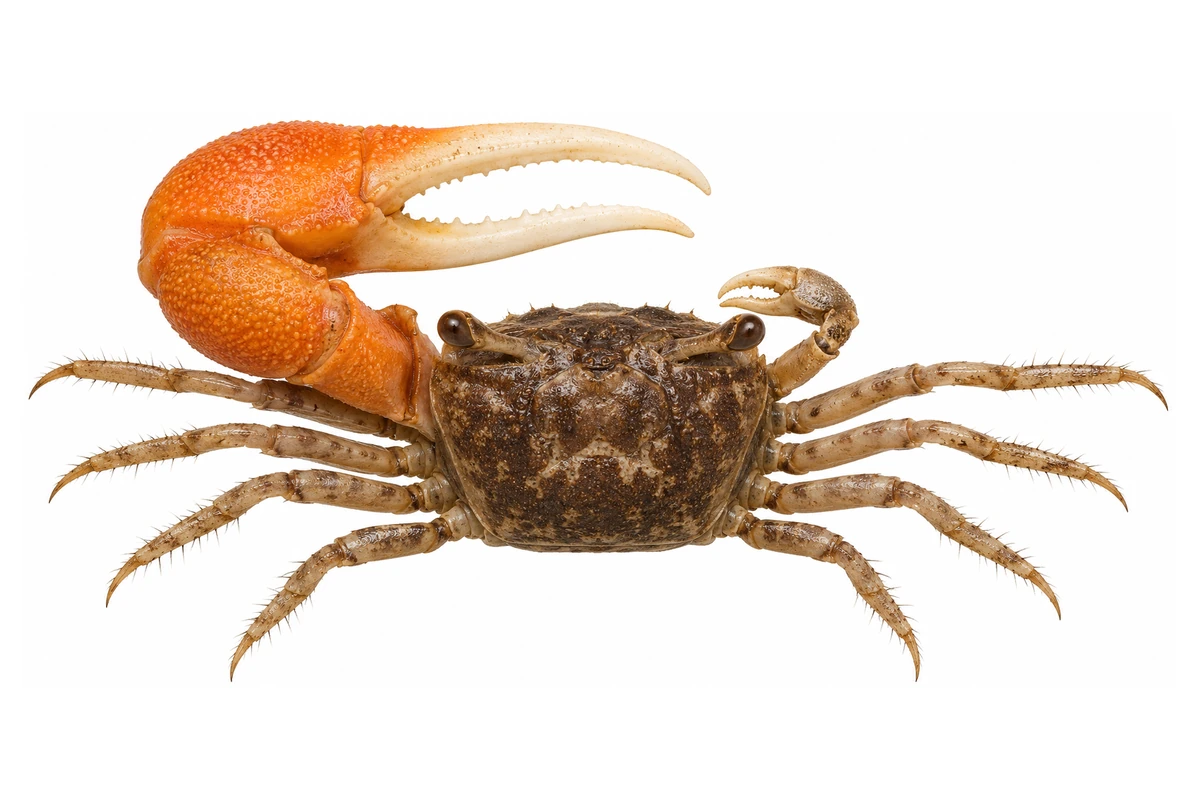
Watch the mud rather than the reef. An adult male may wave one oversized claw at the mouth of its burrow, with both eyes held high above the shell.
Other Galápagos fiddlers can wave a large claw too. To distinguish this crab from Heller’s fiddler, compare the shape of the large claw and its finger tips. Color changes, so it is not enough on its own.
Galápagos Islands records
Documented Galápagos record: Museum material records three males from Santa Cruz in February 1964. A later field study illustrates a male specimen from Bahía de Tortuga on the same island. A record does not guarantee a sighting.
Fun facts
- It digs burrows in tidal mud, where it may be seen when the flats are exposed.
- An adult male’s large claw is used for display, so watch for an up-and-down wave rather than trying to get closer.
- Published measurements put the carapace at up to about 22 mm across.
- The shell is trapezoid-shaped and distinctly wider than it is long.
- The grainy outside of the large claw contrasts with its long narrow fingers, which leave a clear gap between them.
- The same species can look subdued brown or mottled; a displaying male can be much paler while its large claw stays orange with pale finger tips.
Explore and learn
Observe from the edge of the tidal habitat and let the crab return to its burrow undisturbed. This is a shore animal, not a normal boat-dive sighting.
Learn how tidal habitats work in Marine Ecosystems Awareness · Explore Stuart Scuba’s worldwide group dive trips




