


Blade Fire Coral
Millepora complanata · Milleporidae · Fire coral · Hydrozoan · Cayman Islands Fish ID
How to identify it
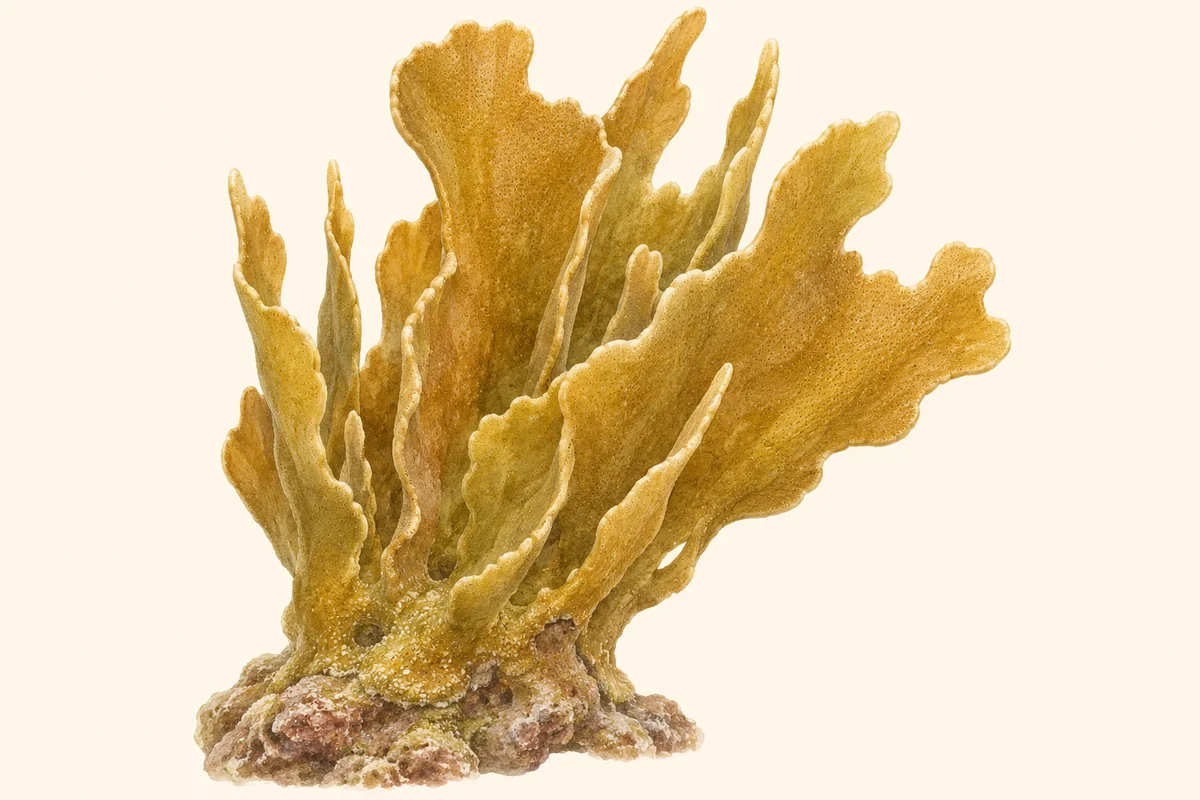
Blade fire coral typically rises in thin, upright blades with broad faces and narrow edges. It is a stinging hydrozoan, not a true stony coral. Compare the broad blades with the thinner branching form of its closest Cayman lookalike, but leave room for overlap.
Branching fire coral usually has upright narrow fingers; a few flattened or fused fingers are not enough to identify blade fire coral.
Learn to observe reefs without touching
SDI Coral Conservation is the place to start if you want to learn about coral habitats and how to observe them responsibly.
Fire corals are stinging hydrozoans, not stony corals, but they belong in the same hands-off reef-observation conversation. Look at the outline from a distance; never touch the colony to identify it.
- Keep your fins and camera clear: Advanced Buoyancy Control focuses on trim, weighting and hovering.
- Build a broader skill set: Advanced Adventure introduces several specialties, including deep diving and navigation, with opportunities to refine buoyancy.
- For deeper recreational dives already in your plans: Deep Diver focuses on planning depth and managing breathing gas. It’s not needed to identify coral on a shallow dive.
- Record the details: Underwater Photography covers lighting and still-image composition. Underwater Video covers framing and steady footage. Use either without resting gear on the reef.
Cayman Islands records
Reef transects recorded it on Grand Cayman, Little Cayman and Cayman Brac.
Fun facts
- The blade is a rigid skeleton laid down by a colony of small hydrozoans.
- Individual animals are much harder to see than the outline of a colony.
- A blade has contrasting broad-face and thin-edge silhouettes.
- The fine holes in its surface are openings for different types of polyps.
- Its sting is delivered by specialized stinging cells, not by the hard skeleton.
See more on your next dive
Fire coral can sting on contact. Keep hands, fins and gear clear while observing or photographing it.




