


Maroon Sponge Zoanthid
Bergia puertoricense · Parazoanthidae · Colonial coral · Cayman Islands Fish ID
How to identify it
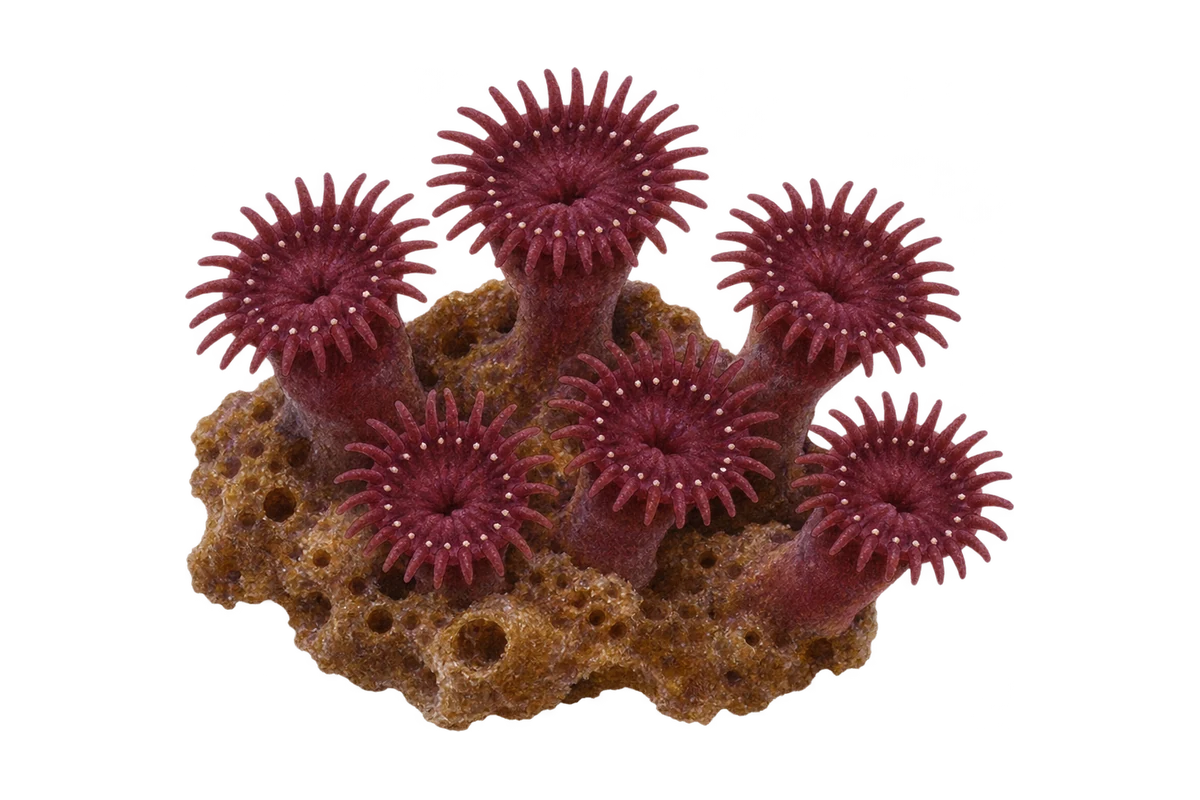
Tiny burgundy flowers on a sponge? Look again. They are separate animal polyps, a lot easier to notice with a steady close-up than from across the reef.
Against sponge zoanthid Umimayanthus parasiticus, look for deep maroon bodies and tentacles rather than pale columns with darker ring. Sponge host and color do not by themselves prove the species.
Learn to observe reefs without touching
SDI Coral Conservation is the place to start if you want to learn about coral habitats and how to observe them responsibly.
These are zoanthids, relatives of corals. Look at the pattern of the polyps and how the colony spreads without handling it or the surface it grows on.
- Keep your fins and camera clear: Advanced Buoyancy Control focuses on trim, weighting and hovering.
- Build a broader skill set: Advanced Adventure introduces several specialties, including deep diving and navigation, with opportunities to refine buoyancy.
- For deeper recreational dives already in your plans: Deep Diver focuses on planning depth and managing breathing gas. It’s not needed to identify coral on a shallow dive.
- Record the details: Underwater Photography covers lighting and still-image composition. Underwater Video covers framing and steady footage. Use either without resting gear on the reef.
Cayman Islands records
Grand Cayman
A documented record does not guarantee an encounter on your dive.
Fun facts
- A living Grand Cayman colony is documented in a named underwater photograph.
- Each open rosette is an individual tiny polyp.
- The deep burgundy color extends onto both the body and tentacles.
- White points between tentacles are a useful close-up cue on some animals.
- It grows in association with sponges, where small groups can be missed easily.
- The current genus replaces the name Parazoanthus found in older guides.




