


Mangrove Red Snapper
Lutjanus argentimaculatus
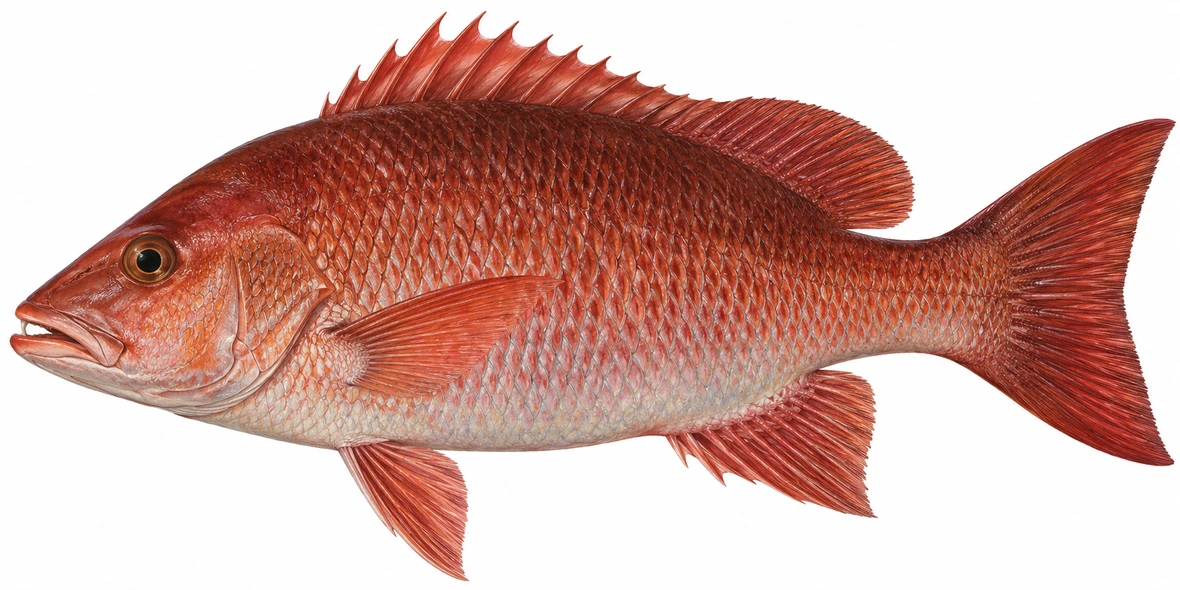
Two details worth remembering
- The mangrove name describes a nursery chapter, not a restriction to mangroves throughout life.
- A red body does not make it a bohar snapper: the lack of the bohar’s deep groove in front of the eye is an important distinction.
How to identify it
A substantial snapper ranging from green-brown to reddish, with a pale belly and nearly square to slightly indented tail. Juveniles have pale vertical bars and one or two blue cheek lines.
Where to look
Young fish use mangrove estuaries and even lower freshwater reaches. Larger animals move onto reefs and eventually deeper offshore habitat. A single adult reef sighting represents only part of this life cycle.
Natural history
A mainly nocturnal predator of fishes, crustaceans, gastropods and cephalopods.
Releases eggs into open water around offshore reefs. Australian seasonal dates in the source are not used as Raja Ampat spawning dates.
Look-alikes
Bohar snapper has a pronounced groove between nostrils and eyes and differently oriented back scale rows; colour alone can mislead.
What to watch for underwater
Photograph the face and tail, then note whether the encounter was in mangrove-influenced water or on an offshore reef.
Recorded in Raja Ampat
This species has a published Raja Ampat record. A regional record does not guarantee a sighting on a particular dive.
- Also listed as
- Mangrove Jack
Sources: fishesofaustralia.net.au species reference · Regional survey record
I saw this and want to share
Back to Raja Ampat Fish ID · Dive Raja Ampat with Stuart Scuba




