


Fish identification archive / Raja Ampat
Mandarinfish
Synchiropus splendidus
Raja Ampat field guide
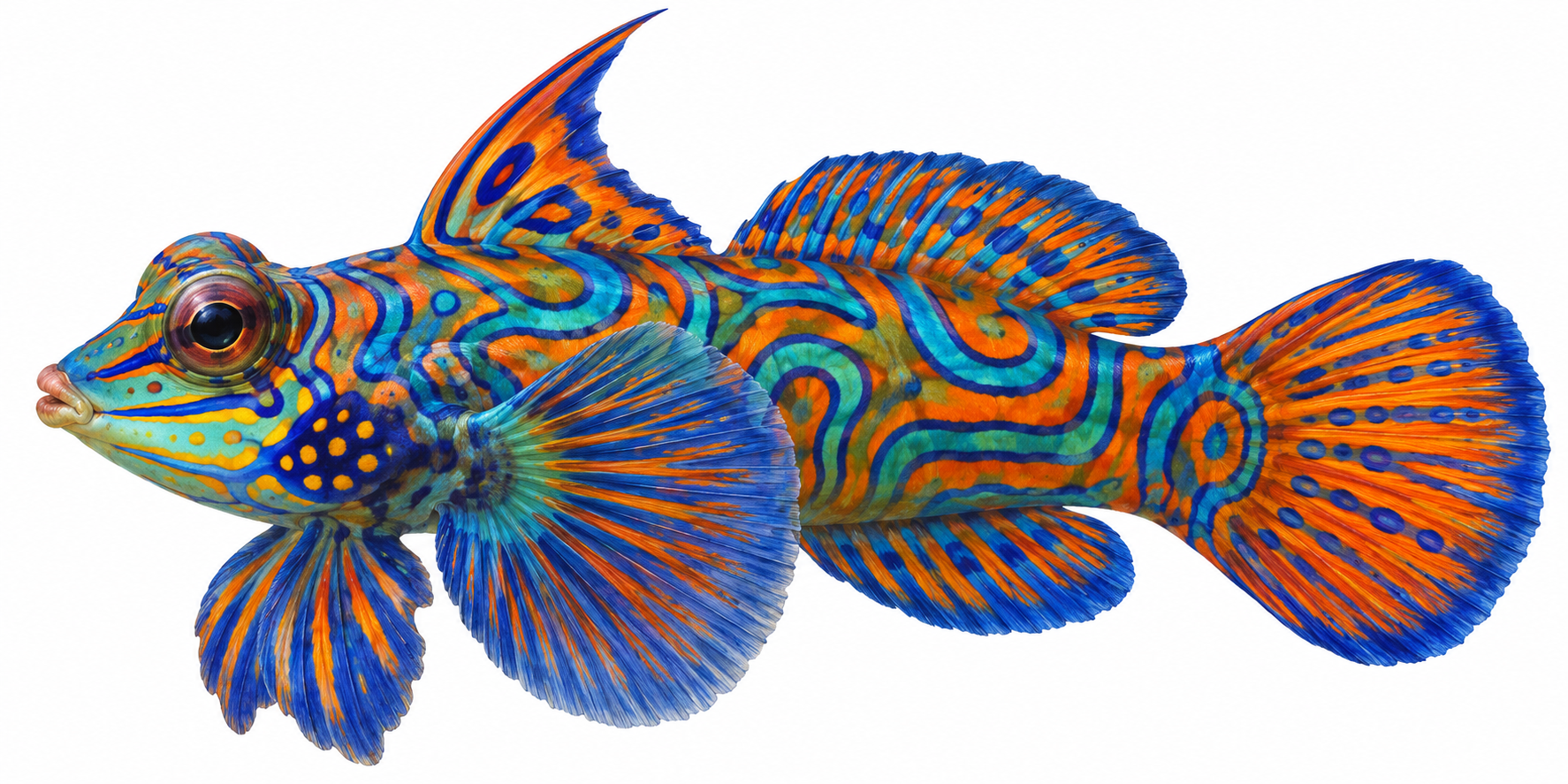
Six things worth noticing
- Blue comes from pigment cells in this fish. Many other blue fish owe their color to microscopic structures that reflect light instead.
- A study of dragonet skin found plenty of mucus-producing cells in mandarinfish, a part of the animal you can’t see in a reef photo.
- In one field study, spawning spots often contained branching or finger-shaped hard corals in the genus Porites.
- The pair’s brief swim above the reef usually happens around dusk. The eggs are released into the water rather than attached to coral.
- Some males in that study regularly returned to one spawning patch; others visited several. Waiting at one spot can tell you more than chasing a fish from patch to patch.
- Larger males spawned more often than smaller males in that study, but mating success varied from evening to evening.
How to identify it
Small dragonet patterned with vivid blue, orange and green winding bands.
Habitat and where to look
Protected reef and rubble habitats close to the bottom.
Daily habits and behavior
Often concealed; activity and courtship can increase near sunset.
What is on the menu?
Tiny bottom-associated animals, including small crustaceans and worms.
Mating and the next generation
A spawning pair rises briefly into the water column to release eggs and sperm.
Look-alikes and identification traps
Confirm the winding band pattern rather than identifying every colorful dragonet as a mandarinfish.
Try this observation
If the itinerary includes guided dusk observation, settle at the distance your guide recommends. For the paired rise, try a wider frame that leaves room above the fish. Our Underwater Photographer course is a place to practice framing a small, moving subject without following it into the coral.
Raja Ampat occurrence
Recorded in Raja Ampat; regional occurrence does not guarantee an encounter on any particular dive. This guide does not imply that every site, itinerary or season offers the same chance of an encounter.
Observe, do not disturb
Keep a respectful distance, leave the animal an unobstructed route and follow your dive guide. Do not touch, feed, chase or collect wildlife. Identification does not establish permission to harvest or food safety; Florida harvest labels do not apply to this Indonesian guide.
Sources and review
Reviewed November 18, 2026.
Make your next dive happen
Dive With UsTrain With UsExplore the Raja Ampat tripShop With Us
Questions? (772) 600-8288 or info@stuartscuba.com.




