


Lunartail Bigeye
Priacanthus hamrur · Priacanthidae
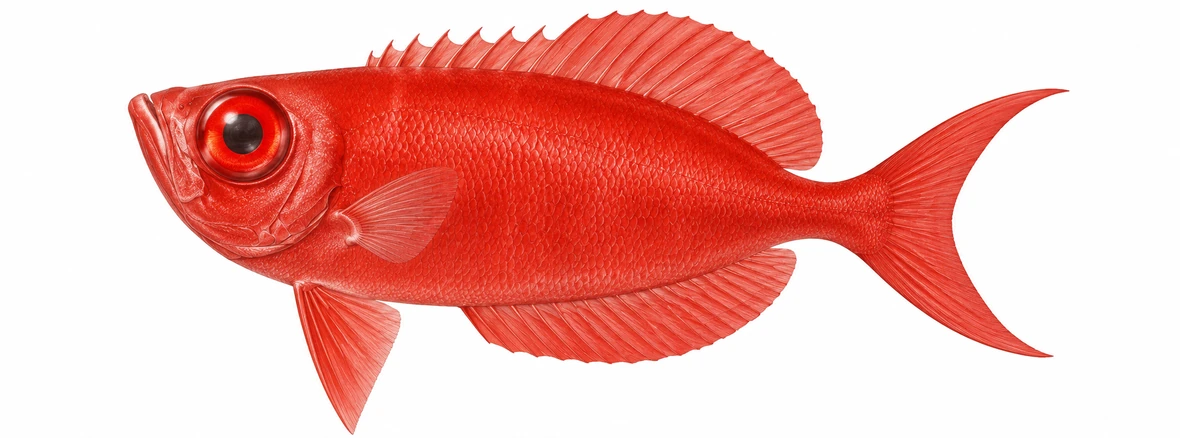
Two details worth remembering
- The familiar crescent tail of adults is much less diagnostic on small individuals.
- The large eye is an excellent clue to a fish that is more active outside the brightest hours.
How to identify it
Large eyes, an upturned jaw and a reddish, deep body are the first clues. On a large adult, look for a short pointed extension at each end of the tail, giving it a shallow crescent outline.
Where to look
Check cave edges or shaded parts of steep reef during daylight. The fish can look silvery with red markings rather than uniformly red; use its outline as well as color.
Natural history
It feeds chiefly in low light on small fish, crustaceans and other invertebrates. Daytime sheltering is a better trip clue than an unverified prediction about reproductive timing.
Look-alikes
Other bigeyes share the enormous eyes and upturned mouth. The tail outline is most informative in adults, so leave a small fish with uncertain fins at family level.
What to watch for underwater
Look in from outside the opening and let the eye and complete tail silhouette resolve naturally.
Recorded in Raja Ampat
This species has a published Raja Ampat record. A regional record does not guarantee a sighting on a particular dive.
- Family
- Priacanthidae
- Field-guide group
- Bigeye
- Also listed as
- Moontail Bigeye, Moontail Bullseye, Lunar-tailed Bigeye
Sources: fishesofaustralia.net.au species reference · Regional survey record
I saw this and want to share
Back to Raja Ampat Fish ID · Dive Raja Ampat with Stuart Scuba




