


Longsnout Stinger
Inimicus didactylus · Synanceiidae
Two details worth remembering
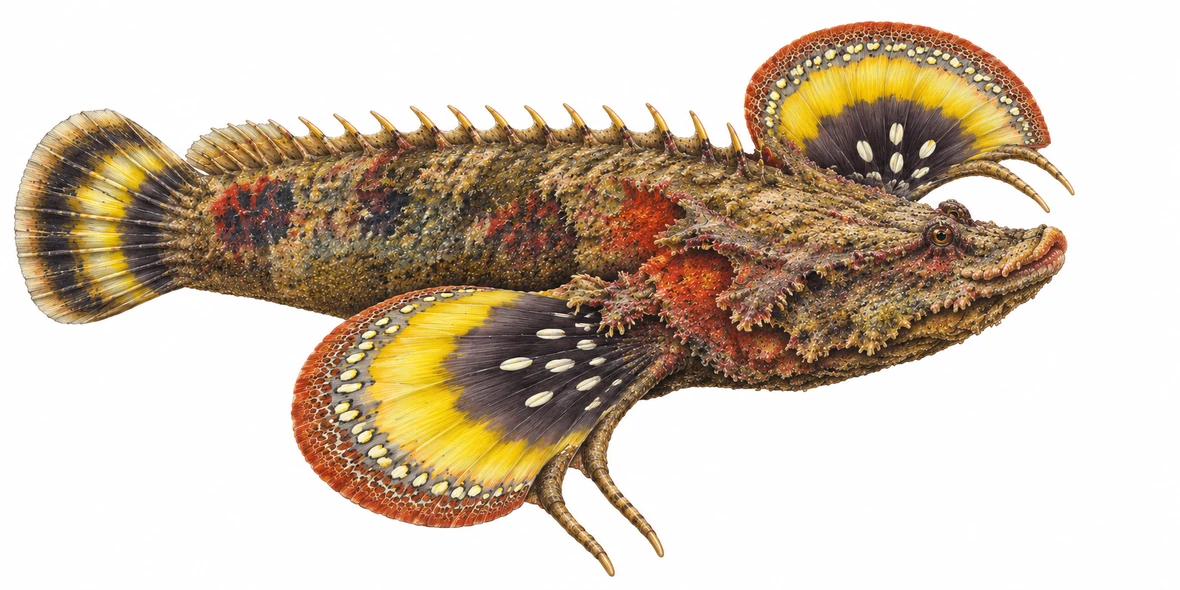
- The species name refers to its two free fingerlike pectoral rays.
- The drab exposed body can conceal a conspicuous pattern on the inside of its large pectoral fins.
How to identify it
A pointed, upturned snout rises from a broad, flat-mottled head. The inner pectoral surface, if naturally shown, has a dark base, a light middle band and a reddish outer margin.
Where to look
Look at sandy patches and rubble around reefs for the eyes and the snout, not a complete fish shape. An individual resting partly under sediment can be difficult to see.
Natural history
An ambush fish that feeds on small fishes and crustaceans, it can move with the detached lower pectoral rays touching the bottom. The dorsal spines are venomous.
Look-alikes
The demon stinger has two dark inner-pectoral bands and a lighter margin. The reef stonefish has a more compact, warty, blunt-faced outline.
What to watch for underwater
Never ask a guide to turn the fish or trigger a display. If the inner fins are hidden, keep the identification provisional.
Recorded in Raja Ampat
This species has a published Raja Ampat record. A regional record does not guarantee a sighting on a particular dive.
- Family
- Synanceiidae
- Field-guide group
- Stingerfish
- Also listed as
- Longsnout Stingerfish, Bearded Ghoul
Sources: fishesofaustralia.net.au species reference · Regional survey record
I saw this and want to share
Back to Raja Ampat Fish ID · Dive Raja Ampat with Stuart Scuba




