


Longfin Blenny
Gobioclinus haitiensis · Labrisomidae
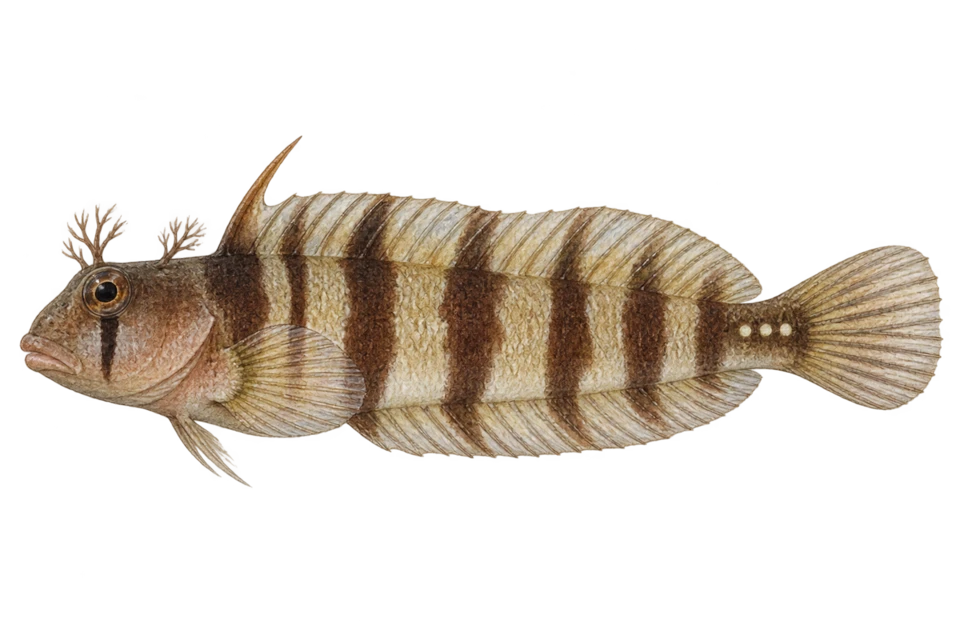
Check for six or seven dark bars, a tall first dorsal spine and three light marks at the tail base.
One fun thing to know
Older survey records may call it Labrisomus haitiensis.
How to identify it
- A dark line drops below the eye from the broad head.
- The second bar is narrow and the forward bars continue onto the dorsal and anal fins.
- No eyespot on the gill cover; three pale marks where the tail fin begins.
Where to look
Patch reefs, lagoons and drop-offs. Smithsonian reports 10–79 ft (3–24 m).
Local record: This fish has been recorded in REEF surveys at Blue Heron Bridge (Phil Foster Park), Riviera Beach. A local record is not a guarantee of a sighting.
Size: Up to about 2.8 in (7.1 cm) in the cited account. This is a published upper size, not what to expect on every dive.
What it eats
Bottom crustaceans, worms and mollusks, plus small fish.
How it behaves
Look at reef level and get a good side-on view without touching the bottom.
Reproduction
Smithsonian lists eggs associated with the seabed and drifting larvae; timing at the Bridge is unknown.
Look-alikes
Puffcheek Blenny also lacks a gill-cover eyespot. Compare the Longfin’s body-bar count and dark line directly below the eye.
Can you collect or eat it?
Enjoy watching it and leave it in the water. This guide does not verify species-specific harvest or food-safety rules. Check the current rules for the exact place, species and method before taking any fish.
Check Florida’s current saltwater rules
Field references
I saw this and want to share
Make your next dive happen
Dive with Stuart Scuba · Train with us · Travel with us · Shop with us



