


Blue Linckia Sea Star
Linckia laevigata · Ophidiasteridae · Sea star · Palau Fish ID
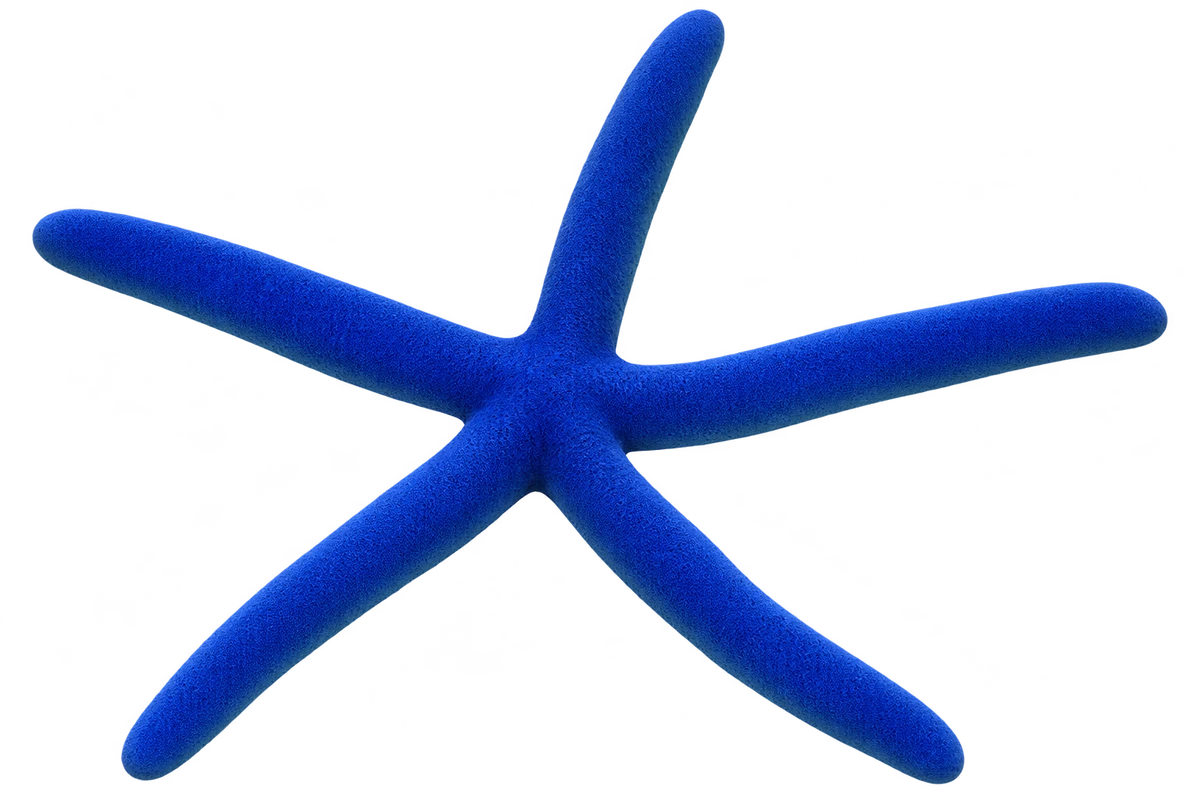
You don’t have to be a sea-star expert to remember a blue Linckia. The blue catches your eye, but the five long, rounded arms and compact center make it a much stronger ID. This is a good one to watch for a moment instead of just ticking the box.
How to recognize it
Look for a small central disc leading into long, almost tubular arms with rounded tips. A typical blue individual has no big raised dark knobs. Blue is the familiar form, but no single color is an identification by itself. Take a whole-animal photo and check that you can see the tips.
Where to look in Palau
Palau collections include two visits to the south passage of Iwayama Bay, plus records from Kasao Reef, Ngadarak Reef and Arakabesan. One reef-flat collection was made in about 3 feet (1 meter) of water. Surveyors also found animals under rocks, but leave rocks right where they are.
Size and life stages
Scientists often record the distance from the center to an arm tip, not the width of the whole animal. A couple of Kasao reef-flat specimens had arms about 5 inches (13–14 cm) from center to tip. That is an example from Palau collections, not a maximum.
What it does all day
Like other sea stars it walks on tube feet beneath the arms. In a Philippine movement study, blue Linckias on a uniform test surface averaged about 3 inches a minute. They tended to keep moving in the same direction on that surface. Take the study for what it measured, not a prediction of how fast every sea star crawls across coral.
The next generation
Do not treat a small or partly hidden star as a different species based on size alone. Start with overall shape and the features you can see. If limbs are concealed, “sea star” can be the right level of confidence.
Look-alikes
Palau also has the common comet star, another Linckia. It can present a similar long-armed outline. Record the proportions and markings from more than one angle if you can. A large disc and big dark knobs point instead toward a different group of sea stars.
Try this on your next dive
Against a fixed feature nearby, see whether the tip of an arm changes position while you hold your own position. You may get a better sense of the animal’s activity by pausing than by moving closer. If you’d rather watch it move, hold one steady shot that includes a fixed point nearby. This is a good exercise in the SDI Underwater Video.
Six things to notice
- The long arms make the central disc look especially small.
- Museum photographs document the striking blue form on reef crests.
- One Palau team collected it on two separate visits to the same passage.
- Researchers found it on a reef flat only about a meter deep.
- In the Philippine test, it was the slowest of four species compared.
- On that test surface, its path was usually fairly direct.
Keep looking through the Palau Fish ID guide, or explore our international group dive trips.




